Magnolia Wu Unfolds It All
46 pages • 1-hour read
Chanel MillerMagnolia Wu Unfolds It All
A modern alternative to SparkNotes and CliffsNotes, SuperSummary offers high-quality Study Guides with detailed chapter summaries and analysis of major themes, characters, and more.
Chapters 1-3Chapter Summaries & Analyses
Content Warning: This section of the guide includes discussion of racism.
Chapter 1 Summary: “The Bing Qi Ling Bubbles Birthday”
Magnolia Wu lives in New York City with her mother and father, who run the Bing Qi Ling Bubbles Laundromat. Magnolia’s only friend moved out of New York a while ago, and she expects to be spending her tenth birthday alone with her parents, watching them work. Magnolia’s mother and father must work long hours, and while most of Magnolia’s classmates are away on summertime holidays, Magnolia must stay in the hot city, entertaining herself as best she can at the laundromat.
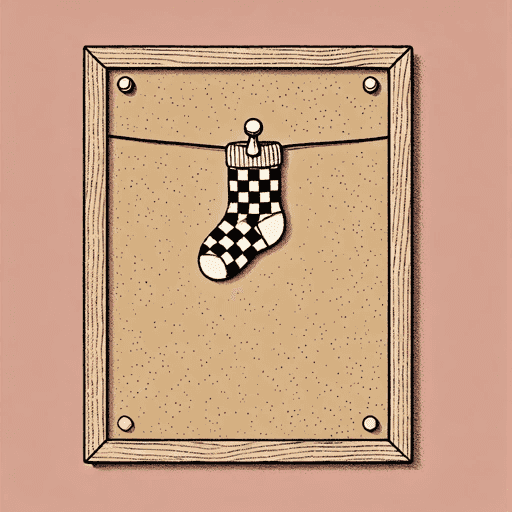
Although Magnolia used to have a lot of fun at the laundromat when she was small, as she has gotten older, she has come to understand that other young people see the laundromat as a strange place—one that she should be embarrassed about. She has stopped playing the silly games she once played there, and she passes the time doing things like sculpting sharks out of dryer lint and pinning lost singleton socks to a bulletin board in hopes that their owners will return to find them.
To Magnolia’s surprise, a friend of her mother’s, Ms. Lam, has returned to the city, bringing her daughter Iris with her, and Magnolia’s mother has arranged for the girls to meet. At first, Magnolia doesn’t think much of Iris. Iris feels homesick for Santa Cruz, California, where she used to live, and says uncomplimentary things about New York. Iris wins Magnolia over by being kind to Magnolia’s dog, Mr. Pants. Magnolia and Iris start to play a game together, but it is interrupted by the shouting of an angry customer. The woman questions whether Mrs. Wu can speak English properly, which makes Magnolia angry.
One of the things the customer yells at Magnolia’s mother is that the laundromat looks dirty and sloppy with a collection of socks hanging on the wall. Magnolia is ashamed that her project might make her parents’ laundromat look bad. She takes the bulletin board down and moves it outside with the trash.
Chapter 2 Summary: “The NYC Sock Detective”
In the morning, Mrs. Wu asks Magnolia to take some peaches over to Salty Muscles, the gym where Ms. Lam works. On her way, Magnolia runs into Luis Mateo, a boy from her class who comes to the laundromat every week to drop off laundry from his father’s barbershop. Magnolia has a crush on Luis, and she is slightly awkward as she tries to banter with him. At Salty Muscles, Iris waves Magnolia over. She tells Magnolia that sometimes people are mean to her mother about her English, as well—like the laundromat customer was to Mrs. Wu. Like Magnolia, she gets frustrated because instead of defending her mother, she gets quiet and scared when people are yelling.
Iris takes a bunch of socks from her knapsack. She tells Magnolia that she rescued them after Magnolia tried to throw them away. “I’m going to help you return each sock to its rightful owner, and you’re going to show me around New York City,” she says (24). Iris’s theory is that each sock contains clues about its owner’s identity. Combined with Magnolia’s extensive knowledge of her neighborhood, she thinks this will be enough to match socks with owners. Magnolia agrees, now thinking of herself as “the NYC Sock Detective” (25). Iris picks up a black-and-white checkered sock and asks Magnolia to guess its owner. Because she knows that a customer named Carl plays chess, Magnolia thinks of him. When she says that this might not be a correct guess, Iris assures her that being right the first time is not important—what is important is just getting started following the clues.
Chapter 3 Summary: “The Black-and-White-Checkered Sock”
Iris and Magnolia head for the park where Carl plays chess. As they travel through the busy city streets, Magnolia gives Iris tips to help her feel calmer and more comfortable in her surroundings. At the park, Carl tells her that the black-and-white sock is not his. He gives them some advice: they may make many wrong turns as they investigate who owns the sock, but they should enjoy the small victories and surprises they encounter along the way.
Iris sees a piece of newspaper printed with a crossword puzzle and guesses that Lisa, a laundromat customer who loves crosswords, is the owner. They head for the subway station, where Lisa works. Lisa tells them that she is not the owner of the black-and-white sock, either. Iris helps Lisa find a word she is looking for in her current puzzle; Magnolia is embarrassed by her inability to spell the word, but Lisa applauds her creative try. She tells Magnolia that she is a creative thinker and that her error is evidence of her clever imagination. It is the first time that Magnolia has ever thought of mistakes this way.
Lisa asks them to take a stack of newspapers to Mr. Mateo’s barbershop. Magnolia has never been inside the shop before, and when she sees its black-and-white checkered floor, she has an idea: perhaps Luis is the owner of the sock. She makes Iris approach him with the sock. Luis is thrilled to have the sock back, as it has a sentimental meaning to him. He explains to the two friends that he is training to be a barber, like his father. His father says that listening to people is one of the most important parts of the job and that hearing people’s stories is “a gift” (41). Magnolia wonders what kind of stories her mother would tell if she ever had time to just sit and talk.
Chapters 1-3 Analysis
The opening chapters of the novel establish its setting, main characters, conflicts, and themes. Miller presents the setting of New York City as a place of diversity and opportunity where a tremendous variety of people can pursue their dreams and benefit from one another’s experience and support. As Magnolia tells Iris, “The city has everything you need” (11). The many things that New York has to offer are emphasized in the story’s first illustration of Magnolia herself: on the book’s title page, she’s shown wearing an “I Love New York” t-shirt. These positive characteristics of New York City undergird the novel’s emerging theme of The Gift of a Wider Perspective. Throughout the first three chapters, many characters of different ages, ethnicities, and life circumstances share ideas and encouragement, broadening one another’s experiences.
The incident in Chapter 1 when the laundromat customer accuses Mrs. Wu of not being able to properly speak English introduces the pervasive threat of racism that runs throughout the novel. When the customer accosts Mrs. Wu saying, “If you can’t understand English, you shouldn’t be running a business,” Magnolia feels frozen, unable to push back against the customer’s racist tirade (16). Across the novel, her experiences teach her to both broaden her perspective and embrace empathy—the antithesis of racist ignorance—that provides her with the confidence to stand up for herself, her mother, and her friend.
Despite living in New York City all her life, Magnolia begins the story as an isolated figure. The story’s illustrations emphasize her isolation by initially only focusing on the people and objects inside the Wus’ laundromat, visually cutting Magnolia off from the city around her. Magnolia “[does] not have a single friend,” and her parents work long hours running the laundromat and don’t have extra money for things like vacations and fancy birthday candles, making Magnolia feel sorry for herself when she compares her life to the lives of other children she knows from school (1). Learning to appreciate the benefits she does have—two loving parents and a stable home, for instance—is one of the ways that Magnolia grows over the course of the story.
Miller emphasizes Magnolia’s creativity and responsibility in the many ways she finds to occupy her time in the laundromat. She helps her parents by collecting coins and restocking detergent. She makes up games and crafts, and she imagines thrilling backstories for the socks she finds left behind. The notice board she creates to showcase the solitary socks inspires Magnolia and Iris’s quest—the central of the plot. Magnolia’s imagined scenarios in which customers return to be reunited with their lost socks further underscore her loneliness. She feels empathy for the lonely socks, separated from their mates and owners because she understands what it is like to feel alone and a little lost.
Meeting Iris represents a turning point in Magnolia’s arc. Iris not only brings The Gift of Friendship into Magnolia’s life, she also models confidence, kindness, and active problem-solving—traits Magnolia seeks to emulate. Iris rescues the socks after they’re thrown away and comes up with a scheme to reunite the socks with their owners. When Magnolia agrees to work with Iris to try to reunite socks with their owners, she realizes that she feels brave enough to do it because “for the first time in a long time, she [has] a friend, someone who believed in her before she did, which is a powerful thing” (25). Iris interacts confidently with all of the new people she meets on their quest, setting an example for Magnolia, who’s still working toward Developing Confidence and Finding One’s Voice.
The text’s illustrations reinforce the sense that Magnolia’s life begins expanding the moment she meets Iris. Chapter 3 opens with an amusingly chaotic drawing of pigeons and a larger drawing of a city park bustling with people. Miller includes pictures of Carl playing chess, a busy subway scene, and the interior of Luis’s father’s barbershop, crowded with customers. In each location, people offer one another help and wisdom. In the subway, passersby shout out answers for Lisa’s crossword puzzle. In the park, Carl advises the girls to learn from their mistakes and enjoy the “surprises and small victories” their journey brings them (32). In the barbershop, Luis explains that hearing others’ stories is “a gift” that people “have to be ready to receive” (41). Collectively, Miller’s illustrations emphasize the diversity and interconnectedness of the city and its people, laying the groundwork for Iris and Magnolia’s journeys toward a greater sense of belonging.
The story’s first three chapters focus on the developing friendship between Iris and Magnolia and the victories and gifts they encounter together as they travel around their New York neighborhood. At this point in the story, the girls’ friendship has not yet faced any serious obstacles, making the novel’s central conflict a lighthearted one—the question of whether the girls can unite the lost socks with their owners. Iris’s negative view of New York and her homesickness for California foreshadow a deeper conflict between them that Magnolia will need to complete her arc to resolve. At this point in the story, she’s more concerned with defending New York than with acknowledging her friend’s feelings and offering meaningful support. As Magnolia’s arc progresses, she eventually learns to embrace empathy and consider other perspectives than her own.

Unlock all 46 pages of this Study Guide
Get in-depth, chapter-by-chapter summaries and analysis from our literary experts.
- Grasp challenging concepts with clear, comprehensive explanations
- Revisit key plot points and ideas without rereading the book
- Share impressive insights in classes and book clubs