Mara, Daughter of The Nile
A modern alternative to SparkNotes and CliffsNotes, SuperSummary offers high-quality Study Guides with detailed chapter summaries and analysis of major themes, characters, and more.
Summaries & Analyses
Quizzes
NEWReading Tools
Symbols & Motifs
The Falcon
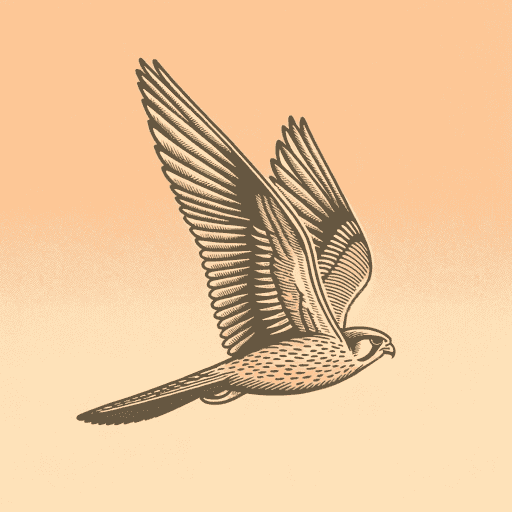
The falcon, a large, powerful bird of prey, can reach diving speeds of up to 90 miles per hour when preying on smaller creatures. A prominent motif of ancient Egyptian art and hieroglyphics, this majestic, far-seeing bird is identified with Horus, a sun god commonly represented with a falcon’s head. As such, the falcon is closely associated with Egypt’s pharaohs, who were seen as Horus’s manifestations on earth. In Mara, Daughter of the Nile, the titular heroine sees a falcon swoop out of the sky and kill a desert lark. In the next moment, still breathless from the “beauty and cruelty of its attack” (77), Mara receives a summons from Hatshepsut, Egypt’s ruthless queen, who calls herself Pharaoh. As Hatshepsut’s later treatment of Mara suggests, this juxtaposition is no coincidence, for the rapacious cruelty of the falcon represents the gloating brutality of Hatshepsut and foreshadows the queen’s acts of sadism, such as her vicious attempt to have the helpless Mara whipped to death.
Juggling
Among the novel’s characters, none is so deft with his hands as the juggler Sahure, who can flip a “cataract” of balls into circles, triangles, and patterns of “brilliant intricacy.” This bold dexterity unnerves Mara, who wonders if he may be a kheft (demon) and asks Sheftu if he can be trusted. Later, she discovers that Sahure, like herself, is playing both sides of the fence, for he is really a spy for Nahereh and the queen. Since Mara herself shuttles back and forth between Sheftu, Nahereh, Inanni, and the king, playing an intricate game with each, Sahure, another double agent, acts as her counterpart; indeed, in her first meeting with the king, when she pretends to translate Thutmose’s words for Inanni, Mara feels “like a juggler with too many balls in the air” (89). Within the context of the novel, juggling itself becomes a symbol for the delicate and dangerous balancing act of espionage, where opposing factions are adroitly maneuvered back and forth, and the slightest mistake can send intricate plans tumbling to the ground. Thus, the narrative implies that the uncertain future of Egypt itself rests in Mara's hands like a juggler's golden balls.
Night and Darkness
In Egypt, a kingdom whose chief deity is the sun god Ra and whose queen bears the title “Your Radiance,” light represents truth, order, and eternal life. Correspondingly, the lack of light is associated with disorder, injustice, and death. Because the novel is set in a time of political unrest, images of night and gloom are used to suggest the metaphorical darkness of chaos, deceit, and oppression. Many of the novel’s scenes are nocturnal, since the rebels and other plotters gather mostly under cover of darkness, and the troubled reign of Hatshepsut is portrayed as an eternal night in which truth, goodness, and chivalry are continually lost in the ever-shifting shadows. The treacherous juggler Sahure, with his air of weary cynicism, is said to “dwell in a dark land” (137), and he eventually arranges for Mara to be blamed for his betrayal of Sheftu. Finally, to defeat the queen, Sheftu must enter “the River of Darkness” (the Valley of the Tombs) to rob a grave, as if great evil can only be vanquished by venturing into the darkest and most taboo of underworlds. After escaping from the terrifying darkness, he feels compelled to keep a lamp burning by his bed to stave off his lingering fears, for the cold darkness of the tomb almost destroyed him. However, the death of Hatshepsut and the ascension of Thutmose III bring Egypt’s long, oppressive night to an end, and as the narrative states, “The night was over; a new day had dawned for the land of Egypt” (279).

Unlock the meaning behind every key symbol & motif
See how recurring imagery, objects, and ideas shape the narrative.
- Explore how the author builds meaning through symbolism
- Understand what symbols & motifs represent in the text
- Connect recurring ideas to themes, characters, and events