Mark Twain
62 pages • 2-hour read
Ron ChernowMark Twain
A modern alternative to SparkNotes and CliffsNotes, SuperSummary offers high-quality Study Guides with detailed chapter summaries and analysis of major themes, characters, and more.
Part 5Chapter Summaries & Analyses
Content Warning: This section of the guide includes discussion of illness and death.
Part 5, Chapter 58 Summary: “Man in the White Clothes”
Between late 1906 and early 1907, Mark Twain juggled public triumph and private disarray. Jean, increasingly ill with epilepsy, entered Hillbourne Farms sanitarium, chafing at rules while seizures, loneliness, and clashes with Clara and Isabel mounted. Clara’s fragile singing career faltered, while Isabel herself collapsed and took a rest cure, yet her duties—and emotional dependence on Twain—kept expanding.
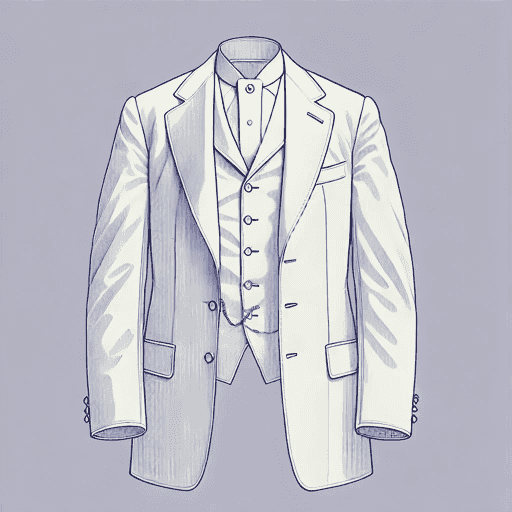
Twain, gout-ridden but restless, lobbied Congress in a dazzling white suit for a longer copyright term to secure his daughters’ future. He then took two vacations to Bermuda while still cultivating new “angelfish.” He developed plans for a country house in Redding, but the family remained scattered, anxious, and frequently at odds.
Part 5, Chapter 59 Summary: “A Real American College Boy”
Invited to receive an honorary doctor of letters at Oxford, 71-year-old Twain sailed for England in June 1907. Onboard he befriended 17-year-old Carlotta Welles, the latest “angelfish.” He then captured London with bath-robe strolls, packed press conferences, royal garden parties, and a triumphant Oxford procession in scarlet gown and mortarboard. He lunched with George Bernard Shaw, collected new admirers such as 16-year-old Frances Nunnally, and basked in adulation that healed decades-old slights about his lack of schooling.
Rumors in New York that he would marry Isabel Lyon prompted Twain to make public denials. While heading home on the Minnetonka, he adopted 10-year-old Dorothy Quick as another “angelfish,” returning to the US amid delighted reporters and renewed family anxieties.
Part 5, Chapter 60 Summary: “All the Wonders That Are Occurring”
Twain decamped to an elite rental at Tuxedo Park while his Redding house was being finished, wrapping Isabel Lyon ever more tightly into familial, financial, and construction duties. Isabel juggled Clara’s deficit-ridden concert tour, Jean’s sanitarium care, and stacks of Twain’s autobiography while marriage rumors swirled.
Twain, meanwhile, lavished time on new “angelfish” Dorothy Quick, provoking Clara’s sarcasm and Jean’s hurt. His friend and banker Henry Rogers suffered a stroke; the Knickerbocker Trust panic trapped Twain’s $51,000; and his Plasmon venture collapsed. As losses mounted, Twain leaned on newcomer Ralph Ashcroft for business counsel, deepening household tensions.
Part 5, Chapter 61 Summary: “A Holiday From Life’s Woes”
After returning to New York, Twain threw himself into charitable appearances for the Hebrew Technical School, the Actors’ Fund, and the Children’s Educational Theatre, but his creative drive flagged and he shelved further autobiography dictation.
During this time, strains within the household worsened: Isabel Lyon now controlled the family’s money, Clara’s concert tour drained cash, and Jean—shifted from Katonah to a cottage in Greenwich—felt imprisoned and sidelined by Isabel’s gate-keeping. Twain’s financial affairs also continued to worsen.
Nevertheless, declaring he had earned “a holiday,” Twain retreated to billiards, Scotch, and an ever-growing “Aquarium Club” of adolescent “angelfish,” indulging others with affection that distanced him still further from his troubled daughters.
Part 5, Chapter 62 Summary: “Innocence at Home”
Twain refused to inspect construction of his Redding, Connecticut, estate, trusting Isabel Lyon and architect John Howells to deliver a fully appointed villa. Arriving in June 1908, he was dazzled by the house, soon rechristened “Stormfield” for outsiders but privately called “Innocence at Home,” intended as headquarters for his ever-growing “Aquarium” of teenage devotees.
While Twain amused himself, his daughters became more restless and resentful. Clara resented Lyon’s authority; Jean, still under doctors’ orders and living with unstable companions, begged to return but was kept away when Lyon convinced Twain to reverse his promise. Twain’s willful detachment left household power—and Jean’s fate—in Lyon’s hands.
Part 5, Chapter 63 Summary: “Mark Twain’s Daughter”
Settled at Stormfield, Twain abandoned sustained writing, preferring billiards, scenery, and the company of teenaged “angelfish.” Isabel Lyon and architect John Howells furnished the house, while Jean, still under Dr. Peterson’s orders, was shunted among caretakers and longed to return home.
Twain’s health wavered after a nephew’s drowning and a heat-exhaustion episode. In response, his doctors advised constant supervision, deepening Lyon’s control. A nighttime burglary panicked residents, drove off staff, and heightened tensions. Clara’s secret affair with accompanist Charles Wark surfaced amid financial disputes. Twain, craving peace, let Lyon and Ralph Ashcroft manage household, money, and access to him, further isolating his daughters.
Part 5, Chapter 64 Summary: “The Death of Tammany”
In autumn 1908, Twain deepened roots at Stormfield. He helped found the Mark Twain Library, hosted Hannibal friend Laura Hawkins (“Becky Thatcher”), and publicly lamented the dog-killing of his beloved cat Tammany.
Behind the good humor, household politics darkened. Clara continued to clash with Isabel Lyon over servant control and future publishing rights, while Isabel and biographer Albert Paine waged a covert war for Twain’s correspondence. Isabel was now romantically linked to business-minded Ralph Ashcroft, and persuaded the aging author to sign an all-embracing power of attorney and to create the Mark Twain Company, cementing her and Ashcroft’s authority. Twain, distracted by visitors and even a stuffed-elephant Christmas prank, remained largely oblivious.
Part 5, Chapter 65 Summary: “An Insane Idea”
After Jean’s unsatisfactory German treatment, Isabel hurriedly installed her in a series of supervised lodgings, prompting family discord and Clara’s demand that Jean be allowed to come home. Meanwhile, Isabel secretly married Ralph Ashcroft. Twain deemed the match “an insane idea” (651), yet, craving their help, signed four contracts that vastly expanded their authority and salaries.
Clara pressed for a financial audit, and tensions exploded. Twain ultimately dismissed Isabel while revoking a sweeping power-of-attorney he had granted the couple. Amid the turmoil, Jean’s return to Stormfield was finally approved, while Henry H. Rogers’s sudden death deprived Twain of his most trusted adviser.
Part 5, Chapter 66 Summary: “Grandpa Twain”
Stormfield’s winter quiet was broken when Twain plunged into Is Shakespeare Dead? (1909). Fired by new Baconian “cipher” books gifted by Helen Keller’s party, he spent January through March expanding a long-held conviction that Francis Bacon wrote Shakespeare’s plays. Ignoring pleas from Paine and Isabel, he rush-printed the tract in April, drawing a brief plagiarism flap with scholar George Greenwood.
A Baltimore trip to Francesca Nunnally’s graduation triggered Twain’s first crippling angina attack, forcing the imposition of sharp limits on travel, cigarettes, and billiards. Recovering at Stormfield, he resumed dictation, welcoming Jean permanently home and publishing the long-gestating satire Captain Stormfield’s Visit to Heaven—his final book released in his lifetime.
Part 5, Chapter 67 Summary: “Letters From the Earth”
Stormfield’s bustle resumed as Clara jettisoned her fading concert career. She nursed pianist Ossip Gabrilowitsch through surgery, and then married Ossip in a hurried, 32-guest ceremony at the house on October 6, 1909. Twain, suffering from frequent angina, played only a token role in the frenzy while Jean, now happily installed nearby, staged a triumphant fund-raiser for the new Mark Twain Library.
As the household settled, Twain channeled his darkest religious skepticism into Letters from the Earth, a blistering, unpublished-in-his-lifetime satire that ridiculed biblical lore, human vanity, and a Creator who permits ceaseless suffering.
Part 5, Chapter 68 Summary: “An Old Bird of Paradise”
Stormfield’s fragile calm shattered in late 1909. Twain, increasingly house-bound by angina, sustained his “angelfishes” correspondence but escaped to Bermuda, lodging with the Allen family and doting on 15-year-old Helen. He returned for the first family Christmas in years: Clara and new husband Ossip had sailed for Europe, leaving Jean—lately thriving as her father’s secretary—to oversee holiday preparations at Stormfield.
On Christmas Eve morning, Jean suffered a seizure and died in her bath, plunging Twain into stunned grief. He forwent the burial, wrote the elegiac “The Death of Jean,” and confronted regret over past neglect while also blaming Isabel Lyon.
Part 5, Chapter 69 Summary: “Halley’s Comet”
In early 1910, wracked by angina and Jean’s recent death, Twain retreated to Bermuda, lodging with the Allen family and trying to recreate domestic comfort with teenage “angelfish” Helen as his secretary. Physical decline, morphine injections, and waves of bitterness toward Isabel Lyon and Ralph Ashcroft punctuated Twain’s quiet days of reading and valedictory humor. He composed “Etiquette for the Afterlife,” predicted Woodrow Wilson’s presidency, and insisted on outlasting Halley’s Comet’s April return.
After his return to Stormfield, Twain greeted Clara and Ossip—with Clara now pregnant—then slipped into final unconsciousness. Twain died peacefully on April 21, 1910, the night after the comet’s closest approach, with his public and literary immortality immediately affirmed.
Part 5 Analysis
Chernow closes his biography with an elegiac and psychologically complex portrayal that refuses easy judgment. Twain emerges as both a national icon and an increasingly isolated, sometimes baffling old man, highlighting the tension between public adoration and private despair that defines the last stretch of Twain’s life.
Even in his old age, Twain continued to wrestle with The Duality of Public Persona Versus Private Self. Even as he played the grand old humorist in his white suit or joked to Oxford reporters, “I have come to show here what a real American college boy looks like” (601), Twain used performance to deflect insecurities about class, education, and status. Chernow underscores how Twain’s dazzling public appearances were meticulously crafted while his family life splintered around him. The biographer’s technique of contrasting Twain’s letters with his public quips reveals how wit masked pain and how fame, far from soothing personal wounds, often deepened them.
This section also probes Twain’s late-life emotional displacement, showing how The Interplay Between Personal Tragedy and Creative Expression became increasingly fraught. The “Aquarium Club,” with its idealized young “angelfish,” exposes both affection and avoidance: Twain could write with seeming tenderness—“What is a home without a child? Particularly a house that’s had such a child as you in it” (609)—but Chernow makes clear how these effusive declarations were often substitutes for repairing bonds with his own estranged adult daughters. Chernow also addresses some of the controversies around these “angelfish” relationships, not accusing Twain of any direct physical misconduct but still acknowledging the strange power dynamics at play between Twain and his much-younger, impressionable teenaged fans.
Chernow also draws out Twain’s darkest moral reckonings, presenting a man whose late writings abandoned genteel satire for unflinching indictment. Passages from Letters from the Earth—“Life was a fever-dream made up of joys embittered by sorrows […] but death was sweet” (679)—reveal a nihilism that Chernow treats not as an aberration but as the logical endpoint of Twain’s lifelong scrutiny of hypocrisy and cruelty. He reveals how Twain’s final moral vision implicated not just empires or churches, but existence itself. Dark humor and rhetorical craft thus remained Twain’s tools for making sense of suffering.
By centering Twain’s letters, dictations, and private reflections, Chernow gives the reader access to a voice stripped of some of its earlier theatricality but no less committed to spectacle—even in contemplating death. Twain’s own mythmaking about Halley’s Comet, turning his death into a cosmic punchline, becomes both a final performance and a profound acknowledgment of mortality. Rather than seeking a redemptive arc, Chernow concludes with an unsparing but humane portrait of an artist whose personal tragedies left marks even on his most celebrated works.

Unlock all 62 pages of this Study Guide
Get in-depth, chapter-by-chapter summaries and analysis from our literary experts.
- Grasp challenging concepts with clear, comprehensive explanations
- Revisit key plot points and ideas without rereading the book
- Share impressive insights in classes and book clubs