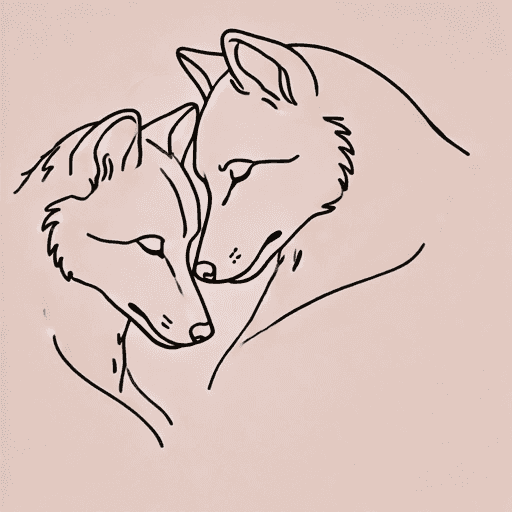
Mate
50 pages • 1-hour read
Ali HazelwoodMate
A modern alternative to SparkNotes and CliffsNotes, SuperSummary offers high-quality Study Guides with detailed chapter summaries and analysis of major themes, characters, and more.
Themes
Content Warning: This section of the guide includes discussion of cursing, sexual content, illness, and death.
Finding Identity and Belonging Through Connection
Serena’s attempts to orient to her new identity and reality convey Mate’s message about how important acceptance and belonging are to forming a holistic sense of self. At the novel’s start, Serena has just discovered that she is a hybrid, or half-Human and half-Were individual. This information alters her understanding of who she is and where she comes from. Because there is only one other known individual of her kind, Serena is alienated from her society, which treats her like a pariah and a pawn. The Humans, Weres, and Vampyres battle to either destroy, use, hide, or manipulate her. Because Serena’s body is politicized, she struggles to make sense of who she is, where she belongs, and what she wants on her own terms; in the end, however, she realizes that embracing her authentic self involves connecting with others.
Serena’s story traces her work to take pride in herself, form connections with others, and foster a home and community. Serena admits, “[I have] lived my entire life not knowing who my parents were,” but she has “never allowed my origins to define me, because if I had, I would have been destined to remain undefined. I may be Serena Nobody, but I’m still Serena” (201). After joining the Northwest pack and becoming involved with Koen Alexander, Serena faces challenges that test her self-assuredness. She is separated from her best friend Misery, with whom she grew up and through whom she developed a sense of belonging. She is forced into constant proximity with Koen, who pushes her away and treats her gruffly. She is told that she is going to die within the year but has no one to share her grief or fear with. Being Serena feels increasingly hard the more alienated Serena feels, leading her to further isolate herself.
Once Serena reaches out to others, stops withholding the truth, and allows herself to love, she is better able to feel secure in herself and to foster healthy relationships. After she learns that she does not have CSD, Serena feels as if “[t]here’s air. There’s a fucking future” (271); and with the future comes hope. Freed from the fear of imminent death, Serena starts making more choices that embrace that future through connection. She develops a relationship with Koen, reconnects with Misery, and even takes risks to live the life she wants. She resists abiding by others’ expectations of her and instead carves her own path, both alongside and independent from Koen. By the novel’s end, she is in a more stable place. She has owned her hybrid identity and started a relationship and life with Koen. She has embraced her true nature and refused to live in fear and shame, underscoring the novel's contention that belonging and acceptance involve connection through vulnerability.
Consent and Agency in Romantic Relationships
Serena and Koen’s complex relational dynamic explores the importance of communication, agency, and reciprocity in romantic relationships. When Serena and Koen first become involved, Serena is reluctant to abide by all of Koen’s demands and directives, most of which are inspired by their “mate” arrangement. “I don’t want a mate,” Serena informs Koen at the novel’s start, “whatever that means. My sex drive’s cobwebs have grown their own cobwebs. I’ve always needed bucketloads of time alone. Plus, I’m still figuring out what I am” (29). Serena is convinced that being Koen’s mate will mean forsaking her independence, power, and autonomy. She does not want to be controlled by Koen, whose protectiveness often borders on possessiveness. At this juncture of the novel, Serena is still learning the “ins and outs” of romance. She has sexual experience, but she has never been involved in a balanced and dynamic intimate relationship. Her arranged relationship with Koen ushers her onto a journey towards learning, growth, and discovery as she navigates how to maintain her sense of self in their relationship.
Over time, Serena and Koen learn how to communicate in a healthy way, learning the importance of listening to and learning from one’s romantic partner. Koen reflects, “The thing is, I grew up with very little control of my life, of my choices, of my body, and maybe because of that, I have thought about things like consent and agency a lot” (294). Koen’s impressions of love and romance are informed by his parents’ relationship and his place in the pack. In the context of Serena, he discovers how to prioritize his partner and to make sacrifices; meanwhile, Serena shows him that it is okay to express his desires and needs, too. The romantic counterparts often banter, playfully bicker, or tease one another, which offers balance to their more heated, passionate, or intense exchanges. These communication patterns capture the complexity of developing understanding with one’s partner. Over time, Serena and Koen’s verbal expression develops into unspoken physical and sensual expression. The lovers give each other time and space, always careful to honor one another’s independence. Serena does not force Koen to be with her because she does not want him to sacrifice his beloved Alpha role in the pack. Koen does not force Serena to leave the pack to protect himself because he wants her to be safe, loved, and secure.
These sacrificial and heartfelt dynamics bleed into Serena and Koen’s sexual relationship, too, which is based upon mutual trust and respect. The characters do not start having penetrative sex until Serena goes into Heat, but during this period, the lovers spend days locked in the cabin together, learning one another’s desires, needs, and preferences. Sexual intimacy, in turn, deepens their preexisting emotional intimacy. Because they feel seen in their emotional relationship, they feel respected and heard in their sexual relationship. The novel suggests that this balance of power is essential to fostering healthy romantic relationships.
Romance as Rebellion
Serena and Koen’s forbidden romance explores how love can be an act of rebellion against violence, hatred, and trauma. When Serena and Koen’s lives first begin to intersect, they are skeptical of each other and eager to maintain boundaries. Serena insists that she does not need a mate because she is an independent woman who is still trying to figure out life on her own terms. She also does not want to compromise Koen’s life and position in the Northwest pack; she is hated by Vampyres, Humans, and many Weres, and she knows that her very existence could threaten Koen’s safety and future. Meanwhile, Koen repeatedly informs Serena, “The part of me that matters isn’t interested in you” (31). He feigns emotional apathy because he does not want to break the celibacy covenant, lose his Alpha position, or wound Serena. Their romance is not only forbidden but promises to create upheaval and turmoil.
Over time, Serena and Koen realize that loving each other is not a crime; rather, accepting one another’s love is a way to survive their tumultuous reality and find redemption amidst it. As Serena tells Koen, “[W]hen I’m with you, I feel…a little less like half of two things, and a little more whole. And when you touch me, it feels right. So right that I forget it’s wrong” (299). Loving each other “feels right” because both Serena and Koen feel empowered and seen by each other. When they choose to break the celibacy covenant to be together, they are choosing love over fear and hatred. They are also choosing to forgive each other for their pasts. They have every reason not to be together: they are different species, come from different backgrounds, and have different priorities. Their compatriots also worry that their relationship will divide the Northwest pack or that Serena will manipulate Koen and steal him from them. Further, Serena’s father killed Koen’s mother and father, and Koen killed Serena’s mother and father. This network of fraught dynamics implies that everything and everyone is against Serena and Koen; their relationship is not categorically “meant to be.” Instead of accepting this assessment, Serena and Koen choose to love each other, even if it means risking others’ scorn and derision.
Serena and Koen’s happy ending underscores the redemptive possibilities of making unconventional choices in love. Serena and Koen’s love story betrays tradition; they rebel against their cultures and their communities’ notions of what is right in order to be together. In doing so, they transcend societal norms, rebelling through their romance.

Unlock every key theme and why it matters
Get in-depth breakdowns of the book’s main ideas and how they connect and evolve.
- Explore how themes develop throughout the text
- Connect themes to characters, events, and symbols
- Support essays and discussions with thematic evidence