55 pages • 1-hour read
Max in the House of Spies: A Tale of World War II
A modern alternative to SparkNotes and CliffsNotes, SuperSummary offers high-quality Study Guides with detailed chapter summaries and analysis of major themes, characters, and more.
Symbols & Motifs
Content Warning: The source text and this guide feature depictions of racism, religious discrimination, and bullying.
Stein and Berg
Stein and Berg, the two immortal creatures who appear on Max’s shoulders, function as a symbol of his displacement as a refugee, and his fractured sense of a German Jewish identity in response to a regime which has invalidated that identity. The way that the creatures introduce themselves—one as a German spirit, and one as Jewish spirit—explicitly establishes this central internal conflict. Berg, a kobold, is a “spirit of that land” (7), representing Max’s deep connection to Germany as a nation and geographical place. Conversely, Stein is a dybbuk, a “spirit of the Jewish people” (7), embodying Max’s sense of Jewish culture and spirituality. The spirits’ physical similarity and simultaneous birth underscore the inseparable nature of these two halves of Max’s identity, while their constant bickering externalizes his painful psychological turmoil. Being both German and Jewish in 1939 places Max in an impossible position, making him the target of antisemitism in his homeland and for both nationalistic prejudice and antisemitic abuse by bullies at his English school. As Max increasingly learns to assimilate in order to survive, the creatures are a constant, tangible reminder of his true, internalized, identity. In offering Max constant companionship and commentary that is alternately mischievous, protective, and cynical, the creatures increasingly represent Max’s sense of German Jewishness as a source of strength and pride.
Pranks
The motif of pranks structures Max’s character arc, illustrating his primary method for subverting authority and weaponizing deception for survival. Far from being simple mischief, Max’s elaborate schemes, involving pigeons, car radios, and a kangaroo, are calculated acts of resistance against bullies, whether they are classmates at St. West’s or the Nazi regime itself. The pigeon prank, for instance, is a direct response to antisemitic cruelty. Max explains his motivation was that “I wasn’t very fond of the way the rugby boys treated the rest of us. Especially everything they said about Jews” (80). Although the pranks often serve as an absurdist comic episode in the book to amuse a young audience, Max’s motivations frame them as morally significant acts of resistance and courage, connecting directly to the theme of Deception as a Tool for Survival and Resistance. Max’s talent for deception prefigures his transition into espionage, as his cleverness catches the attention of Uncle Ewen, who recognizes Max’s “genius.” Each prank serves as a narrative set piece, demonstrating Max’s ability to think “four moves out” and control his environment. This motif demonstrates how, in a world governed by injustice, imaginative and disruptive deceptions become a necessary and powerful tool for the powerless to reclaim agency and fight back on their own terms. The childlike nature of the prank as a concept highlights this imbalance of power, emphasizing Max’s position as a child in a world of adult ambiguity.
Radios
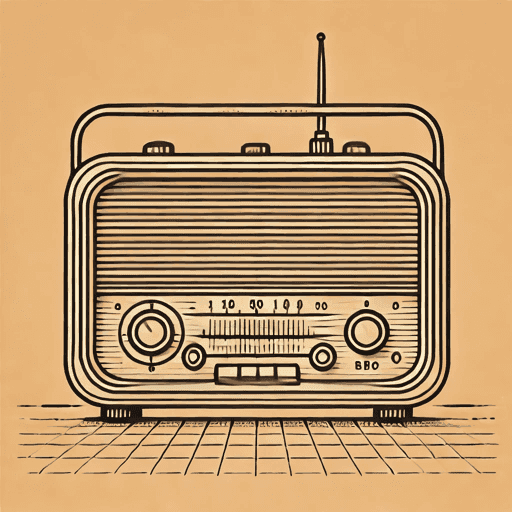
The symbol of the radio represents Max’s genius, his fraught connection to home, and the dual-edged power of information that defines his wartime experience. For Max, the radio is more than a machine: It is a conduit to his former life and the catalyst for his future. His ability to modify his gifted Murphy radio to receive a clear signal from Germany is the first proof of his extraordinary intellect to Uncle Ewen. The broadcast brings the conflict directly into his English refuge, as “someone spoke to him from Berlin. As clearly as if they were broadcasting from Kensington Palace, just around the corner” (32). This reception is a source of both comfort and pain, providing a link to his parents’ world while also subjecting him to the terrifying propaganda of Goebbels and Hitler. This duality mirrors Max’s own conflicted German-Jewish identity, caught between love for his German home and horror at its Nazi regime. The radio becomes a weapon in his pivotal car-radio prank, where he proves his capabilities as a spy. It also links directly to Max’s spy mission: to infiltrate the Funkhaus, the German broadcasting center, which the intelligence services consider the nervous system of the Nazi regime.
Obscure British Names
The motif of obscure British names is used in the novel to explore Max’s sense of displacement as a refugee, his enforced adaptation and growing acceptance into British society. The motif relies especially on the obscure non-phonetic spellings of many traditional British place-names and personal names. Within the historical class structures of British society, the knowledge of the correct spellings—or, conversely, pronunciations—of non-phonetic names acted as a shibboleth, a means to divide people into “insiders” or “outsiders” within a self-defining group. Master Yarrow uses British place-names explicitly as a means to humiliate Max in front of the class, assuming that Max will be unable to guess the “correct” contracted pronunciations of “Worcestershire,” “Leominster,” and “Godmanchester.” These names connect to the novel’s presentation of the deliberately arcane rules and jargon of British public schools, acting in the book as a microcosm of wider British society and attitudes in the mid-20th century. These rules are unintelligible to Max as a newcomer, and used as a tool to ostracize him: “A sci is a boy who doesn't belong here. Not knowing the word sci proves you're a sci” (43).
Having linked these types of English words to identity and belonging, the novel makes the major plot point of Max’s spy training dependent on a similar enigma: The demand that he will place the correct spelling of “Major Chumley”—a name Max only knows spoken aloud—into the dead letter box. Passing this test requires literal ingenuity but its real meaning is symbolic, representing the Max’s “passing” into the insular British intelligence establishment of the 1940s. Although used to highlight Max’s sense of alienation and gradual assimilation as German Jew in Britian, Gidwitz plays on the cultural understanding of his young—and predominantly US—audience, as the discrepancies between spelling and pronunciation in British English is a longstanding cultural joke between the US and UK. In order to maintain the joke and the suspense of the plot point, the novel misspells “Cholmondeley” as “Chumley” throughout. This is a play on authorial omniscience which turns the insider/outsider rule of the shibboleth on its head. Its deliberate absurdity is made explicit when the author-narrator self-consciously states that he will continue to spell “Cholmondeley” as “Chumley,” “because Cholmondeley is as impossible to read as it is to spell,” inviting the reader into a subversive bond which parodies the exclusivity of shibboleths (257)

Unlock the meaning behind every key symbol & motif
See how recurring imagery, objects, and ideas shape the narrative.
- Explore how the author builds meaning through symbolism
- Understand what symbols & motifs represent in the text
- Connect recurring ideas to themes, characters, and events