Mayflower: A Story of Courage, Community, and War
Mayflower: A Story of Courage, Community, and War
A modern alternative to SparkNotes and CliffsNotes, SuperSummary offers high-quality Study Guides with detailed chapter summaries and analysis of major themes, characters, and more.
Summaries & Analyses
Quizzes
NEWReading Tools
Themes
Religious Freedom
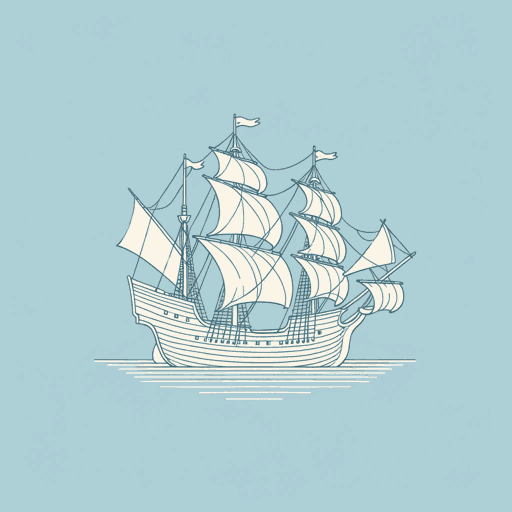
In the 1600s, England had become a dangerous place for Separatists, who believed that the Church of England had become corrupt. Separatists went back to the Bible and did not accept anything that could not be found in scripture. This put them at odds with the Church of England, and after fleeing to Leiden, Holland, where they enjoyed religious freedom for a while, the Separatists left for the New World. Their ship, the Mayflower, set sail for the New World in September 1620 to seek out a place where the Separatists might worship freely. Ironically, given the persecution they had faced, they were extremely intolerant of other beliefs. This intolerance would cause problems for many others in New England.
The Separatists called themselves Pilgrims, and were forced to travel, and later live, with people they called the Strangers. These people did not share the same religious beliefs as the Pilgrims. The Pilgrims had to become more flexible in their beliefs in order to live peacefully with the Strangers. Though the Pilgrims established Plymouth with the Strangers, the Pilgrims ensured that their religious views still held sway, and their belief system became the standard for Plymouth and many of the other colonies. When colonies like Merrymount established alternative forms of religious practice, the Pilgrims reacted harshly, thus undermining the religious freedom they had sought in the New World.
The Pilgrims and Puritans were similar in many ways. The Puritans arrived in the New World later, yet, while the Pilgrims kept to themselves, Puritan New England grew. It is still considered ironic that a people who left England in pursuit of religious freedom could be so intolerant of others, including the Native Americans, whom they treated poorly. They also persecuted the Quakers for their religious beliefs.
The Relationship between Native Americans and Pilgrims
The relationship between the Pilgrims and Native Americans, most notably the Pokanokets, was one born of necessity, rather than mutual trust. Massasoit, the leader of the Pokanokets, kept an eye on the Pilgrims as they struggled to survive upon arrival. He was persuaded by Squanto, who had plans of his own, to befriend the Pilgrims for the benefit of his people. Squanto astutely reasoned that the Pokanokets could boost their standing in the region and become a force to be reckoned with by becoming allies of the English. This move ensured that the Pokanokets, who had once been the greatest force in the region, could once again compete with their rivals, the Narragansetts.
The relationship between the two sides worked so well because both needed the other for survival. Initially, the Pilgrims leaned on the Pokanokets heavily. Massasoit ensured that his people taught the Pilgrims how to plant crops and survive the harsh climate. The two groups shared the first Thanksgiving together, relying heavily on the food supplies of the Pokanokets. They also signed treaties to ensure they would respect each other’s property and come to each other’s aid if attacked. In this way, Massasoit not only outplayed the Narragansetts, he angered other Native Americans in the region for siding with the English.
The relationship between the Native tribes and the English began to deteriorate when the second generation of Pilgrims came of age. These individuals did not uphold the same religious practices of their forefathers; a lapse to which William Bradford attributed the settlers’ growing trouble with Native Americans. The newer generation also felt that their relationship with the Pokanokets and other Native tribes was hindering their prosperity in the New World. The anger and dissatisfaction of the Native Americans—caused in large part by the behavior of the English—led to increased fear and prejudice among the settlers. This, in turn, prompted rash decisions, such as taking weapons from Philip (Massasoit’s son) and humiliating him, that contributed to the outbreak of King Philip’s War. Ultimately, the English did little to prove that their hearts were in the right place. They neglected diplomacy and often acted crudely or rashly when dealing with Native Americans.
Prejudice
Prejudice was an underlying reason for the breakup of good relations between the Pilgrims and the Pokanokets. The Pilgrims envied Native American land, and often thought that, if no one was living on it, they could claim it. Pilgrims thought they could make much better use of the land than the Native people could, and they wanted to turn a profit. Land was an enviable resource and struggles for ownership of it fanned the fires of prejudice and hate. Pilgrims also perceived Native Americans as untrustworthy. This prejudice intensified during King Philip’s War to the point that peaceful Native Americans were killed or sold into slavery. The English also thought of themselves as superior and, several times, underestimated their enemy when going into battle. Ultimately, the Pilgrims in Plymouth thought themselves morally right, even though they were squeezing the Pokanokets and other tribes off their land, often through deception. This “morality” was echoed by other colonies, creating an unspoken consensus that the English and the English only knew what was best for New England.
The Start of Secularism in the New World
Religious fervor began to fade with the second generation of Pilgrims, which included individuals like Josiah Winslow. This increased secularism was partly tied to materialism: the settlers became more interested in the profit that could be made in New England, than in the religious freedom it offered. William Bradford and other, original settlers cared little for wealth. For the most part, Bradford and similarly devout Pilgrims wanted a land where they could worship as they chose. Bradford insisted that the trouble the settlers encountered with Native Americans was a result of God’s wrath at the colony’s relaxation of religious values. The Pilgrims attempted to fast and pray but found it was far too late; King Philip’s War began when settlers were killed and scalped while fasting and praying.
Though Puritans shared their religion with Native Americans, even converting them and erecting schools where they might study, when the atrocities were perpetrated against Native Americans, Native leaders and their people wanted nothing to do with Christianity. Even those Native Americans who lived in Praying villages and sided with the English became victims of the English’s wrath during King Philip’s War.

Unlock every key theme and why it matters
Get in-depth breakdowns of the book’s main ideas and how they connect and evolve.
- Explore how themes develop throughout the text
- Connect themes to characters, events, and symbols
- Support essays and discussions with thematic evidence