Mending Wall
Mending Wall
A modern alternative to SparkNotes and CliffsNotes, SuperSummary offers high-quality Study Guides with detailed chapter summaries and analysis of major themes, characters, and more. For select classroom titles, we also provide Teaching Guides with discussion and quiz questions to prompt student engagement.
Poem Analysis
Analysis: “Mending Wall”
Rather than speaking straightforwardly, the speaker opens “Mending Wall” with a riddle: “Something there is that doesn’t love a wall” (Line 1). The word order is convoluted and spell-like, more suited to a fairy tale character than a rural farmer. With this line, Frost provides insight into the speaker’s personality: he is imaginative and playful. He pays close attention to sunlight on the stones (Line 3) and even to the “frozen ground-swell” beneath, which he does not refer to directly by name (Line 2). Instead, Frost dances around directly saying the word the reader expects: frost, which is also the name of the poet himself. He draws attention to this detail by pretending to withhold it, perhaps encouraging the reader to align the poet with the unnamed speaker.
While “Mending Wall” presents a strong dichotomy between the speaker, who wants to tear down walls, and the neighbor, who wants to maintain them, it is the speaker who repairs the wall first. He builds it back up where the frost and hunters have damaged it during the winter (Lines 6-7). It is also the speaker, not the neighbor, who arranges their annual ritual of repair (Line 12). The philosophical divide between the two men is not so stark as it might seem. The speaker is fine with repairing the wall sometimes, just not, apparently, when he is with his neighbor.
The neighbor enters the landscape of the poem in Line 11, and the speaker underlines, with powerful repetition, that they “set the wall between [them] once again. / We keep the wall between us as we go” (Line 14-5). The speaker is now hyperaware of the wall’s presence. For the first time he seems to resent this fixed, unmovable boundary between him and the man he sees so rarely. The wall is a symbol, representing not only the boundary line between their properties, but also the barrier between the men themselves, whatever it is that prevents them from making a human connection with each other.
As the men work, the speaker again shows glimpses of his playful personality. He imagines some of the stones to be balls and loaves of bread and pretends, apparently out loud, that they must say a spell to make them stay in place. For him, this wall repair is all “just another kind of out-door game” (Line 21).
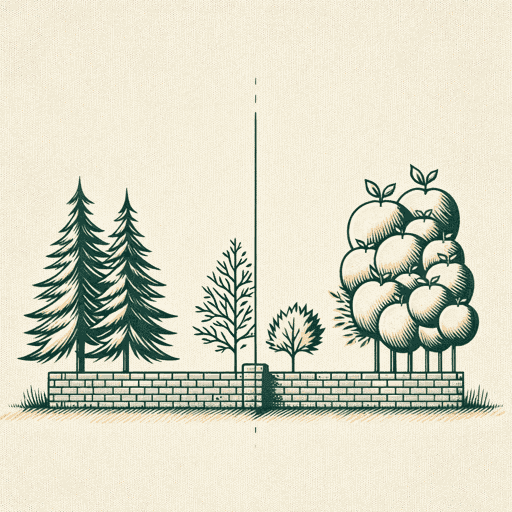
The neighbor, though, is less upbeat than the speaker. He offers no response to the speaker’s games, continuing the repairs in stoic silence, callousing his fingers on the rocks (another barrier) (Line 20). Here the speaker’s tact changes, perhaps out of annoyance for not being indulged. He points out that the wall is not necessary anyways; it’s not as if his apple trees will cross over and eat the neighbor’s pinecones (25-6). The neighbor responds to the speaker’s joke with a terse, stodgy old maxim: “Good fences make good neighbors” (27).
Like the wall, the neighbor did not invent or create this saying. It has been handed down from people who lived before him. It’s possible the neighbor repeats the saying because he is an unimaginative, boring person who prefers tradition to thinking for himself. Or perhaps the neighbor says it to shut down a silly conversation and get back to the work at hand. Both interpretations are possible. While the speaker sees barriers between people as tiresome and old-fashioned, the neighbor believes that healthy boundaries make for healthy relationships.
At this point, the speaker runs into a familiar dilemma for teachers. He wants the neighbor to think more critically about his worldview, but he wants him to arrive at the thought himself, rather than being lectured (28-9). He presses the neighbor on why a wall is necessary at all; neither of them own cattle, which they might have to keep out of each other’s yards (30-1). That is what he says to the neighbor, but he privately reveals a deeper truth about himself to the reader: the speaker doesn’t actually care about apples or pinecones or cows. He is reluctant to accept walls of any kind, and wouldn’t build one unless he knew exactly what it would keep out and what it would keep in. He repeats the first line of the poem: “Something there is that doesn’t love a wall” (Line 35). While he paints his neighbor as being inflexible, the speaker is equally stuck in his own point of view.
The speaker can’t find an argument that would be persuasive to his neighbor and defaults to another fantastical suggestion—maybe it’s elves who take apart the wall (Lines 36-7). He gives up on the idea before floating it. Despondent, he uncharitably compares his neighbor to an “old-stone savage,” a cave man stuck in the Dark Ages. He is frustrated with him not necessarily because he won’t give up his father’s saying, but because the neighbor won’t “go behind” it. He won’t be playful and imaginative and thoughtful; he just wants to finish the work.
Ultimately, the men make little progress. Both are stubborn. The poem ends when, like the speaker, the neighbor repeats the defining line of his worldview verbatim: “Good fences make good neighbors” (Line 45). It is unclear who wins the argument. In presenting two rigidly uncompromising worldviews, each with their own merits, perhaps Frost is challenging us to “go behind” our own preconceptions and break down the black and white “walls” in our own thinking.

Get in-depth, chapter-by-chapter summaries and analysis from our literary experts.
- Grasp challenging concepts with clear, comprehensive explanations
- Revisit key plot points and ideas without rereading the book
- Share impressive insights in classes and book clubs