Mending Wall
A modern alternative to SparkNotes and CliffsNotes, SuperSummary offers high-quality Study Guides with detailed chapter summaries and analysis of major themes, characters, and more. For select classroom titles, we also provide Teaching Guides with discussion and quiz questions to prompt student engagement.
Symbols & Motifs
The Wall
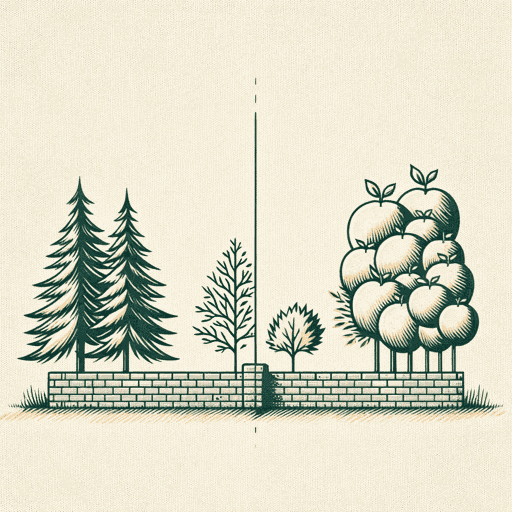
The wall is old, built long before the speaker or his neighbor were born. Its original purpose has apparently been lost to time: it has no clear function now, as there are no cows for the men to keep out of each other’s yards, the speaker jokes (31). But while the speaker makes light of the wall and its upkeep, his more practical neighbor sees its repair as a typical part his work day, an expected component of farm labor. He, more cautious and world-wise than the speaker, prioritizes the maintenance of systems which are already in place before a problem becomes apparent. The more positively-minded speaker sees no problem to keep them separate now, and thus can’t imagine a problem in the future. The wall represents this divergence in their world views, as well as embodying barriers in general, as discussed above.
“The Frozen-Ground-Swell” (Frost)
The “frozen-ground-swell” introduced in Line 2 has several possible metaphorical readings. First, Frost may be using indirect language to pointedly conceal the expected word: frost. “There is something that doesn’t love a wall, / That wants it down” the poet says, and tells us, in the first two lines of the poem, what this “something” may be: himself. As an artist, Frost has an impulse to empathize and make human connections; some part of him wants the walls between him and the rest of humanity torn down.
The frost might also represent the almost supernatural power of nature. The other forces which break down the wall are human—namely the hunters, who remove stones to pursue rabbits more effectively (Lines 5-9), but also the speaker, who wants the wall down, even if he does not dis-assemble it himself. However, the frost breaks down the wall for its own reasons—or perhaps, more frighteningly, for no reason at all. It is a mysterious force in the poem, working only when no one else is around (Line 10). This mildly dreadful air is underlined by the poet describing the frost in euphemistic, roundabout terms—“the frozen-ground swell”—the same way one might speak of a deity or supernatural force. Frost sometimes uses nature, particularly snow and frost, to evoke the mysterious, darker forces of the world, most famously in “Stopping by Woods on a Snowy Evening.”
Finally, on a metaliterary level, the swell beneath the ground may also symbolize the nature of the poem itself. While its message at first appears simple and straightforward, its true meaning swells beneath the surface, disturbing and even toppling the “walls” of the reader’s worldview.
Apples and Pinecones
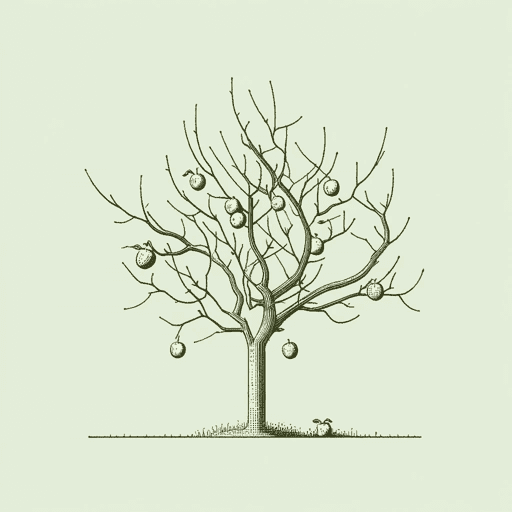
In Line 24, the speaker issues a simple, powerful judgment: “He is all pine and I am apple orchard.” In associating himself with apples (a cultivated, orderly, useful tree) and his neighbor with pine (an inedible, wild tree), the speaker establishes a stark contrast between them. The speaker aligns himself with civilization and enlightenment; his neighbor, with wildness and savagery. This contrast is strengthened by the later image of the neighbor as “an old-stone savage armed” (Line 40). The speaker thinks of himself as more modern, humane, and progressive, in the sense that he is (hypothetically) interested in change and development, while his bumpkin neighbor is stuck in the Stone Age.

Unlock the meaning behind every key symbol & motif
See how recurring imagery, objects, and ideas shape the narrative.
- Explore how the author builds meaning through symbolism
- Understand what symbols & motifs represent in the text
- Connect recurring ideas to themes, characters, and events
Related Titles
By Robert Frost