Mick Harte Was Here
36 pages • 1-hour read
Barbara ParkMick Harte Was Here
A modern alternative to SparkNotes and CliffsNotes, SuperSummary offers high-quality Study Guides with detailed chapter summaries and analysis of major themes, characters, and more.
Important Quotes
“His tire just hit a rock. And he skidded into the back of a passing truck. And that was that. There wasn’t a scratch on him. It was a head injury.”
(Chapter 1, Page 3)
This quote emphasizes the randomness of Mick’s accident. It contextualizes the anguish of the family, who experience Mick’s death as shockingly abrupt and unexpected. The accidental nature of Mick’s death lends support to the importance of bike helmets. Barbara Park suggests that even competent riders can fall for unexpected reasons and that wearing a helmet greatly reduces the rider’s chances of injury or death. In these lines, Park uses short, declarative sentences, rather than melodramatic prose—this serves to highlight the tragedy.
“I can’t think of anything worse than using my brother’s accident as the tear-jerking climax to some tragic story. I don’t want to make you cry. I just want to tell you about Mick. But I thought you should know right up front that he’s not here anymore.”
(Chapter 1, Page 4)
In a technique known as breaking the fourth wall, Phoebe addresses the audience directly—referring to them as “you”—about the nature of Mick’s death and how she is telling this story. In this way, Park encourages readers to feel more closely connected and sympathetic to Phoebe and to her loss.
“Both my parents are totally different from Mick and me. They’re real methodical and organized, and everything is always technically planned out.”
(Chapter 1, Page 6)
Park establishes the timetabled and carefully orchestrated nature of the Harte family’s daily life, which she will later contrast with the absence of structure when Mick dies. This juxtaposition speaks to the magnitude of the family’s grief and devastation at Mick’s death.
“Boy, they sure don’t make tattoos like they did when you were a young lad, do they, Pop?”
(Chapter 1, Page 10)
Mick’s quip over breakfast on the morning of his death characterizes him as entertaining and witty. Humorously, he imitates the style of a curmudgeonly older person, dissatisfied with modern life and harping about how things used to be. Coming from a 12-year-old, the comment is unexpected and funny.
“It kills me when I remember that. Because I hardly cuss at all. At least not as much as most kids my age, I don’t think.”
(Chapter 1, Page 11)
In these lines, Park explores Guilt Over the Death of a Loved One. Phoebe is disappointed at herself for her uncharacteristic swearing at Mick the morning of his death. She feels guilty that her final interactions with Mick did not convey the adoration she felt for him.
“We scratched the letters F-A-R-T in the new driveway that had just been poured next to our house.”
(Chapter 1, Page 12)
Phoebe characterizes her and Mick’s closeness through anecdotes of their cheeky antics as children. In addition to establishing their loving relationship, this example foreshadows the novel’s final scene, when Phoebe commemorates Mick by writing “MICK HARTE WAS HERE” in the setting cement next to their school (88).
“Even Pop had to admit that Mick was a sharp dresser. A lot of girls had crushes on him.”
(Chapter 2, Page 16)
Mick’s sharp fashion sense is a defining part of his character and draws the admiration of friends and family. A tragic downside to Mick’s fixation with fashion, however, is his perception of his bicycle helmet as “dorky.”
“Hey, Pheeb! Wait up! I need you to do me a favor, okay? I need you to ride my bike home from school.”
(Chapter 2, Page 17)
This is another memory which Phoebe dwells on guiltily; she wonders if Mick would still be alive if she had written his bicycle home for him as he asked. This connects to the recurring theme, Guilt Over the Death of a Loved One. Later, Phoebe’s father helps her to see the hundred small variables which led to Mick’s death; he urges her not to carry guilt, although he carries his own for not forcing Mick to wear his helmet.
“My stomach starts to churn. I don’t like having the ambulance turn there. By now it should be speeding off to someone else’s neighborhood. A neighborhood where I don’t know anyone.”
(Chapter 2, Page 18)
As Phoebe hears the approaching ambulance, she feels mounting anxiety; this is indicated by her physical response: “My stomach starts to churn.” Her intuition tells her that the ambulance is coming for someone that she knows. This turns out to be tragically correct; it is the ambulance coming to collect Mick after his crash into the truck. In a few short hours, he will be declared dead of a traumatic brain injury. Again, Park uses short, declarative sentences to slow down pacing and underscore the emotional impact of the moment.
“Then he reached out and closed my brother’s door. ‘NO! DON’T DO THAT! I DON’T WANT YOU TO DO THAT!’ I screamed.”
(Chapter 3, Page 27)
Phoebe interprets the closing of Mick’s door as a powerful symbol of the finality of his death; he will never be coming back to his room. During this very early stage of grief, Phoebe is unable and unwilling to confront this tragic fact, and therefore begs her father to leave the door open.
“I couldn’t move, couldn’t do anything to comfort him. It’s just so scary, you know? Hearing your pop cry like that.”
(Chapter 3, Page 28)
Mr. Harte’s overwhelming flood of tears illustrates his love for Mick, and his absolute devastation over his death. Seeing her father sob is an uncomfortable role reversal for Phoebe; as the child, her parents typically comfort her when she cries. She is unable to assist her father, as she is so shocked and upset with the demonstrative nature of his grief and overcome by her own. Phoebe’s father’s tears increase her distress.
“We mostly just ate cereal standing up if we got hungry. Which was never. So no problem.”
(Chapter 3, Page 32)
The Hartes’ careful and precise routines are upended by Mick’s death. Their loss of appetite illustrates the extent of their grief, as does their loss of organized rituals, such as sitting at the dining table to eat a home cooked meal.
“Sooner or later they almost got around to saying something about God. And how he had a plan for Mick and all. That’s when I’d say I had to go and I’d hang up on them. I mean forgive me, okay? But even now I don’t feel like giving God a big pat on the back for his wonderful plan.”
(Chapter 3, Page 34)
Phoebe is emotionally volatile at this point, a testament to her enormous feelings of grief and loss. Park explores how expressions of sympathy can be received in varying ways by sensitive and emotional mourners. The idea of God taking Mick intentionally distresses Phoebe. On the other hand, she formulates a spiritual understanding of Mick still being present with her, which comforts her. Park suggests that people must find their own spiritual and religious understandings of death to help them to move through immense grief. Additionally, these lines are characteristic of Phoebe’s colloquial, informal voice. She uses a sentence fragment— “And how he had a plan for Mick and all” and conversational language—”I mean forgive me, okay?”
“I never knew how long the dark could last, until the third night after Mick died. That was the night I cried so hard my stomach muscles hurt when I touched them, and my sheets and pillowcase got so soggy with tears and sweat, I got out of bed and lay on the floor till morning.”
(Chapter 3, Page 35)
The night’s length, as experienced by Phoebe as she weeps, indicates her intense loneliness through seemingly endless nights of grief. The intensity of her tears, which leaves her muscles sore and her bed soaked, illustrates her love for Mick and the magnitude of her devastation at his death. Here, Park illustrates The Impact of Grief.
“I hung up on her. I know it was wrong to do that, but I didn’t care what the counselor said. And I didn’t care about how much better everybody felt after saying his name. I didn’t feel better. I would never feel better. Feeling better sounded almost disloyal.”
(Chapter 4, Page 38)
Zoe describes an exercise that Mick’s peers participated in with the grief counselor at school, emphasizing its cathartic effects. Phoebe is affronted that people are feeling better after Mick’s death; for Phoebe, this feels inappropriate and disrespectful to Mick. The idea of recovery makes Phoebe feel disloyal to Mick’s memory and to the tragedy of his passing. These lines introduce Learning to Live With Loss as an important theme; at this stage, Phoebe is unwilling to begin the journey of healing.
The text uses repetition for emphasis and to create a sense of urgency: “I didn’t care what the counselor said. And I didn’t care about how much better everybody felt after saying his name. I didn’t feel better. I would never feel better. Feeling better sounded almost disloyal” (bold added for emphasis).
“Over on his nightstand was the unopened cigar he’d found in the street coming home from kindergarten one day. It was the kind that new fathers hand out when their wives have a baby. The kind that has ‘IT’S A GIRL!’ on the paper band at the top. But at the time, Mick thought it meant the cigar was a girl, and he named it Helen.”
(Chapter 4, Page 39)
Mick’s hilarious eccentricity is characterized by Helen the cigar. His misconstruing of “IT’S A GIRL!” shows his sense of comedy, as does the fact that he kept the cigar on his nightstand for the next seven years. Phoebe’s choice to go into Mick’s room to look at his possessions shows that she is beginning to move on to the next stage of the mourning process. She commemorates Mick joyously in these moments, rather than only being occupied with the tragedy of his death. Learning to Live With Loss is an important theme in this chapter.
“‘Because if God is everywhere the way they say he is, and Mick is with God, then Mick could be everywhere too.’ She raised her eyebrows. ‘Couldn’t he?’ For a second I couldn’t even answer. I was still just so amazed, you know? At how right it felt.”
(Chapter 5, Page 52)
Zoe helps Phoebe to come up with a spiritual belief system which allows for Mick’s continued presence in her life; this brings Phoebe a huge sense of comfort and solace, as she feels connected to Mick even while missing him intensely. Park stresses the importance of having a support network when moving through intense grief, as characterized by Zoe. Park also suggests that spiritual or religious beliefs can bring solace in understanding and accepting death.
“Mick’s kindergarten teacher went to the microphone next. She told about the spring pageant, when Mick broke away from the Dance of the Bumblebees and started spinning wildly all over the stage, doing a dance completely his own. After the show—when she asked him why he’d done it—he told her that ‘the music got in his pants.’”
(Chapter 6, Page 60)
Mick’s memorial service again emphasizes his eccentric and hilarious personality. These stories underscore the tragedy of Mick’s death, as they further humanize him.
“All at once, Lindy Nelson sort of lunged for my hand, and squeezed it way too tight. And Amy Lightner blurted out something incredibly stupid, about how her mother said to say hi to my mother.”
(Chapter 7, Page 66)
The people in Phoebe’s life struggle to connect with her and show their sympathy in a manner that she receives positively. Most often, Phoebe is angry at these commiserations, deeming them to be in some way inappropriate. Park suggests that sometimes it is near impossible to support a person in exactly the right way when they are suffering from an enormous loss. She does not condemn the efforts of Phoebe’s friends, but rather highlights Phoebe’s distress and volatility during this time.
“I buried my face in his pillow. And I breathed in the smell of him.”
(Chapter 7, Page 68)
Unlike in the days after the accident—when Phoebe couldn’t bear to go near Mick’s room—his room and bed now bring Phoebe comfort and solace. Learning to Live With Loss is an important theme here: Phoebe continues to navigate her challenging and ever-changing grief, seeking out the memories and physical reminders of Mick which call to her.
“‘He called me a Wascally Wabbit,’ she managed. But as soon as she said it she started to laugh. We both did. She came into the room then. It must have been unbelievably hard for her to do that. But she came in, and sat down on the edge of his bed.”
(Chapter 7, Page 72)
Mrs. Harte’s newfound strength is indicated by her visiting Mick’s room, something she has not been able to do since his death. Phoebe and her mother laugh over memories of Mick’s infuriating and hilarious tendencies, and experience the catharsis of commemorating Mick with joy. By discussing him in past tense and spending time in his bedroom, Phoebe and her mother are beginning to accept the unimaginable fact of Mick’s death and to celebrate his memory together. Previously, Phoebe and her mother had been navigating their grief separately; it had been an isolating and lonely process for them both. In this scene, they reunite as a supportive family.
“As he was talking, he turned around to make sure I was paying attention. While his head was turned, our car drifted into the next lane and two cars blasted their horns at us. He made a quick recovery. It was close, though. It was also the end of his talk on good judgment and common sense. And the lesson I ended up learning that day was that even smart guys with chemistry degrees do stupid stuff once in a while.”
(Chapter 8, Page 76)
As Phoebe’s father lectures her about car safety, he almost has an accident. For Phoebe, this highlights that “good judgment and common sense” are not enough to guard against life’s accidents, which can be random and unexpected. She uses this to reflect on Mick’s choice to not wear a helmet because he never crashed before. Park suggests that life is unpredictable, and that people must exercise caution and use whatever potentially life-saving measures are available.
“‘This was my brother’s bike helmet,’ I said. My voice broke, but somehow I forced myself to finish. ‘He said it made him look like a dork.’”
(Chapter 8, Page 81)
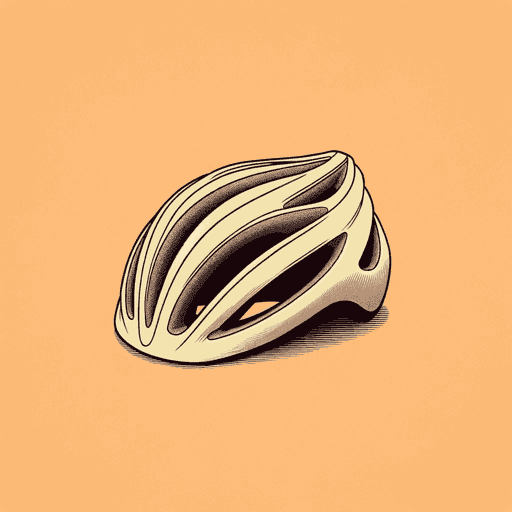
At the school assembly, Phoebe discusses the importance of bicycle helmets in saving lives. To illustrate her point, she displays Mick’s helmet, still new in the box. Park uses Mick’s tragic death as an example of the potentially tragic consequences of choosing not to wear a bicycle helmet because it is viewed as uncool. Bicycle safety is a recurring motif throughout her work; she draws explicit attention to it in her Author’s Note, which lists statistics on the effectiveness of helmet use in reducing instances of injury and death.
“But all at once, he heaved this God-awful sigh and whispered, ‘If only I had made him wear his helmet.’”
(Chapter 9, Page 85)
Mr. Harte reveals that he is harboring guilt over Mick’s death; he feels responsible for not forcing his son to wear the helmet that he bought him. This quote explores Guilt Over the Death of a Loved One; both Phoebe and Mr. Harte regret their choices leading up to Mick’s death. Their anguish illustrates the extent of their love for Mick, and their desire for the situation to be undone.
“MICK HARTE WAS HERE.”
(Chapter 9, Page 88)
This phrase, which is also the title of the novel, is engraved in the concrete by Phoebe. It shows that she is Learning to Live with Loss; she celebrates Mick’s memory, and commemorates him in a way which feels appropriate for their loving, silly sibling relationship. This calls back to Chapter 1, where Phoebe describes how she and Mick wrote “F-A-R-T” in the setting concrete of their driveway.

Unlock every key quote and its meaning
Get 25 quotes with page numbers and clear analysis to help you reference, write, and discuss with confidence.
- Cite quotes accurately with exact page numbers
- Understand what each quote really means
- Strengthen your analysis in essays or discussions