67 pages • 2-hour read
Midnight Rider
A modern alternative to SparkNotes and CliffsNotes, SuperSummary offers high-quality Study Guides with detailed chapter summaries and analysis of major themes, characters, and more.
Chapters 18-27Chapter Summaries & Analyses
Chapter 18 Summary: “Midnight Escapade”
Caleb leads Hannah and Will down stone steps into a dark, narrow tunnel beneath the Province House, lighting candles to guide their way. After traversing the tunnel, they emerge through a trapdoor and into a forested lot next to an alley. Caleb distributes handbills and tacks, and the trio begins posting warnings on buildings throughout Boston, targeting Tory lawyers and judges.
While replacing a handbill that has already been torn down, Will is spotted by a British soldier, and the group flees back to the tunnel entrance, narrowly escaping their pursuers. They return through the passage, re-entering the Province House at dawn. Hannah changes out of her disguise and then obtains hot water from Annie, another maid, for Meg, using it as an excuse for her lateness. When Meg questions her disheveled appearance, Hannah lies and claims to be unwell. Meg reveals that Catherine reported Hannah missing from her bed. She warns that she will be watching Hannah closely.
Chapter 19 Summary: “Hannah’s Impertinence”
During the weeks after the midnight handbill distribution, Hannah disguises herself as Hans and regularly rides Promise through the tunnel, learning the patrol routes around Boston. She overhears General Gage discussing the Continental Congress meeting in Philadelphia. He and his officers mention Dr. Joseph Warren’s resolutions; General Gage has an informant who has alerted him that Paul Revere might be carrying them to Philadelphia, Pennsylvania.
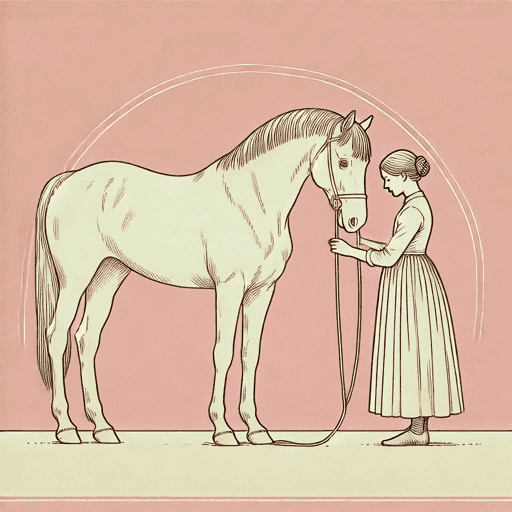
One morning, Hannah and Caleb discuss the general’s informant and Will’s recent courier missions on Promise for the Committees of Correspondence. In the stables, Hannah and Caleb hear Gabriel, General Gage’s horse, shrieking in distress and rush to help. When General Gage enters and attempts to subdue the horse with a whip, Hannah intervenes, using her gentle approach and a soothing song to calm Gabriel. Caleb discovers that an errant orange kitten frightened the horse. When General Gage orders the kitten drowned, Hannah pleads for its life. The general relents, allowing Hannah to keep the kitten, provided that it remains hidden and out of the stables. Hannah plans to keep the kitten in the room that she shares with Catherine. Caleb is astonished that Hannah was able to get the governor to soften enough to smile.
Chapter 20 Summary: “Midnight Prank”
Hannah names the kitten Gypsy. In October, Mrs. Gage announces that the Province House will host regular parties for British officers. As Hannah helps prepare for these gatherings and serves at them, she observes Lieutenant Pratt watching Meg possessively. Caleb tells Hannah that Will wants to meet her at Valley Acres that night. When Meg asks Hannah to perform imitations for entertainment, Pratt scolds Hannah for her “impertinence” when she initially refuses. Hannah then imitates the lieutenant’s haughty manner, amusing Meg but enraging the officer.
Later, Hannah confides in Catherine about her Patriot activities, and Catherine expresses concern for her safety. That evening, Hannah meets Will at Valley Acres, where he updates her on events in Cambridge and Salem, including riots against Tory lawyers and judges. He mentions that Hannah’s aunt Phoebe is reportedly seeing a Tory lawyer named Mr. Parley, and Hannah predicts that Phoebe will marry him for his money. After their conversation, Hannah rides Promise to the Common, where British soldiers are camped. Noticing Lieutenant Pratt’s horse, Red Roy, tied uncomfortably tight, she releases him as a prank before fleeing on Promise.
Chapter 21 Summary: “Stop That Horseman!”
The following day, servants at the Province House discuss Lieutenant Pratt’s missing horse. Caleb reports that Red Roy was found near Frog Lane. When the conversation turns to General Gage, Hannah claims that he has been perfectly kind and fair to her. Lydia commends Hannah’s supposed loyalty to General Gage, which Hannah internally rejects.
Later, Caleb confirms that Hannah responsible for unhitching Red Roy and warns her that Lieutenant Pratt is furious, as he has been disciplined by Colonel Maddison. They discuss the Patriots’ Committee of Safety, which has been formed to surveil both the British and the Tories. Will is also a member of this committee. Caleb warns Hannah not to get into trouble with her late-night escapades on Promise.
That night, Hannah (disguised as Hans) rides Promise to the Common to observe soldiers’ night maneuvers. She disrupts their formation by galloping through a line of mounted soldiers, who shout, “Stop that horseman!” (188). Hannah then unlatches a paddock gate, freeing more soldiers’ horses, before escaping pursuit. She hides with Promise near the waterfront as soldiers search for the “Yankee rebel,” threatening to shoot the culprit.
Chapter 22 Summary: “An Encounter With Paul Rever
After evading her pursuers, Hannah returns Promise to Valley Acres. On her way back, she is stopped by soldiers and Lieutenant Pratt. Thinking quickly, Hannah (as Hans) adopts a British accent, identifying herself as “Hans Gibbs.” Paul Revere and Will arrive, vouching for “Hans” and claiming that “he” was with them, successfully diverting Pratt’s suspicions.
After Lieutenant Pratt leaves, Paul confronts “Hans,” scolding “him” for recklessness. Shaken, Hannah apologizes, forgetting to maintain her male voice. Paul notices her mother’s ring and realizes that “Hans” is actually a young girl. Hannah admits her identity and states her desire to help the Patriot cause. Paul advises her to help by discreetly observing at the Province House rather than playing risky pranks after dark. Will escorts Hannah toward the tunnel, and they discuss the espionage networks on both sides. Will warns Hannah to stop her pranks and avoid riding Promise, as all mishaps that occur at night are now blamed on the so-called “Midnight Rider.” He also warns her against riding Promise, as the soldiers know to look for a black horse. When Hannah returns to the Province House, Catherine warns her that Meg knows she was out and wants to see her immediately.
Chapter 23 Summary: “Hannah and Meg’s Secret Pact”
Meg confronts Hannah, revealing that she has followed Hannah and now knows about the tunnel. Meg mistakenly assumes that Hannah is having trysts with Caleb. Relieved that her true activities remain unknown, Hannah goes along with this misunderstanding. Meg reveals her plan to use the tunnel to meet Lieutenant Pratt and demands Hannah’s silence, threatening to expose her to Mrs. Gage otherwise.
Meg proposes that they cover for each other, with Hannah impersonating Meg in bed if Mrs. Gage checks on Meg during her absences. Hannah agrees to the pact but persuades Meg not to tell Lieutenant Pratt about the tunnel, suggesting that General Gage might need it as an escape route. Meg agrees to keep the tunnel secret from him, and the two reach an accord.
Chapter 24 Summary: “A Letter Without Words”
Several days after the pact with Meg, Hannah accompanies Catherine to Christ Church. As they pass the Old South Meeting House, Catherine shares the history of the Boston Tea Party. Hannah does not understand the minister’s message during the service. Afterward, Catherine introduces Hannah to Joseph Greenleaf. Later, Catherine explains that he is the secret Whig publisher of “The Royal American” (209), a newspaper disguised as a Tory publication. Catherine also explains that the minister’s decision to quote the Bible verse stating that an enslaved person “cannot serve two masters” means that it is impossible for a person to maintain divided loyalties (210).
Two weeks pass, with Hannah staying at the Province House and refraining from her midnight rides on Promise. One day, Mrs. Gage tasks Hannah with delivering a letter to Phillis Wheatley, giving her a sealed letter and an unsealed permission slip for the journey. Hannah discovers that the permission slip is blank except for an iris drawing. When the sentry refuses to let Hannah leave, she realizes that “Mrs. Gage must have sealed the wrong letter” (213). She wonders why Mrs. Gage would have wanted her to deliver a letter without any message on it.
Chapter 25 Summary: “Who Owns That Horse?”
Hannah returns to Mrs. Gage, pointing out the mistake with the letters. Mrs. Gage appears startled, takes the papers from Hannah, and prepares a new letter for Phillis. As she moves to obey, Hannah notes that Mrs. Gage looks distressed.
Hannah successfully delivers the corrected letter to Phillis, who receives it secretively and offers no reply. Mystified by this behavior, Hannah visits Promise at Valley Acres. The stable hand approaches and warns Hannah to stay outside the fence, revealing that an army officer inquired about Promise’s owner just that morning. Hannah learns that the stable hand named Will as the owner, and she worries that Promise is being linked to the Midnight Rider—a complication that could potentially implicate Will.
Chapter 26 Summary: “An American Thanksgiving in a British Mansion”
General Gage orders a Thanksgiving banquet at the Province House in order to respect American customs. The servants, including Hannah, prepare an elaborate feast. When Lydia disparages the idea of celebrating an American holiday, Mrs. Gage overhears and angrily rebukes her, asserting, “I happen to be an American!” (222).
Before the feast begins, Hannah and Catherine don their best garments. They discuss Mrs. Gage’s divided loyalties, and Hannah reflects on the recent sermon about the impossibility of serving two “masters.” Catherine says that Gypsy has been particularly eager to escape lately.
When Hannah helps Meg dress for dinner, Meg reveals her plans to use the tunnel that night to meet Lieutenant Pratt while Hannah takes her place in bed. During the post-dinner entertainment, Hannah spots an escaped Gypsy under a lady’s chair and causes a commotion in her efforts to catch the kitten, toppling the woman and startling guests. Pratt suggests drowning Hannah and Gypsy both.
Chapter 27 Summary: “Meg’s Rendezvous”
Meg intervenes, claiming Gypsy as her own pet. General Gage allows Meg to keep the kitten, saving Hannah from punishment. After the Thanksgiving banquet, Meg gives Gypsy back to Hannah with a warning to be more careful. That night, Meg prepares to leave through the tunnel to meet Lieutenant Pratt. Hannah locks Meg’s door and waits in Meg’s bed, passing the time by speculating about the resistance. She also contemplates Will’s good looks and wonders whether he cares for her. She eventually falls asleep. When Mrs. Gage knocks to check on Meg, Hannah successfully impersonates Meg’s voice.
Meg returns very late, disheveled and upset. She recounts her miserable experience. She found the tunnel to be cold and dark; her candle went out, and she fell. Lieutenant Pratt was late because he had to escort another lady home first. Indignant, Meg vowed never to speak to him again. Despite the difficult situation, Meg confirms that she did not tell Pratt about the tunnel. Hannah offers comfort as Meg, still believing that Hannah uses the tunnel for trysts, marvels at Hannah’s supposed devotion. Hannah doesn’t correct Meg’s misunderstanding about her own activities.
Chapters 18-27 Analysis
These chapters mark a new level of intensity in the resistance efforts, and the secret tunnel beneath the Province House therefore functions as a symbol of the underground networks of resistance that operated just beneath the awareness of British authority figures during the pre-revolutionary period. In this way, Harlow uses the tunnel as both a literal passageway and a metaphorical representation of the hidden channels that facilitated colonial opposition. When Hannah, Caleb, and Will use this passage to distribute handbills threatening Tory lawyers, they participate in a tradition of clandestine opposition that the architecture itself enables. The tunnel’s connection between the seat of British governmental power and the streets of Boston represents the permeable boundary between official authority and popular resistance, and this symbolic geography reflects the broader historical reality that revolutionary movements operated through informal networks, challenging the status quo via channels that authorities could neither fully monitor nor control.
As Hannah’s subversive acts grow bolder, her efforts toward the rebels’ cause help her make progress with Finding Personal Growth Amid Political Awakening. Specifically, her political consciousness develops when she participates directly in resistance activities rather than waiting on the sidelines or engaging in abstract ideological discussion. Notably, she officially transforms from a passive observer into an active participant when she begins distributing handbills and engaging in outright espionage rather than innocently happening to overhear political conversations. Her new maturity and political awareness are explicitly identified when she declares her thoughts to Catherine, stating, “[W]e Americans are all indentured servants to England—just as I am indentured to the Gages. England wants our taxes and loyalty, but they’ve taken away our town meetings and fair trials. They’ve blocked our harbor” (175-76). With these words, Hannah delivers a sophisticated political analysis that connects her personal circumstances to the broader colonial grievances that she sees around her.
By using Personal Bondage as a Mirror for Political Oppression, Hannah undergoes a crucial intellectual breakthrough that transforms her understanding of the conflicts threatening her world. Although Paul Revere condemns her activities as the Midnight Rider, these antics nonetheless represent her attempt to assert some measure of agency within a system that is designed to render her powerless on multiple levels. Through these nighttime escapades, Hannah develops practical skills in strategic thinking, risk assessment, and operational security, and although she does not yet know it, she is gaining skills that will serve her well when she later puts everything on the line to help the Patriots’ cause.
The motif of disguise and deception reappears frequently amid Hannah’s activities, and the practical necessity of masquerading as “Hans Gibbs” delivers a broader commentary on the performative nature of identity during periods of political upheaval. By slipping into her male disguise at will, Hannah assumes a dynamic role that peacetime social structures would prohibit her from inhabiting, and her uncanny ability to adopt different voices and accents makes her ideally suited to espionage. She also has no qualms about dissembling—even with those she likes—in order to further the cause of resistance. For example, she easily builds upon Meg’s assumption that she has been using the tunnel for trysts with Caleb, never letting on that her nighttime escapades are political rather than romantic in nature.
The prevalence of disguise and false identities throughout these chapters manifests in several different ways, and Mrs. Gage’s elaborate subterfuge and coded correspondence suggest that deception is a necessary survival skill for those who find themselves caught between conflicting loyalties. Although the full significance of her messages to Phillis Wheatley has yet to be revealed, it is clear that Mrs. Gage also holds dangerous secrets and engages in sophisticated acts of concealment and misdirection. Her activities also highlight the difficulties of Navigating the Challenges of Divided Loyalties, for as an American-born woman who is married to the British military governor, she struggles to decide which metaphorical “master” to serve. Although she carefully conceals her clandestine support for the resistance, she sometimes breaks out into more definitive declarations of loyalty, as when she declares, “I happen to be an American!” (222), and quashes the complaints of the errant Lydia.
Mrs. Gage is not alone in her ambivalence, as Hannah’s own position mirrors this complexity on a smaller scale, especially when she experiences genuine gratitude toward General Gage for his personal kindness regarding Gabriel and Gypsy—even as she works to undermine his political authority. However, Harlow uses Catherine’s explanation of the minister’s warning about serving two “masters” to indicate the fundamental choice that all revolutionaries must make, for they must ultimately choose one single side to support, even when doing so causes personal anguish. This issue reflects the historical reality that the American Revolution was simultaneously a war of independence and a civil war that divided families, communities, and individuals who held conflicting allegiances.

Unlock all 67 pages of this Study Guide
Get in-depth, chapter-by-chapter summaries and analysis from our literary experts.
- Grasp challenging concepts with clear, comprehensive explanations
- Revisit key plot points and ideas without rereading the book
- Share impressive insights in classes and book clubs