Mind of My Mind
53 pages • 1-hour read
Octavia E. ButlerMind of My Mind
A modern alternative to SparkNotes and CliffsNotes, SuperSummary offers high-quality Study Guides with detailed chapter summaries and analysis of major themes, characters, and more.
Character Analysis
Mary
Mary is the protagonist of Mind of My Mind and a narrator for her sections. At first, she has a romantic interest in Doro. Over time, she grows romantically involved with her husband, Karl. Mary is one of Doro’s projects, created through his thousand-years-long breeding program, and he has great hopes that she will be able to bring his active telepaths together. Mary succeeds, creating the Pattern, marking the turning point in her life. Before this, Mary possesses a starkly different view of life. She is selfish and concerned primarily with her relationship with Doro. When Doro tells her that she is to marry Karl, she asks him to take Karl’s body so that they can be together instead. This will kill Karl, and Doro chastises Mary for her callous approach to their relationship: “I wonder if you’re going to grow out of that […] Your total disregard for human life—except for your own, of course” (25-26). Doro believes that Mary is self-centered and sees her as focused solely on her own goals of independence and greed. While this reflects himself, he needs her to be more aware and sympathetic, fearing that if she realizes the power he intends for her, she will consume others’ energy with no regard for their lives.
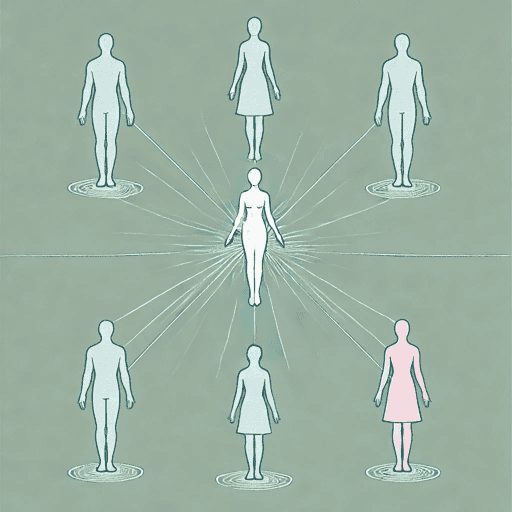
After Mary undergoes transition, she eases Doro’s fear, proving to be in control of her powers and able to stop herself from killing others for her own needs. In the two years after the transition, as Mary builds the Patternist society, she begins to see herself as a foil to Doro. She commits to acting and leading differently, seeking to preserve the lives of her Patternists instead of manipulating them for her own gain. When the confrontation between Mary and Doro becomes inevitable, Mary strategizes with Karl, keeping the safety of the Pattern in mind: “I said no, Karl. It’s like you said last night. I’m going to have to fight him. I’ll take from you then, and from the others. But not until then. I’m not the vampire he is. I give in return for my taking” (224). Mary distinguishes herself from Doro by means of contributing to her people, seeing it as a mutually beneficial relationship. She views Doro as a vampire that takes and consumes in a destructive way that only benefits him. She understands that she is like him because of her abilities but controls herself and her hunger, creating an inclusive community in which the Pattern exists to benefit all.
Doro
Doro is the primary antagonist of Mind of My Mind and a foil to Mary. Doro differs greatly from the other characters, despite also possessing incredible abilities. Doro is immortal and can switch bodies at will by consuming the minds and energy of others, like a parasite. When he does this, he feeds on them, filling him with intense emotions and sensations. In his long life, Doro creates a breeding project, in which he seeks to foster the creation of a race of telepaths, either to act as a community of super-powered beings around him or as a strong society for him to dominate. His goal is in part realized when Mary forms the Pattern, and he tells the First Family that they can be the culmination of his life’s work: “That’s what I’ve been trying to achieve for thousands of years. It’s what I’ll be on my way to achieving if the seven of you can stay together on you own without killing each other” (135). Doro wants these seven telepaths to coexist and begin building a society for him to dominate, replacing the current system of fractured and spread-out communities across the world. At the core of Doro’s identity is his need for power and domination, leading him to control the cultivation of mutations and telepathic communities, all with the vision of creating a new world for him to rule.
As the Pattern develops and grows under Mary’s guidance, Doro’s vision of the Patternists and his role within their society diminishes. He not only realizes that he cannot join them but also that he cannot lead and dominate them while Mary exerts power over them. Mary knows this, and as she begins to challenge Doro and push back against his demand that she stop growing the Patternists, she taunts him with his failure. When she tells him they no longer need him and that they can leave him behind, she can see how worried he is: “The hatred that had flared in his eyes was concealed again. I suspected it was more envy than hatred […] He envied me for doing what he had bred me to do—because he was incomplete, and he would never be able to do it himself” (218-19). When Doro underwent transition as a child, something went wrong, and he never gained the telepathic abilities he should have, instead gaining the ability to switch bodies. Ever since, he’s craved community and power, and now that his goals are realized, he must contend with the fact that it is not enough. He cannot join them, and they form their society around the premise of supporting one another, at odds with Doro’s treatments of telepaths.
Karl
Karl is the love interest, guide, and trusted ally of Mary. Karl is a powerful telepath, one whom Doro wants to pair with Mary, believing he can help her survive transition. Karl is fiercely independent, using his abilities to take a house from a mute and keep Vivian, his lover, with him despite Mary’s entrance into their lives. When Mary establishes the Pattern, and brings him under control, he resists it, acting out violently against Vivian. When he tries to escape Mary and drive away, he finds himself pulled back, as though on a leash. He, like the other actives, resents feeling like those they manipulate: “Once he was there, at least Mary’s pattern would stop pulling at him, dragging at him, subverting his will as easily as he subverted Vivian’s” (107). Karl uses his abilities to control Vivian and remove her free will. He does this to his own benefit, but once he feels a similar control over him by Mary, he rages against it. Many of the telepaths, including Karl, use their abilities in ethically questionable ways, treating others as though they do not deserve independence, without thinking of the consequences. Mary’s control forces Karl to consider his place in this new community, as well as his relationship with Mary.
Though Karl initially resists Mary and the Pattern, he later becomes an ally to her. He never truly adjusts to her control over him or accepts the knowledge of her immense power, but he comes to trust her as she trusts him. Mary knows this and cultivates their relationship, often opening her mind to him and sharing her plans. She understands their relationship and the reason behind his wariness but trusts that he is comfortable: “I was a predator, and frankly, not a very good one. But that was all right, because Karl wasn’t as sure as he had once been that he minded being the prey. He was a little wary, a little amused. He had never really hated me” (198). Karl, like the others, grows comfortable with community and trust among telepaths and finds his place within the new group. He accepts his status beneath Mary and easily takes on the task of helping her. Karl is dynamic because he demonstrates how the Patternists accept Mary and her leadership because of the trust she instills in them and what she gives to them. He serves Doro before being with Mary, but he acted out of fear with Doro rather than the love and respect that he develops for Mary, even asking her to have a child with him.
Emma
Emma is the long-time love interest of Doro and the only other immortal character in Mind of My Mind. Whereas Doro can switch bodies to lengthen his life, Emma is a master healer with incredible longevity and the ability to shapeshift. She has complete control of her body, and Doro respects her enough to not threaten taking her body. Her immortality draws Doro close to her, and their relationship hinges upon this shared experience. Before the events of the novel, Emma was adamantly opposed to Doro’s abuses of telepaths and his breeding program, making him promise not to interfere with her own children: “At first Doro had valued her and her new strain too much to punish her for her ‘arrogance.’ Later, as he became accustomed to her, to the idea of her immortality, he began to value her as more than just a breeder. She became a companion to him” (11). Doro’s perspective of Emma changes over time, and she becomes a comfort to him. Not only do they carry on a romantic relationship, Emma provides advice and support for him. She takes Mary in to help her grow up in a safe environment and shares her opinions on what Doro should do when the Patternists grow too large.
When Doro returns after two years away, he finds Emma, and she shares her disapproval of Mary’s actions and the Patternists’ growth. In a similar way to how she once resisted Doro’s power and abuse, she criticizes Mary’s power. She dislikes how the Patternist abuse the mutes and is wary of how Mary acts like Doro: “She’s got too much power, Doro. She terrifies me. She’s doing exactly what you always said you wanted to do. But she’s doing it, not you. All those people, those fifteen hundred people in the section, are hers, not yours” (168). Though Emma at times disagrees with Doro’s plans, she sees him as the de facto leader of telepaths and the only person who should act with so much power. She worries that Mary seizes too much power, and is concerned with how she will yield it, particularly with how Mary might wield it against Doro and herself. Emma and Mary often feel animosity toward each other, and Emma believes that the treatment of the mutes signifies how the Patternists view anyone who is not a telepath.
Seth Dana
Seth Dana is one of the members of the First Family and, like the others, is a dynamic character who undergoes change because of the Pattern. While others’ transformations stem primarily from their inclusion into a community, Seth’s emerges from the changing relationship with his brother, Clay. Seth is an active telepath while Clay is latent. As a latent, Clay struggles with his abilities and leads a painful life. Seth feels a strong obligation to Clay, and his life revolves around protecting and helping him, even if it means bringing Clay with him to Forsyth: “He and Clay would go to California. He couldn’t leave Clay here alone in the desert. And he couldn’t stay to see Clay settled in. He couldn’t stay for anything at all. Clay’s independence would have to wait” (74). Seth’s purpose is to help Clay, and when Mary discovers that the Pattern will turn Clay into an active, he wants to help his brother through the transition.
Mary challenges Seth’s strong devotion to his brother, refusing to allow him to help Clay through his transition. Mary argues that Seth is too close and caring, meaning he will coddle Clay through the pain, impacting the success of transition. He resents being pushed to the side initially but answers the call to help others through transition when Mary asks. With Clay no longer needing his help, Seth enters a new phase of his life, repurposing the skills he used to try to help Clay to now help others: “He was a kind of matchmaker, sensing easily and accurately which seconds would be compatible with which latents. His worst mistake had been his first, his decision to second Clay. Mary had stopped him then” (174). Though Seth could not help Clay, his experience with his brother proves invaluable in finding the Patternists best suited to help others through transition. Through community and Mary’s guidance, Seth finds a purpose best suited for him.
Rachel Davidson
Rachel Davidson is one of Mary’s strongest detractors when she and the rest of the First Family arrive in Forsyth. Rachel is a powerful healer with similar abilities to Mary and sees Mary as a challenge to her independence and power. When Mary exerts her control over others, Rachel warns her not to threaten her in the same way, only to be chastised for believing she is Mary’s equal: “Don’t think you can ever handle me that way! Of course not, I sent back, Unfortunately for you, the only way I can handle you is by killing you. She dropped away from me mad and scared and ashamed of herself for being scared” (133). Rachel’s embarrassment stems from her staunch freedom and control over others through religion. Rachel is used to dominating others and resents being in the place of her victims. When she realizes that Mary can defeat and control her, she feels fear and shame. She is uncomfortable in this new territory and does not like questioning her place in the world.
Like the others, Rachel proves to be a dynamic character, finding a place in Mary’s newly formed community. Much of Rachel’s animosity toward Mary stems from her former life, in which being isolated and independent was a means of survival. Now, with a community forming around her, Rachel slowly begins to accept this new kind of life and see its benefits. Rachel’s change in perspective is severe as she goes from being Mary’s most serious antagonist in the Pattern to one of her most dependable allies: “[I[f I have to stay here, I’d rather live in a community of actives—if such a thing is possible. I’d like us to stop hiding so much and start finding out what we’re capable of […] What I’m working up to is that I’m willing to help you” (159). Rachel wants a new life within the Pattern and does not want to continue living with the pain and shame of isolation that comes with being a telepath. She has a complicated relationship with her abilities as well, needing to drain others to use them. The ethical complications of her abilities push her to discover a new way of life in the Pattern. This culminates with her adopting the responsibility of locating and bringing in the most vulnerable and abused of latent telepaths into the Pattern.
Jesse Bernarr
Jesse Bernarr is very close to Rachel in Mind of My Mind, not only being her love interest but also initially exhibiting a similar resistance to Mary and predilection to abusing his powers. Jesse uses his telepathic abilities to control an entire town, making them like him and obey him. He is the most popular man in town, taking any girl he wants on a date and scoring free meals at will. When he encounters people from out of town, Jesse toys with them, either using his power to condition them or physical force to compound his sense of superiority: “[S]ometimes Jesse like to expend a little effort […] Sometimes Jesse liked to reassure himself that even without his extra abilities he would still be better than Tom’s kind” (82). Jesse sees being a telepath as being better than everyone else. He relishes the fight with Tom because it permits him to prove that he is better. This sense of self makes his opposition to the Pattern and Mary’s control severe, as he refuses to be under the control of anyone but himself. He is the first to attack Mary, believing that his strength gives him an advantage, though he is quickly humbled.
Mary’s demonstration of her power over Jesse establishes the First Family as a community and acts as the catalyst for the change in the other characters. Jesse, also a dynamic character, shares a similar transformation to Seth. Both men find their roles in the community adapted to best suit their abilities. While Seth has a talent for connecting and supporting people, Jesse excels at conditioning and controlling the mutes. While his role in Forsyth is like his role in his hometown, his purpose changes. He no longer abuses the non-telepathic but protects them: “People who abuse mutes are my responsibility […] Because mutes are my responsibility. Hannibal is even a relative of mine. I’ll take care of him” (182-83). When another Patternist abuses mutes, Jesse sees it as his responsibility to bring justice, even though the violent Patternist shares a common identity with Jesse. Jesse’s change is sparked by the new sense of community the Pattern offers. While before he conditioned others to serve his own selfish needs, he now does so to serve the needs of the community and makes sure to curb any abusive behavior against them.
Ada Dragan
Of the six actives Mary connects to, Ada is possibly the most tortured. She struggles with the mental noise of others around her, and it impacts her ability to function. While the other members of the first family share this, she is unique in her desire to find others like her and foster a sense of community. She craves not being alone, and this pushes her to hold onto her relationship, despite the pain it causes her: “She would never be well again, never be able to go among people without being bombarded by their thoughts. And facing this, she could not possibly continue her present living arrangement. She could no longer force Kenneth to stay […] to force an obscene, artificial love” (87). While the others build lives for themselves, Seth with Clay, Rachel with her followers, and Jesse with his conditioned hometown, Ada is isolated and falling apart. She is truly alone and in pain, with no positive outlook of the future. When Mary connects her to the Pattern, she relishes the contact, and looks toward Forsyth with excitement, even as the others resist it, and view it with a sense of annoyance and dread.
When Ada finds her place in the Patternist society, it is one as unique as her. Unlike the others, she is quick to accept Mary and offers little resistance as the First Family comes together. She is dynamic, however, as her life and purpose change once she becomes comfortable in the community. Before the Pattern, Ada could not be around people, but with the Pattern’s protection and benefits, Ada finds that she has the unique ability to work with children, the most mentally volatile part of society: “It was a responsibility that had chosen Ada more than she had chosen it. She had discovered that she worked easily with children, enjoyed them, while most Patternists could not work with them at all” (188). Ada takes on the role of a caregiver and guide to young children struggling with their developing telepathic abilities. She becomes the person she needed when she was at her most vulnerable, providing community and guidance to those who need it. She is comfortable with this responsibility, a position in which no other actives excel, and helps create the community and support she once needed.
Jan Sholto
Jan Sholto is one of the members of the First Family drawn to Forsyth by Mary’s pattern. Jan is a bitter and isolated woman who fosters no relationships. She hides from her children, sending them away to live with a family she conditions to care for them. Jan struggles to be around the unprotected minds of children and feels no special connection to her children, not even crying when she discovers that her son dies. Jan’s immediate resistance to connecting with her daughter when she visits demonstrates her lack of concern for others: “Jan automatically blocked any mental contact with her. She had learned painfully that children not only had no depth but that their unstable little animal minds could deliver one emotional outburst after another” (89). Jan is wary of emotion, only engaging with objects, as her telepathy allows her to see impressions of the past through objects. Jan’s relationship with her abilities is negative and toxic, defined by the pain it brings her rather than the potential connections it could foster.
In Forsyth, Jan struggles immensely to find a place among the First Family. Her prejudices combined with her fear of Doro and resistance to her abilities make her an outcast. She immediately and fervently hates Mary and wants nothing more than to leave the Patternists. Even though she attempts to foster a romantic connection with Karl, Mary soon brushes her aside and threatens her. However, over time, she finds a place in this new society and happiness through her abilities. She uses her telepathic abilities to imbue objects with information, creating educational objects and art, which helps her connect with others: “Some of the new Patternists who were related to her began coming to her to learn to use whatever psychometric ability they had. She taught them, took lovers from among them, and worked to improve her art. And she was happier than she had ever been before” (203). Jan proves the most dynamic of the First Family, as she is starkly different after the Pattern is formed. She goes from not wanting a family to deriving happiness from them where before she only found pain. Her art helps her reassess her relationship with her abilities and gives her a new outlook on her life.
Clay Dana
Clay Dana is the brother of Seth and a minor character in Mind of My Mind. Clay represents the pain and isolation of those telepaths that do not transition and remain latent throughout their entire lives, unable to cultivate the skills to protect their minds from others. When Seth first connects to the Pattern, he tries to help Clay create a quiet life, knowing the detriment Clay’s latent abilities have on him: “Clay was slowly deciding to kill himself. It was slow because, in spite of everything, Clay did not want to die. He was just becoming less and less able to tolerate the pain of living” (69). Clay and other latents suffer through life, with no hope of their anguish diminishing. Mary sympathizes with this plight, and the discovery that the Pattern can help Clay by forcing him into transition inspires Mary to grow the Pattern, catalyzing the eventual confrontation with Doro. After Clay undergoes transition, he finds that he loses his telepathic abilities and instead gains telekinetic ones. This change allows him to see a new, peaceful future ahead of him: “Lady, you read my mind. You’ll see that’s no tragedy to me. All that so-called power ever brought me was grief. Now that I’m free of it, I think I’ll go back to Arizona—raise myself a few cows, maybe a few kids” (162). Through Clay, Mary can see how her work helps others, and this influences her and her hopes for the Pattern. Clay’s importance reaches beyond this novel, as his telekinetic abilities inspire him to create an efficient means of space travel. In Mind of My Mind’s sequel, Clay’s Ark, the spaceship that brings a deadly disease back to Earth is named after its inventor, Clay Dana.
Vivian
Vivian is the most prominent mute featured in Mind of My Mind and acts as foreshadowing to the development of a mute enslaved class in Patternist society. Vivian is the love interest of Karl when he and Mary first meet and marry. Karl conditions her to stay with him, and she offers little to no resistance, particularly when Karl conditions her to accept that Mary will become his wife: “Doro had told me Karl wouldn’t let her really resent me or feel angry or humiliated. Wouldn’t let her! She was a Goddamn robot and she didn’t even know it. Or, rather, she did know it but wasn’t allowed to care” (37). When Mary learns of this and meets Vivian, she is uncomfortable with the position the girl is in. She has no free will and is subject to the whims of Karl. Mary describes her as a robot and reflects on how she is not even aware of this, her mind completely controlled by Karl. The control Karl has over Vivian is later replicated across Patternist society, as the mutes they condition to be their servants are in the same position as Vivian, obedient and unable to fight against it.

Unlock analysis of every major character
Get a detailed breakdown of each character’s role, motivations, and development.
- Explore in-depth profiles for every important character
- Trace character arcs, turning points, and relationships
- Connect characters to key themes and plot points