53 pages • 1-hour read
Mind of My Mind
A modern alternative to SparkNotes and CliffsNotes, SuperSummary offers high-quality Study Guides with detailed chapter summaries and analysis of major themes, characters, and more.
Prologue-Part 1Chapter Summaries & Analyses
Prologue Summary
Content Warning: This section features discussion of child abuse, suicidal ideation, suicide, physical abuse, emotional abuse, and graphic violence.
Doro visits the home of his widow and three-year-old daughter in the city of Forsyth, California. When Rina opens the door, she does not recognize him. He is in a new body: When he speaks, she hears his voice. Doro is over 4,000 years old and can transfer his consciousness from one body to another, a mutation that grants him immortality. He finds others with strange abilities, most often telepaths, and operates a breeding program to cultivate specific powers.
Mary, his daughter, is a result of this program, and Doro has high hopes for her. When Doro finds bruises on Mary’s legs, he angrily confronts Rina, who says that she cannot handle Mary’s telepathic abilities. When she is around Mary, Rina hears voices and experiences headaches. Doro used to kill women like Rina who struggled in his breeding program after bearing children. Now, he offers to move Rina in with a distant relative, Emma, who can help raise Mary.
Doro visits Emma, who is also immortal, though in a different way. She is a shapeshifter and a gifted healer. Doro finds her as an old woman and explains that he wants to move Mary and Rina in with her. Emma initially pushes back, not wanting to raise another child.
Emma disproves of Doro’s breeding program and only participated because he threatened her children. Long ago, Emma convinced Doro to change his ways by threatening to let herself die. They’ve since been companions, supporting each other in their immortality. When Emma asks why Doro cares so much for Mary, he explains that she is important to his plan of uniting his telepaths. She does not believe it is possible, but she agrees to take Mary in.
Part 1, Chapter 1 Summary
Mary, now 19, is reading in her room when a man knocks at the door, looking for Rina. When Mary tells him that Rina is not home, he tries to force his way in. She hits him in the head with a frying a pan and leaves, taking her purse to go shopping in Los Angeles. Later, as she climbs on the bus, she is hit with the intense thoughts of others, and she freezes. Though her telepathic abilities are developing, she cannot control them until she undergoes transition—the traumatic and dangerous change that will grant her full telepathic abilities.
At home, Mary finds Rina and Emma waiting. They scold Mary for her violence. Mary is horrified to learn that the man, now at the hospital, is Emma’s grandson. She dislikes Emma, believing she exercises too much control over Doro.
Doro wakes Mary up the next day and takes her for a drive. They stop outside of a jail, and a Mary is overwhelmed by intense emotions and claustrophobia. Doro warns Mary against violence and crime, saying that she could never survive a packed jail with her telepathy. Afterwards, they go shopping, and Doro brings Mary to a hotel. There, Doro tells Mary that she is to be married to someone who will help her through transition.
Doro brings Mary to her soon-to-be husband’s house. It is a mansion in an affluent neighborhood. Doro warns Mary to be careful with him: He is an active telepath, not a latent, meaning he is through transition. Doro hopes that this man, Karl Larkin, and Mary can gain respect for one another. Back at the hotel, Doro and Mary make love, and Mary, in love with Doro, accepts her new future. When her mind grows more sensitive and she begins to suffer, Doro takes her to Karl, believing she is near her transition.
Part 1, Chapter 2 Summary
Doro visits Karl before introducing him to Mary. He hopes that they will be the first telepaths to successfully coexist. Usually, they kill each other to keep their minds from melding and losing their individuality. Doro finds Karl at the pool with Vivian, a woman Karl mentally controls and wants to marry. Karl insists on keeping Vivian around, though Doro warns this might lead Mary to violence. He wants Karl to help Mary through her challenging transition. Karl reluctantly agrees.
Doro brings Mary to Karl a few days after she turns 20. Before they depart, he tells Mary about Vivian, and she grows violently upset. Doro hits her, and she bites him. It is a threat, as she knows that if she hurts him enough, he will be forced out of his body and into the nearest: hers. She tells Doro that one day she will know how to hurt him.
At Karl’s house, Karl gives Mary a tour. When she asks how he can help her through her transition, Karl explains that he is meant to shield her from the thoughts and emotions of others. Mary asks about the house, and Karl admits that he used his abilities to force its previous owner to sign it over to him. Noticing the bruise on Mary’s cheek, Karl asks why she and Doro fought. Mary admits that she loved Doro and will need time to move on from the disappointment of not marrying him. Mary questions what purpose Doro will have for her once she becomes active. Karl suspects Doro will tell her when the time comes.
Five days after their first meeting, Karl and Mary wed. After the ceremony, Mary leaves the house and takes the bus to visit Emma. Emma is unexpectedly kind to Mary, advising her to wait there to send a message to Doro. When Karl finally comes to pick her up, Emma reminds the man of his upbringing. Later, Karl tells Mary that Emma raised him. When he was three, his mother held his hand over a flame, burning it away. When Doro found out, he killed the woman and brought Karl to Emma, whose granddaughter, a healer, regrew his hand. Afterwards, Doro found Karl a new family. Later that night, Karl comes to Mary’s bedroom and silently joins her in bed. Afterwards, he goes to leave, but Mary invites him back, not wanting to be alone.
Part 1, Chapter 3 Summary
While Karl and Doro visit one of their businesses, Karl is overwhelmed by his connection with Mary and realizes that she is in transition. On their way to Mary, Doro warns Karl to give her the space to undergo transition herself. Though Doro threatens to kill Karl if Mary does not survive the transition, he also warns that even if she survives but fails, Karl will want her dead.
When they arrive, Karl rushes to Mary, feeling her experience a man burning to death in a house fire. Vivian is with Mary and admits to worrying that Mary will replace her, though she is not jealous because of Karl’s conditioning. Karl tells her she is free to leave but asks for another day until they can speak. She and Doro leave, and Karl joins Mary.
As Mary experiences others’ pain and fear, Karl finds himself drawn in through his connection with her. When he pulls away from the experience of a man confronting a large snake, he realizes that by experiencing this with Mary, he blocks her from fully experiencing it. He considers that this may weaken her or hinder her transition and stops. Throughout the night, as Mary struggles, Karl tries to teach her how to shield her mind from others. As morning comes, he feels her connect to other active telepaths. She draws his mind in as well, and he cannot break the connection.
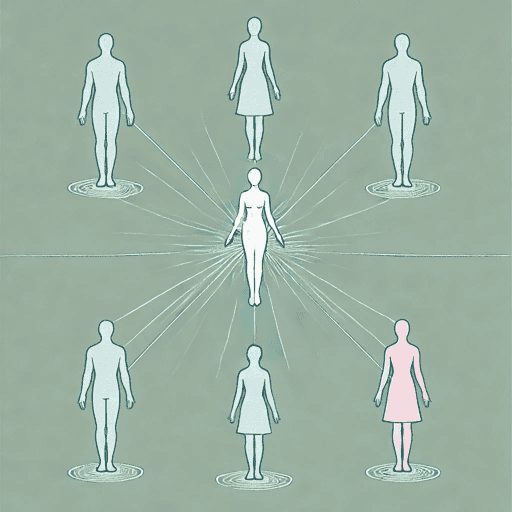
Mary cannot help herself as she reaches out to other minds. She connects with six other telepaths in the final moments of her transition and sees them as points of light creating a pattern. They struggle against her, but she keeps them close, feeling as though she has a right to them. When Mary cannot find a way to let them go, she falls asleep.
Karl wakes Mary up the next morning and asks her to let him into her mind to break the connection. She realizes that she finally has a mental shield. She slowly takes it down and senses Vivian and Doro elsewhere in the house. When she looks into Doro’s mind, she feels the sensation of falling and pulls back, believing she was about to die. Karl explains that Doro can easily take over a telepath’s mind. When she lets Karl into her mind, he cannot discover a way to break the link and criticizes her for thinking she owns him and the others, like Doro does. Mary promises that if he can find a way to break them apart, she will comply.
Prologue-Part 1 Analysis
In the Prologue of Mind of My Mind, Doro visits Mary, whom he has high hopes for as a strong telepath. His purpose in creating the breeding program, from which Mary derives, is to create a race of powerful telepaths. His practices are a result of his own abilities, which instill in him skewed values of human life: “For all but the first few centuries of his four-thousand-year life, he had been struggling to build a race around himself […] he had an untold number of failures, dangerous or only pathetic, which he had destroyed as casually as other people slaughtered cattle” (9). Doro can switch bodies at will, making him immortal. This allows him to view others as resources to advance his own aims. Doro’s body-switching also functions metaphorically as a form of possession, turning the lives of others into disposable tools for his survival. This literal erasure of selfhood and of the value of others underscores the violence at the heart of his power. Doro’s breeding program embodies The Ethical Complications of Oppressive Power as Doro abuses his abilities to manipulate and control others to create a race of telepaths. Unchallenged, he treats others as he wishes, with no consequences for his actions because of his power. He promotes incest and even kills to force unions in pursuit of the perfect mutation or telepath. He believes he owns and controls the telepaths he creates, demonstrating his unchecked power, sense of hierarchy, and lack of belief in human autonomy, which he distorts as necessary for societal progress.
The community that the Pattern—or Mary’s connection with the other six telepaths—forms in Mind of My Mind is a catalyst for most characters to question and reform their identities. As active telepaths, they struggle around others because they absorb emotion, and it is not until they connect to the Pattern that they can tolerate each other and lead communal lives. Mary experiences The Development of Identity Within Community even before the Pattern is established, as she grows closer to Karl. Karl is a more experienced telepath and someone who can guide her through the turbulent times of her transition. Karl’s presence marks a turning point for Mary—not only romantically or psychically, but in her shifting view of strength as something rooted in connection rather than control. Mary realizes that she craves companionship, foreshadowing the later development of Patternists’ community: “I didn’t want to be alone. I couldn’t have put into words how much I suddenly didn’t want to be alone, how much it scared me” (47). Before Karl, Mary prides herself on her isolation, independence, and strength, not bonding with Emma or Rina. When Karl enters her life with the knowledge to help her transition, she sees an opportunity to form a connection with someone like herself. On their first night together, she experiences a new closeness, and it exacerbates her feelings of loneliness. This vulnerability marks Mary’s first real step toward becoming a leader capable of empathy, not just dominance. This same realization occurs in each of the Patternists as they join the Pattern and experience community.
The extraordinary abilities that the characters possess place them in a unique social positions. Guided by the precedent Doro sets, the active telepaths see their power as a means to dominate those who have no abilities and cannot fight back. When Mary creates the Pattern, however, her ability to control others expands to include other telepaths, making her like Doro. When she first meditates on what the Pattern is, she realizes that she feels as though it is right for her to control those she connects with: “I realized that there was something really proprietary about my feelings toward them. As though I was supposed to have charge over them and they were supposed to accept me” (59). This moment signals Mary’s moral crisis: She both resists and mirrors Doro’s logic, feeling the same pull that Doro feels over others. Mary, however, is less confident in this feeling of ownership as others, making The Struggle for Domination Over Others one in which she doesn’t seek to fully control those around her or use her abilities to overwhelm and terrorize them. She sees herself as a foil to Doro and commits to a different kind of leadership. Yet her claim that others feel “like mine” introduces ambiguity into her intentions, leaving open the question of whether the Pattern will ultimately liberate or subjugate its members. Octavia E. Butler uses this tension to blur the line between protection and possession, and between community and coercion.

Unlock all 53 pages of this Study Guide
Get in-depth, chapter-by-chapter summaries and analysis from our literary experts.
- Grasp challenging concepts with clear, comprehensive explanations
- Revisit key plot points and ideas without rereading the book
- Share impressive insights in classes and book clubs