Mind of My Mind
53 pages • 1-hour read
Octavia E. ButlerMind of My Mind
A modern alternative to SparkNotes and CliffsNotes, SuperSummary offers high-quality Study Guides with detailed chapter summaries and analysis of major themes, characters, and more.
Symbols & Motifs
The Pattern
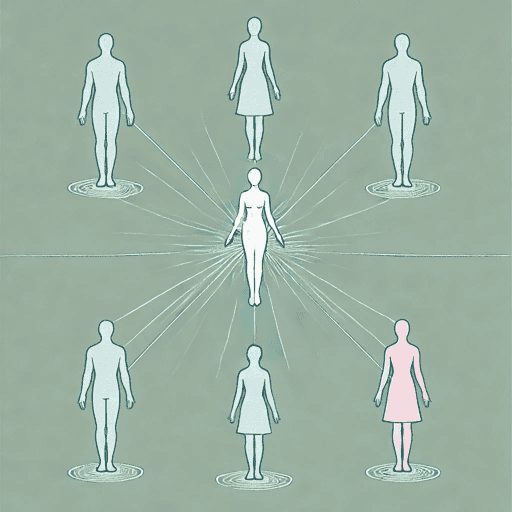
When Mary forms the Pattern with other telepaths, she sees it visually manifest as an actual pattern. The Pattern connects her with other minds, placing her in the middle. As she looks at the Pattern and the people connected to it, its visual appearance begins to represent the significance the Pattern will have in their lives. The Pattern is a motif for the theme of The Development of Identity Within Community. As the actives struggle against the Pattern and Mary, they also become more familiar with each other: “Then they were long strands of fire, stretching away from me, but somehow never quite stretching quite far enough to escape. They were writhing, shapeless things, merging into each other, breaking apart, rolling together again as a tidal wave of light, as a single clawing hand” (59). The Pattern irrevocably connects the telepaths together, and their struggles against it signify their own resistance to others, each so accustomed to being on their own and independent. And yet as the struggle, they interact with each other, never able to break away completely and always drawn back together. This view of the Pattern foreshadows the First Family’s experiences. It showcases the initial refusal of the actives to accept the Pattern, as well as the inevitable union they can’t escape, tied to Mary as they are. As they come together, they retain their individual identity while simultaneously becoming a community, each an individual part to a more important, united whole.
The House
Karl’s house in Forsyth becomes the central focus of the Pattern as the First Family comes together there and Mary, as head of the Pattern, lives there. It is from this house that the Pattern flows out, and the house itself represents the power the telepaths have. Karl’s house is spectacular, with many amenities that leave Mary surprised when she first sees it: “Karl and I stood on the porch and looked out at his park of a backyard. Tennis court. Swimming pool and bath house […] Grass. Trees. There was a multicar garage off to one side, and I got a glimpse of a cottage almost hidden by trees” (39). When Mary discovers that Karl essentially stole the house, using his telepathic abilities to convince someone to sign it over to him, she realizes that they are quite similar, and that only the development of their abilities separates them: “You stole it! Oh, God. Beautiful; you’re human, after all. And here I have to make do with shoplifting” (41). Through Karl’s theft, the house becomes a motif that represents the theme of The Ethical Complications of Oppressive Power. Karl uses his abilities to steal rather than earn the house and enjoys a rich life through the manipulation of other peoples’ free will. By doing so, the house becomes more than just the base of the Patternists’ operations but a symbol of their oppressive power and willingness to subjugate those they deem beneath them to their will.
Mary’s Eyes
Mary is one of the many experimental products of Doro’s breeding program, and as such, takes notice of her appearance. She is very conscious of her eyes, which are green, thinking of how they symbolize her status as a project for Doro. Doro is careful with his breeding programs, selecting certain bodies for himself before partnering with women in order to manipulate a certain mutation. Therefore, Mary’s eyes act as a symbol for Doro’s creation of a telepathic race: “My eyes—traffic-light green, Rina called them—and my skin, a kind of light coffee, were gifts from the white man’s body that Doro was wearing when he got Rina pregnant. Some poor guy from a religious colony Doro controlled in Pennsylvania. Doro had people all over” (25). Mary sees her eyes as a legacy of the body Doro used to father her. This body came from across the country, from a different community, and was chosen solely for the genetic potential it could create in a partnership. These circumstances solidify Mary’s belief that she is an experiment above all else for Doro and demonstrate the lengths to which Doro will go to ensure he accomplishes his goals. Mary’s physical features do not hold the same legacy they might if her father and mother were in a loving and organic relationship and are instead the byproduct of Doro’s actions. Without a permanent body, Doro cannot pass down any physical attributes, further complicating the already murky relationship Mary has with him as both father and lover.

Unlock the meaning behind every key symbol & motif
See how recurring imagery, objects, and ideas shape the narrative.
- Explore how the author builds meaning through symbolism
- Understand what symbols & motifs represent in the text
- Connect recurring ideas to themes, characters, and events