Mistakes Were Made
47 pages • 1-hour read
Stephan PastisMistakes Were Made
A modern alternative to SparkNotes and CliffsNotes, SuperSummary offers high-quality Study Guides with detailed chapter summaries and analysis of major themes, characters, and more.
Prologue-Chapter 17Chapter Summaries & Analyses
Prologue Summary: “A Prologue That Story-Wise Is Out of Order”
In an illustration, Timmy Failure and his blank-eyed business partner, a polar bear named Total, are in a car that Timmy has driven straight into the living room of the wrong house. Timmy points out that driving a car into someone’s living room is harder than it looks.
Chapter 1 Summary: “Blah, Blah, Blah, Blah, Blah”
Timmy Failure comes from a long line of Failures—the family name was once Fayleure, but this was changed at some point in past generations. Timmy is small and wears a “distinctive scarf.” His polar bear, Total, wandered south in search of food and ended up in Timmy’s house. The family cat didn’t survive the incident, but Timmy has a polar bear now instead.
Timmy presents this book as a historical record of everything he has experienced and learned about working as a detective for his and Total’s investigative agency, TOTAL FAILURE, INC. According to Timmy, there are four main obstacles to his work: his mom, his school, his best friend (whom he refers to as an idiot), and his polar bear/business partner.
Chapter 2 Summary: “The Candy Man Can’t ‘Cause He’s Missing All His Chocolate”
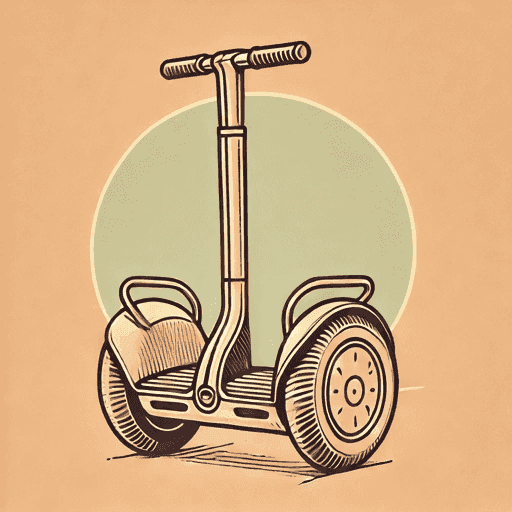
Timmy’s detective agency gets a call from a schoolmate named Gunnar, who claims his bucket of Halloween candy was stolen. Timmy secretly takes his mother’s Segway, which he is forbidden to use, and he and Total head to Gunnar’s house. Total immediately starts eating Gunnar’s garbage, and Timmy wishes he would be a little more classy.
In Gunnar’s house, they find an empty table where a candy bucket used to be. Timmy decides to charge $4 per day plus chicken nuggets for Total. On his way out, he passes Gunnar’s brother Gabe’s room. Gabe is on the bed, surrounded by candy wrappers and covered in chocolate. Timmy keeps walking, writing in his notepad that Gabe is “not tidy.”
Chapter 3 Summary: “The Timmy Empire Strikes Back”
Timmy doesn’t like his teacher, Old Man Crocus, because he’s “187 years old” and always seems grumpy (16). One day, Timmy decided to draw on the class’s world map, filling in all the countries in which he hoped to set up his detective empire. When Mr. Crocus erased it, Timmy erased the teacher’s work in return. Timmy was then sent to sit with three kids whom he considers not very bright, but whom the teacher thinks Timmy could learn from. The first is Molly, who smells like oranges, and the other is Rollo Tookus. The third kid is a girl whose face is obscured in the accompanying illustration, because Timmy doesn’t want to talk about her.
Chapter 4 Summary: “Meet Rollo Tookus”
Timmy thinks that Rollo only appears smart because he studies constantly. Rollo hopes to get into Stanford one day, but Timmy finds it all very boring. He reminds himself never to be like Rollo by writing it on the bottom of his shoe. Timmy often goes over to Rollo’s house in the evenings, where he talks about his detective adventures while Rollo studies. Upon hearing about the candy incident, Rollo suggests that Gabe might be the culprit, but Timmy finds that ridiculous.
Chapter 5 Summary: “Problems at the Office”
Timmy’s “office” is really just his mother’s closet, which is filled with clothing. Timmy wants his mother to get rid of her clothes, but that isn’t an option, so Total tries wearing them instead. Timmy plans to rent a space in a skyscraper that costs $54,000 per month; he hopes that the candy case will bring him recognition and more business.
Chapter 6 Summary: “It Ain’t Me, Gabe”
Timmy relents and decides to interview Gabe. Gabe openly tells Timmy that he was in his room eating candy that night. Timmy writes in his notebook that Gabe has an alibi.
Chapter 7 Summary: “Sad-Eyed Lady of the Lunch Recess”
Timmy tells himself that he is popular and only sits alone at lunch because he’s too busy working on his detective agency. Total isn’t allowed inside the school grounds, so he sits outside the fence all day, staring at Timmy and the other children. Sometimes Timmy goes to sit near Total and pet him through the fence. Timmy also often talks to the lunch lady, a woman named Dondi Sweetwater. He doesn’t mind hanging out with her, even though she tends to talk a lot. Dondi gives Total Rice Krispies squares, which Timmy asks her to keep secret.
Chapter 8 Summary: “Once Upon an Iceberg”
Timmy can tell that his mother is stressed by the way she rides her Segway back and forth down the block. At night, she reads to him, even when she’s had a hard day. Timmy provides his own stories, featuring his own illustrations. The stories always involve a seal being eaten by a polar bear, because these stories are the only way Total can sleep at night.
Chapter 9 Summary: “Sumo Interlude”
Timmy wears a sumo suit and stands behind a tree looking conspicuous. He waits for the girl who cannot be named to pass by, in hopes that he can roll her off the curb.
Chapter 10 Summary: “More Office Problems”
Timmy’s mother catches him skipping school and gets angry with him. He’s aware that his mother is worried about not having enough money but doesn’t see what his own contributions to her stress might be. Meanwhile, Timmy tries to turn Total into the agency’s secretary, but Total just pulls the phone out of the wall.
Chapter 11 Summary: “Test Day”
Timmy thinks tests are silly and usually just draws pictures on his answer sheets instead of trying to answer the questions. Today, Timmy’s teacher tells the class they will be completing the test in groups of four. Timmy’s partners are his desk mates, Rollo, Molly, and the girl he doesn’t want to name. Molly seems to have a crush on Timmy and is happy about the assignment; when she claps, the smell of tangerine floods the room, and Timmy imagines everyone as a living tangerine.
Chapter 12 Summary: “Why Fuzzy-Wuzzy Wasn’t”
Timmy takes the Segway without permission again and goes to a classmate named Max’s house to investigate a dead hamster. Max explains he just found him that way, and Timmy starts to look for clues. He asks Max if the hamster was ever involved in crime, and Max answers no. Timmy ignores this and takes one of the hamster tubes with Max’s name on it, claiming it as forensic evidence. When he leaves the house, Timmy realizes his mother’s Segway is gone.
Chapter 13 Summary: “The Small Business Community Is Under Siege”
At the parent-teacher meeting, all Timmy can think about is the missing Segway and how he can get it back without his mother noticing it’s gone. Timmy’s mother and Mr. Crocus talk about how, if Timmy’s habits don’t change, he will be the first student that his teacher has ever held back. Timmy waits for his mother to defend him, but she just nods her head.
Chapter 14 Summary: “Orange Juice. Shaken. Not Stirred.”
The other day, Timmy intentionally failed the group test in class, causing everyone’s grades to fall. Rollo is now panicking about the next test, and his head appears to shake from stress. Rollo spends the night studying while Timmy tries to figure out how to get the Segway back.
Chapter 15 Summary: “Please Don’t Squeeze the Detective”
Timmy attaches a bucket of chicken nuggets to a string and uses it to lure Total along in a wagon, their new form of transportation. He knows Total is humiliated, but Timmy thinks it is necessary. He makes his way to another case at a house covered in toilet paper. Unfortunately, the case is already being investigated by Timmy’s rival and the girl he previously refused to name: Corrina Corrina.
Chapter 16 Summary: “The Chapter I Was Hoping to Put Off. The One About the Beast.”
Timmy considers Corrina Corrina to be in line with some of history’s most evil people, such as Genghis Khan and Attila the Hun. Corrina Corrina has her own detective agency in an office that her father lets her use in a fancy building downtown. Timmy envisions himself renting space in a skyscraper next door so he can drop shoes on her from above. Corrina Corrina also has all sorts of fancy gadgets she uses in her investigations, but Timmy thinks that those things are unnecessary.
Chapter 17 Summary: “A Change Is Gonna Come”
Timmy has filed almost 150 complaints against Corrina Corrina, but none of them seem to be of any use. Desperate to compete and promote his business, Timmy buys a hat that reads “BISCUITS” on it and starts handing out free cheese. Unfortunately, everyone who comes by is preoccupied by the mysterious lack of biscuits.
Prologue-Chapter 17 Analysis
The narrative introduces Timmy at the height of his problems and the story’s climax, beginning in medias res, or in the middle of things, before going back to where it all began. Timmy drives a car into his old teacher’s living room by mistake, sparking intrigue and a whole host of questions to be answered: How did Timmy end up driving a car? Why did he crash into his teacher’s house? Where are the adults in this situation? By beginning at this pivotal moment, Stephan Pastis immediately creates tension, driving the plot forward.
These opening chapters introduce Timmy Failure, the protagonist, and highlight the challenges he’ll face throughout the novel. Timmy’s whole existence is irony and contradiction, beginning with his name itself. Timmy believes himself to be a total success story, although his story is titled “Mistakes Were Made.” The name of his detective agency, “Total Failure, Inc.,” expresses the tension between what Timmy believes he is communicating and what is really being said: He hopes that such a bold name will attract business while failing to see that he is announcing himself as a failure. Timmy also has a desire to appear professional and organized, but his only equipment is a “detective’s log,” just a notebook, and he is constantly distracted by his imaginary friend, Total. Timmy is also a failure at investigation and logical deduction: He doesn’t notice clues that are right in front of his face (like Gunnar’s brother eating chocolate) and always comes to illogical, even counterproductive, conclusions. Timmy also frequently hyperbolizes, particularly when talking about people in his life or about his success. He says that Mr. Crocus is “187 years old” (16) and believes he will one day soon be able to afford an expensive office space downtown. In many ways, Timmy represents a typical kid with a rich imagination, but by offering up this status quo, the book also prepares to test Timmy’s character and methods, setting his character up for growth and maturity as the story develops.
Timmy is not an “evil” character, but he does have serious flaws that affect others in negative ways. He is highly self-serving and thinks only about his goal of having a successful detective agency, illustrating the narrowness of his point of view: He is completely focused on himself and his goals, and he treats family, friends, and even school carelessly. Timmy has several real-world problems, such as his mother’s financial issues, her new boyfriend, and his failing grades at school, and the detective agency provides a safe place for Timmy to escape. The theme of The Destructive Power of Lies is introduced almost immediately in this context, as Timmy unthinkingly builds a series of falsehoods to get what he wants without considering their effects on his relationships. Timmy also shows his shortsightedness in his relationship with Rollo; he calls his best friend an idiot and often uses him for tasks that he doesn’t want to complete himself. In addition, Timmy and his mother have a close relationship, illustrating The Unconditional Bond Between Mother and Son, but his lies damage it. Timmy’s character arc over the course of the novel will involve becoming more aware of how his actions affect others and finding the balance of Being Oneself While Being Open to Improving.
Timmy’s narrow perspective is also illustrated by his focus on Corrina Corrina and his unfounded belief that she is his enemy. His preoccupation with Corrina Corrina acts as a major obstacle to his success because he spends far too much time investigating her. In doing so, Timmy loses his mother’s Segway, which only compounds his issues and causes him to lie to her more. However, he blames Corrina Corrina for the Segway’s disappearance instead of taking responsibility, showing his continuing inability to accurately deduce the source of a problem. Continuous dramatic irony arises from this pattern, as the illustrations always point directly to the answer, but Timmy always misses it.
This dramatic irony is also supported by the book’s illustrations, which often highlight the difference between Timmy’s perception of events and their true nature. The illustrations also offer hints about the effects of Timmy’s actions on others, effects that he doesn’t see: When he writes “Don’t be like Rollo” on the bottom of his shoe (22), he unthinkingly puts his foot on the table, allowing Rollo to see the message. The illustration of this event shows Rollo’s hurt expression, something that Timmy doesn’t notice. In addition, Timmy’s mother isn’t shown directly in these chapters—her dialogue is presented from outside the frame, highlighting how peripheral Timmy sees it as and how little attention he is paying.

Unlock all 47 pages of this Study Guide
Get in-depth, chapter-by-chapter summaries and analysis from our literary experts.
- Grasp challenging concepts with clear, comprehensive explanations
- Revisit key plot points and ideas without rereading the book
- Share impressive insights in classes and book clubs