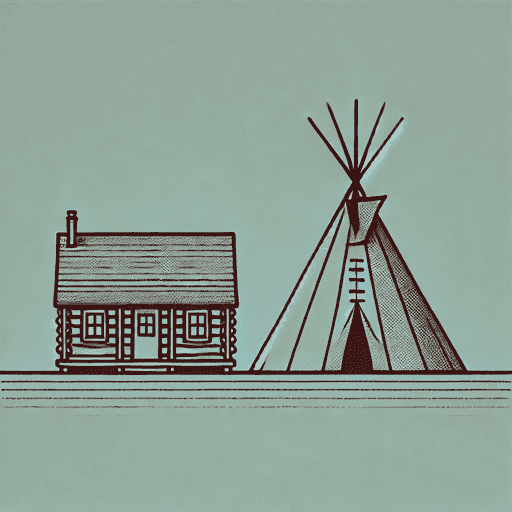
Moccasin Trail
54 pages • 1-hour read
Eloise McgrawMoccasin Trail
A modern alternative to SparkNotes and CliffsNotes, SuperSummary offers high-quality Study Guides with detailed chapter summaries and analysis of major themes, characters, and more.
Chapters 1-5Chapter Summaries & Analyses
Content Warning: This section of the guide contains depictions of racism, illness and death, and animal cruelty and/or animal death.
Chapter 1 Summary
In October 1844, as dusk falls over the Oregon Territory mountains, young trapper Jim Keath moves upstream to set his last trap near the Powder River. His appearance is unusual: He wears white trapper’s buckskins but has long braided hair with an eagle feather, and his light brown eyes carry a guarded, watchful expression. His mind automatically reads wilderness signs while he consciously dwells on simpler matters like food and fire. The icy stream reminds him that winter is coming, and he wishes he and his partner, Tom Rivers, could stay in the mountains, but the beaver are gone.
If Tom returns to Taos, Jim feels he must return to Absaroka, the Crow homeland; yet he ran away from the Crows only a year ago, desperate for the company of white trappers. He carefully sets his trap near a beaver lodge, remembering once hiding inside such a lodge from Sioux warriors. He touches his necklace of bear claws and blue beads for luck, troubled by the emptiness the vanished beaver have created within him.
His hand touches the four scars on his forehead, reminders of the grizzly attack seven years earlier that that led to his adoption into the Crow community. He was 11, fleeing the wounded bear in panic. When he finally fired, the bear was upon him, its claws tearing through flesh before he lost consciousness. He awoke three days later in a Crow lodge.
Back in the present, Jim spots movement on a distant hillside—likely scouts he identifies as “Digger Indians”—and returns to camp, where his dog, Moki, greets him. He builds a fire and begins cooking stew, feeling lonesome as he anticipates Tom’s departure. The smell of meat reminds him of Red Deer, his Crow adoptive mother. He recalls waking in her tepee, where she claimed him in place of her dead son and later fastened the grizzly’s claw necklace around his neck. Over six years, under Red Deer and her husband, Chief Scalp Necklace, he learned warrior ways, counted coup at 14, and earned the right to wear an eagle feather and experienced his own medicine dream.
At 16, seeing Crow warriors return with blond scalps from slain trappers reminded him of his white mother and awakened a renewed longing for his birth family and white life. He ran away, stealing the beautiful mare, Buckskin, and rode to Taos. Now that life is crumbling too. Tom emerges from the trees, laughing as he dodges Jim’s thrown knife. They banter, but Jim dreads knowing Tom leaves tomorrow for Nez Perce country and possibly California. Tom invites Jim along, but Jim refuses—he earned his coup feather stealing Nez Perce horses. Suddenly their mule tenses, sensing danger. Jim suspects the same “Digger” scouts. Both men grab rifles and take cover.
Chapter 2 Summary
After five tense minutes, a white flag appears from the bushes. Two Indigenous men whom Jim calls “Digger Indians” emerge. Tom recognizes the older one as Big Bull, who addresses Jim by his Crow name, Talks Alone. After the visitors eat and perform a pipe ceremony, Jim gives Big Bull gunpowder to speed things along. Big Bull explains that a trapper called Black Jaw—whom Tom identifies as Bill Hervey—paid him to find Talks Alone and deliver a message.
Big Bull produces a crumpled, dirty piece of paper. Tom recognizes it as a letter. Jim, who can no longer read writing fluently, asks Tom to decipher it. Tom struggles but makes out crucial words: “Jim,” “dead,” and the name “Jonnie” at the end. Jim acknowledges he once knew someone named Jonnie. Tom reads more fragments: “still,” “valley,” and pieces of a phrase about “all that’s left” and “bound for the valley” and “our only chance.”
Jim is deeply shaken—“still” and “valley” are words from his medicine dream. He retrieves his medicine bundle and ties it in his hair for protection. Tom suggests finding someone at The Dalles who can read the letter fully, and Jim resolves to go.
Tom asks who Jonnie is. Jim reveals Jonnie is his brother, Jonathan. Surprised, Tom admits he had assumed Jim was a ‘half-breed.’ Jim explains he was born in Missouri and ran away at 11 to follow his uncle, trapper Adam Russell. Jim confirms Tom’s suspicion that Russell was killed and scalped by Blackfeet. He describes how his uncle’s visit ignited his desire to leave home and how he secretly followed him west. After the grizzly attack separated them, Jim lived with the Crows for six years, leaving only when seeing a blond scalp reminded him of his mother.
Jim connects the letter’s words to his medicine dream, in which he defeated the grizzly by shouting English phrases from the 23rd Psalm. The Crow Wise One, Many Horses, told him these were powerful words, “white man’s medicine.” Tom gently suggests Jim might be happier returning to the Crows, but Jim insists the letter is a sign his medicine is white and he must seek out a valley where white settlers live. Tom warns that emigrants, not mountain men, inhabit such places and questions whether Jim can live among them. As they settle for the night, Tom remarks that with the beaver gone, there are no easy trails left for mountain men.
Chapter 3 Summary
At daybreak, Jim checks his traps. Five are empty, but the sixth has caught a prime, 60-pound beaver— which he takes as a good omen. He offers the valuable pelt to Tom, whose traps were all empty, but Tom refuses. After an awkward breakfast, they ride to the Powder River. At the parting point, Tom asks Jim one last time to come with him. Jim touches the letter in his pouch and declines. They shake hands, and Tom rides south. Jim watches until he disappears, then turns northwest toward The Dalles.
About a week later, Jim reaches a promontory overlooking the Columbia River Gorge. Below lies The Dalles settlement, crowded with emigrant wagons. He rides down, feeling both eager and frightened at seeing so many emigrants—the first white women and children he has encountered in seven years. They stare back at his buckskins, braids, and coup feather.
He asks trader Harris if he can read writing. Inside the trading post, Harris loudly greets him as “Injun Jim,” embarrassing him before the crowded room. Just then, Moki’s snarl draws Jim outside. He finds his dog cornering a small blond boy whose father is aiming a pistol at Moki. Jim deflects the man’s arm as it fires, saving his dog. He angrily informs them Moki is a dog, not a wolf. The crowd makes hostile comments about “wild Injuns” before dispersing.
Feeling unsettled at being called “Injun Jim,” Jim returns to the post with a beaver pelt for payment. Harris begins reading the letter aloud for everyone to hear. When Harris reads that Jim’s mother has died, Jim demands he stop. Harris continues loudly. Enraged, Jim puts his knife to Harris’s throat and retrieves the letter, then pushes through the silent crowd.
Outside, a large, red-bearded man introduces himself as Rutledge. He says he knew Jim’s mother and offers to read the letter privately. Rutledge reads the full message: It is from Jonnie, explaining that their father died three years ago, their mother died two months ago on the trail and was buried near the Sweetwater, and the remaining siblings—Jonnie, Sally, and Dan’l—need Jim, as the eldest, to claim land for them in the Willamette Valley because none of them is old enough to claim land there. Rutledge offers to take Jim to them. Jim nods, interpreting the letter as confirmation that he must rejoin his birth family.
Chapter 4 Summary
At dusk, Rutledge leads Jim through the chaotic emigrant camp. As they near Rutledge’s wagon, they hear banjo music—Jonnie singing. Jim feels increasingly nervous, unable to recall his brother’s face clearly. When they step into the firelight, the music stops. A tall boy rises, and Jim is stunned by his strong resemblance to their dead uncle, Adam Russell—same build, same features, but with thick-lashed black eyes instead of their uncle’s hawk gaze and smooth young cheeks instead of weathered furrows.
After an awkward greeting and handshake, they struggle for words. Jonnie repeatedly studies Jim’s braids, medicine bundle, and claw necklace. They make strained small talk about the trail’s hardships. Jonnie suggests they go somewhere more private. He tells Rutledge they will talk later, then leads Jim toward his own family’s wagon where Sally waits.
Jim asks how their mother died. Jonnie explains it was a recurring fever, worsened by the journey, and that their mother never stopped wanting to see Jim. Jonnie reveals that after their father’s death and losing the farm, he brought the family west for free land. However, he is six months too young to claim it and asks if Jim will do so. Jim agrees, and Jonnie’s relief is immense.
As they near Jim’s animals, Moki senses a threat and lunges at Jonnie’s throat. Jim shoves Jonnie clear and scolds the dog, then makes Moki sniff Jonnie until he accepts him. When Jonnie worries about Sally’s safety, Jim replies that he will not bite her either. Jonnie’s embarrassed flush suggests Jim’s suspicion that his brother is wary of him.
Jim notices Jonnie limping badly in worn-out “factory boots” (48) and comments on it. When Jonnie admires Buckskin and asks where Jim bought her, Jim proudly declares he stole her from a Crow warrior. Expecting admiration, he is met with shocked silence. He tries to explain the difficulty of the theft, but Jonnie remains distant. Jim realizes they are strangers and feels homesick for his life with Tom.
Jim learns Dan’l is 11 and has yellow hair. They both realize Dan’l is the boy from the trading post incident. Jonnie begins to say Dan’l told them about a wolf and an “Injun” but stops. Jim confronts him about the word “Injun.” Jonnie bursts out that Jim looks more Indigenous than white and demands to know what happened. Jim recounts running away with their uncle, the grizzly attack, and six years with the Crow. When Jonnie calls the Crows “devils,” Jim snaps back defensively. He finishes by explaining his return to trapping with Tom Rivers and the letter’s arrival. Jonnie is shocked Jim has forgotten how to read.
At their wagon, Jonnie insists on warning Sally first about Jim’s appearance. While waiting alone, Jim uses his tracking skills to notice a child’s footprints with a distinctive heel mark and knife slits in the dirt nearby. He tells himself he does not care what his family thinks but knows deep down that Jonnie’s opinion matters immensely.
Chapter 5 Summary
Jim prepares himself emotionally for meeting Sally. When he sees her—small, fair-haired, and straight-backed—he is immediately struck by shyness, and she reminds him of their mother. However, her eyes are bright with hostility. Prompted by Jonnie, she greets him formally by his given name, which unsettles him because their mother always used it. Her expression shows distaste for his appearance and smell, and Jim moves downwind. She asks pointedly if the letter interfered with his plans and where he lives. When she asks about their uncle, he bluntly says he was scalped and had an arrow in his brain, which unnerves her. She demands why he never came home to see their mother. After Jonnie intervenes, Sally retreats into the wagon with a formal expression of thanks.
Their youngest brother, Dan’l, arrives with firewood. When the limping Jonnie wants to move the oxen, Jim takes charge, ordering Jonnie to rest and declaring he will build the fire. Sally is surprised when Jim reveals he knows she already moved the oxen—he deduced it from a fresh hoofprint. He resolves to demonstrate his usefulness.
Dan’l recognizes Moki and asks if Jim is really his brother. Jim confirms it and lets Dan’l pet the dog, and they quickly bond. Jim builds a small, efficient fire. Dan’l contrasts it with Jonnie’s large ones and chatters admiringly about Jonnie’s leadership on the trail. When Dan’l asks about his scars, Jim tells him a grizzly gave them when he was a boy and that he killed it. Dan’l reacts with awe.
Using the clues he observed earlier, Jim correctly identifies the distinctive mark on Dan’l’s shoe and describes the knife game he was playing. He demonstrates his skill by throwing his knife and slicing a bug on a tree. Sally forbids him from teaching such tricks to Dan’l.
Sally brings out a skillet of potatoes, explaining it is all they have left. Jim tells her to throw them away and produces fresh meat. Jonnie stubbornly refuses, insisting they will not live off Jim. Jim loses his temper, shouting that they are in no condition to be proud and that he is taking charge until they are fit to travel. Jonnie and Sally fall silent.
Jim throws his grizzly robe around the shivering Dan’l and prepares an herbal paste from a root called oks-pi-poku. He orders Jonnie to remove his boots. As Jonnie complies, Jim throws the ruined boots into the fire. He applies the soothing paste to Jonnie’s raw, swollen feet. Jonnie thanks him, and they share a moment of silent understanding—a truce. Jim serves the roasted meat to his family.
Chapters 1-5 Analysis
These opening chapters establish the theme of The Conflict Between So-Called Civilized and Wild Identities. Jim Keath exists in a liminal state, marked by his hybrid appearance—a trapper’s buckskins paired with Crow braids and an eagle feather. This external combination mirrors his internal schism, as he moves between his upbringing as a Crow warrior and his origins in the white world. The narrative grounds this identity crisis within the decline of the American fur trade, a historical moment in which the mountain man’s way of life, which once enabled cultural exchange between white and Indigenous communities, is vanishing. Jim’s reflection that “Lifting empty traps every morning made a kind of emptiness inside you too” (6) links the depleted landscape to his own sense of purposelessness. His world is collapsing, forcing him to choose between two societies that both struggle to accommodate his blended identity.
The narrative contrasts two disparate worldviews, exploring The Clash of Cultural Knowledge Systems. Jim’s proficiency is rooted in an Indigenous understanding of the natural world; his mind “automatically” deciphers environmental signs, a skill that ensures his survival. In contrast, the emigrants are shown to lack such skills, wearing impractical “factory boots,” building wasteful fires, and being unable to distinguish a dog from a wolf. This juxtaposition establishes Jim’s practical superiority while simultaneously highlighting his social alienation. His knowledge, which should be his greatest asset, also marks him as culturally unfamiliar to the settlers around him. This clash extends beyond survival skills to cultural values. At the trading post, the public reading of his private letter violates Jim’s sense of dignity, prompting a violent, instinctive reaction born from a different code of honor. His subsequent use of Crow medicine to treat Jonnie’s injuries provides another illustration: The Indigenous knowledge his family distrusts proves effective, complicating any simple binary between civilized and primitive.
The reunion with the Keath siblings introduces the theme of Redefining Family Through Survival and Obligation. The event is not a sentimental homecoming but one fraught with tension, suspicion, and pragmatic necessity. Jonnie’s primary emotion is relief that Jim is old enough to legally claim the land they cannot. Family is thus initially framed not by affection but by a shared, desperate goal of securing a future. Sally’s immediate hostility stems from resentment over his perceived abandonment of their mother, positioning him as an outsider who forfeited his familial rights. Jim understands that his only path to acceptance is through demonstrating his utility. He asserts his authority not through appeals to kinship but through competence—providing fresh meat, building an efficient fire, and treating Jonnie’s wounds. This dynamic establishes the family as a unit forged by crisis, in which belonging must be demonstrated through action instead of relying solely on blood ties.
The text employs symbols and motifs to articulate Jim’s internal and external conflicts. The four grizzly scars on his forehead serve as a physical testament to the experience that severed him from his white childhood and integrated him into the Crow world. The letter from Jonnie functions as a piece of “white man’s medicine,” a summons that validates the English words of his medicine dream and directs him toward a new path. Its physical journey, passed from a trapper to “Digger Indians” before reaching him, shows the interconnected nature of frontier communication networks. Furthermore, the motif of names charts Jim’s shifting identity. To the Crows, he is the introspective Talks Alone. To the mocking trader, he is the generic “Injun Jim.” To Sally, who clings to the past, he is the formal “James.” Each name represents a different facet of his being, reflecting how his identity is constantly defined and contested by those around him.
Through a close third-person narrative perspective, the author grants the reader access to Jim’s complex consciousness, creating a contrast between his rich interior world and his often-stilted interactions. Jim’s internal monologue is a blend of languages and cultural references, integrating Crow concepts and memories of his white upbringing. This narrative strategy allows for a nuanced exploration of his hybrid identity. The dissonance between his articulate thoughts and his blunt speech when confronted by his family dramatizes his profound alienation. When Jonnie confronts him, exclaiming, “‘You do look Injun, blamed if you don’t! More Injun than white!’” (50), the accusation voices the family’s fear and confirms the reader’s understanding of Jim’s deep-seated conflict, a conflict he can contemplate internally but struggles to articulate to the very people he is meant to call his own.

Unlock all 54 pages of this Study Guide
Get in-depth, chapter-by-chapter summaries and analysis from our literary experts.
- Grasp challenging concepts with clear, comprehensive explanations
- Revisit key plot points and ideas without rereading the book
- Share impressive insights in classes and book clubs