Moccasin Trail
54 pages • 1-hour read
Eloise McgrawMoccasin Trail
A modern alternative to SparkNotes and CliffsNotes, SuperSummary offers high-quality Study Guides with detailed chapter summaries and analysis of major themes, characters, and more.
Chapters 15-19Chapter Summaries & Analyses
Content Warning: This section of the guide contains depictions of racism.
Chapter 15 Summary
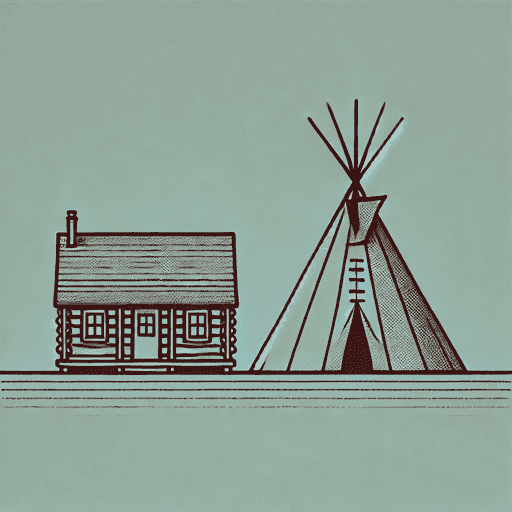
In April, Jim hacks furiously at blackberry thickets while Jonnie maintains a steady rhythm. Using an analogy about tracking cattle thieves, Jonnie teaches Jim that slow, steady work is better than frantic bursts. The claim has transformed: The tepee is dismantled, a shed houses a heifer purchased on credit, and the brothers follow a daily routine of clearing land, swimming, and racing to the cabin. Inside, the clock makes Jim feel restless. Some evenings Jonnie reads from the Bible; the words fascinate and disturb Jim, who sees them as a kind of medicine.
Dan’l repeatedly asks Jim to hunt or play, but Jim refuses because of the work, promising they will do these things later. The boy grows disappointed and resentful. When clearing finishes, Jonnie begins plowing. Watching the furrows, Jim feels homesick for Absaroka as the seasons change and the mountains lose their snow. In July, he teaches Dan’l to chase butterflies while repeating Crow words for swiftness. Jonnie observes and remarks that the running itself, rather than magic, makes a boy faster. He asks if Jim is homesick; Jim denies it but still thinks about his old life with the Crow.
In mid-August, Jim rides to see Joe Meek but learns he is away dealing with Umpqua trouble. Continuing to Oregon City to trade, Jim encounters his old friend Tom Rivers outside the trading post, and they greet each other joyfully.
Chapter 16 Summary
That evening, Tom and Jim make camp and talk beside the campfire. Tom has been to Taos and California; at Taos he heard about Jim. His Nez Perce wife left him a month ago, believing there was no future with a beaver man. He mentions hearing of beaver in South Park, back in the Rockies, but deflects when Jim shows interest, warning him to stick to his cabin.
Tom camps under the oak where the tepee stood and stays over a month. Jonnie and Sally welcome him warmly, but Dan’l remains hostile, jealous that Tom might steal Jim away. Tom works alongside them during harvest; Jim goes through his tasks distracted by Tom’s presence.
They visit Joe Meek, who roars with delight. At a harvest celebration at the Rutledges’, men discuss the new wagon trains arriving and rumors of a possible overland route through the Cascades. Tom stands somewhat apart from the farmers even while standing among them. Jim realizes Tom is the loneliest man he has ever seen.
Three days after the harvest celebration, Jim rides out at dawn with Tom. His belongings are loaded on Bad Medicine, Moki races alongside, and Buckskin’s nose points toward the high Cascades.
Chapter 17 Summary
Jim and Tom ride into the mountains, the journey feeling natural to Jim. At Willamette Falls, an old Chinook ferryman named Jake reluctantly ferries them across, sour about Umpquas portaging around the falls as they begin their return south after trading. Jim bribes him with blue beads.
They climb through forests toward the Cascades. Jim is restless, repeatedly checking horses and gear. On the third morning they hear shouting and discover wagons descending Laurel Hill. Jim watches as a wagon careens wildly down the near-vertical slope, oxen scrambling while a tree drags behind as a brake. More wagons wait at the top. Jim imagines wagons spreading across the continent, bringing settlers into places he once thought unreachable. He realizes he belongs in the valley, not the wilderness.
Tom reveals he knew Jim belonged with his family all along but wanted to see him discover it himself. Jim asks Tom to return, but Tom refuses. Trapping is his life; he is a man whose time has passed. They part in the mist. Jim descends toward home, determined to stay with his family.
Five mornings later Jim arrives at the clearing. Sally is weeping. Dan’l has disappeared, leaving a note saying he has gone to be an “Injun.” Jonnie and the men have searched fruitlessly for three days. Jim realizes Dan’l must be with the Umpquas heading south and immediately rides to rescue him.
Chapter 18 Summary
Before dawn, the Crow warrior Talks Alone—Jim, painted and stripped—watches the Umpqua camp from above a hidden cove. Two sentries guard the sleeping Umpqua camp. Jim lowers himself down the embankment, sends Moki to attack the sentry by the fire, and he shoots the other with an arrow. He kills the first sentry with his knife and enters the largest hut using a burning brand for light.
Inside, Jim finds Dan’l bound hand and foot among sleeping Umpquas. He frees the boy and they escape through the back wall. But Dan’l’s ankles are numb from the bindings; he stumbles and Jim must carry him. The Umpquas wake and pursue. As Jim scrambles up the embankment, he is struck on the head by a blow and falls back into the camp, unconscious.
Jim wakes bound beside Dan’l. The Umpqua chieftain kicks him and speaks angrily in his dialect. At dawn, Joe Meek arrives with Jonnie, Mr. Rutledge, and others. Guided by the message Jim sent with Sally, Meek follows his trail through the night. Meek confronts the chieftain, who denies having captives. Jim attacks his guard and yells, revealing their location. Meek rescues them as the Umpquas scatter.
Meek offers Jim the position of deputy for his tracking skills. Jim refuses, telling Meek that once Dan’l is home, he must leave the valley for good. He believes his past choices have brought trouble to his family and decides he must leave.
Chapter 19 Summary
Three days later, Jim, Jonnie, Dan’l, and Mr. Rutledge return home. Sally joyfully welcomes Dan’l, expressing gratitude for Jim’s role in rescuing him. Despite his desire to stay, Jim tells Jonnie he is leaving for good to protect Dan’l from his influence. Jonnie insists Jim tell Dan’l himself.
Jim tries to explain the valley’s future and the brave settlers at Laurel Hill, but Dan’l insists he wants to be like Jim. Jim cuts off both his braids and throws down his coup feather, showing Dan’l that he will no longer live as a Crow warrior. Sally saves the braids and feather in the leather box with family keepsakes.
Jim retreats to the river, struggling with his medicine bundle. Jonnie finds him, and Jim explains the dream that brought him to the valley. Jonnie recognizes the words as the 23rd Psalm from the Bible, which their mother read when they were sick. Jim realizes his medicine connected to this remembered prayer. He throws away the bundle.
They spend the afternoon planning Jim’s future, which now includes farming, teaching Dan’l, and possibly helping Joe Meek as a deputy when needed. Jim tries to say he will forget Absaroka, but Jonnie tells him not to try. The Crows made him strong and brave; he should remember them.
At sunset they return to the cabin. Jim looks over the valley and the home he shares with his family and walks through the lighted doorway, finally home at last.
Chapters 15-19 Analysis
These final chapters resolve Jim’s central struggle, The Conflict Between So-Called Civilized and Wild Identities, by positioning his personal choice within the larger historical force of American westward expansion. His departure with Tom Rivers is a final attempt to reclaim an identity rooted in the wilderness, a life free from domestic and agricultural obligation. His vision at Laurel Hill, however, confronts him with the reality that the era of the mountain man is over. The sight of wagons crossing a landscape previously considered impassable reflects the ideology of Manifest Destiny. He sees the settlers not as individuals but as a collective, seemingly unstoppable force, their wagons described as “crawling in little clouds of dust over every corner of the continent.”
This moment leads Jim to recognize that the way of life he associates with the wilderness is being displaced by large-scale migration and settlement. His decision to return to the valley reflects his recognition that this transformation is underway, and that he must decide how he will live within it. The episode also highlights a deeper tension within the novel: Jim is able to move between cultural identities and ultimately choose his place in this changing world, a freedom that the expansion of settler society denied to many Indigenous communities whose lands and lifeways were being displaced.
The crisis of Dan’l’s abduction cements Jim’s new identity, reframing the theme of Redefining Family Through Survival and Obligation. To save his brother, Jim must take up again his Crow warrior persona, Talks Alone. Although he has been trying to leave this identity behind, he draws on it in order to fulfill his new obligations as a family member. The rescue mission functions as a final enactment of his past self, carried out for the purpose of protecting his family. The subsequent act of cutting his braids is the public expression of this internal transformation, a sacrifice intended to secure Dan’l’s future within settlers’ community and to affirm Jim’s commitment to his family. Sally’s preservation of the braids and coup feather is significant; she places them “under the clock with Pa’s medal” (243), a gesture that integrates Jim’s past into the family’s history and recognizes that his Crow identity remains part of that history.
The resolution of Jim’s internal conflict hinges on re-contextualizing the source of his spiritual power, further exploring The Clash of Cultural Knowledge Systems. Throughout the narrative, Jim attributes his survival and guidance to his “medicine,” a form of spiritual protection understood through Crow cultural belief. Jonnie’s revelation that Jim’s sacred medicine song is actually the 23rd Psalm, a memory from their childhood, reframes Jim’s understanding of this experience. The discovery does not negate the significance the medicine held for him; instead, the novel redirects its source to his own submerged past and Christian upbringing. His “white man’s medicine” is presented in the narrative as something he had carried from childhood, even while he lived within Crow culture. Throwing away his medicine bundle signifies Jim’s attempt to reconcile these different parts of his life, as he begins to interpret his strength as coming from the overlapping experiences that shaped his identity.
Character foils illuminate the stakes of Jim’s decision, placing his individual journey within a broader social and historical context. Tom Rivers represents a way of life that is increasingly marginalized by settlement. Described as “the loneliest man he had ever seen” (211), Tom appears unable or unwilling to adapt to the agricultural society that settlers are establishing in the region. His return to the mountains is a withdrawal into the life he knows, a choice for lonely freedom over communal belonging. Joe Meek, however, is presented as someone who has adjusted to the changing conditions of the valley. A former mountain man like Jim and Tom, Meek has integrated into the new society, becoming its sheriff. Meek’s job offer to Jim is an invitation to follow this path of integration, using his wilderness skills in service of the community. By accepting this role, Jim chooses a path that acknowledges his past while committing himself to life in the valley community.
The narrative structure also uses a cyclical journey to mirror Jim’s psychological transformation. This section opens with Jim riding into the mountains to escape his family and closes with him riding into the mountains to rescue a family member. This inverted parallel demonstrates the shift in his motivations from a flight toward a romanticized past to an acceptance of new responsibilities within the family and the valley community. The symbolic landscape reinforces this change. The cabin, once a site of confinement, is ultimately transformed into a “lighted door” that signifies safety, belonging, and peace. This final image marks the end of his physical and internal wandering, suggesting that Jim has found a place where his past experiences and present commitments can coexist.

Unlock all 54 pages of this Study Guide
Get in-depth, chapter-by-chapter summaries and analysis from our literary experts.
- Grasp challenging concepts with clear, comprehensive explanations
- Revisit key plot points and ideas without rereading the book
- Share impressive insights in classes and book clubs