Moccasin Trail
54 pages • 1-hour read
Eloise McgrawMoccasin Trail
A modern alternative to SparkNotes and CliffsNotes, SuperSummary offers high-quality Study Guides with detailed chapter summaries and analysis of major themes, characters, and more.
Summary and Study Guide
Overview
Eloise Jarvis McGraw’s young adult historical novel, Moccasin Trail (1952), was named a Newbery Honor Book in 1953. Set in the Oregon Territory in 1844, the adventure story follows 19-year-old Jim Keath, a young man of white parentage who spent six years living among the Crow people after they rescued him following a grizzly bear attack. When a letter summons him to help his long-lost pioneer siblings journey to the Willamette Valley, Jim must navigate their fear of his frontier upbringing while confronting his own fractured identity. The novel explores themes of The Conflict Between So-Called Civilized and Wild Identities, Redefining Family Through Survival and Obligation, and The Clash of Cultural Knowledge Systems.
An acclaimed author of children’s and young adult fiction, McGraw was known for her meticulous historical research. She received two other Newbery Honors for her novels The Golden Goblet (1961) and The Moorchild (1996). Moccasin Trail is set during a pivotal moment in the history of the American West. By the 1840s, the once-dominant beaver fur trade had collapsed due to over-trapping and changing European fashions, forcing mountain men like Jim to find new livelihoods. Simultaneously, westward expansion was surging, with thousands of American settlers, or “bourgeways,” traveling the Oregon Trail, a movement often justified through the ideology of Manifest Destiny. Jim’s personal crisis of identity unfolds against this broader historical transition, positioning him between the declining world of the mountain trapper and the expanding settler society represented by the wagon trains heading toward Oregon. Written in the mid-20th century, the novel also reflects cultural assumptions common in frontier literature of its time, particularly in its portrayal of Indigenous cultures and westward expansion.
This guide refers to the 1986 Puffin Books edition.
Content Warning: The source text contains depictions of racism, illness and death, animal cruelty and/or animal death, and physical abuse.
Plot Summary
In October 1844, 19-year-old Jim Keath, a trapper in the Oregon territory, sets his last beaver trap with a sense of unease. His appearance reflects both white and Indigenous cultures, with a trapper’s buckskins and Crow-style braids. The fur trade is dying, and his partner, Tom Rivers, is leaving. Jim is torn between returning to the Crow people who raised him and finding a place in the white world he left behind. At age 11, Jim ran away from his family’s Missouri farm to follow his trapper uncle, Adam Russell. A year later, a grizzly bear mauled him, leaving him with prominent scars. He was found by a Crow hunting party and taken in by Red Deer, who raised him as a son, while her husband, the chief Scalp Necklace, also accepted him among the Crow. He later earned the Crow name “Talks Alone” and received an eagle feather after performing a coup. At 17, the sight of a blond scalp reminded him of his white mother, prompting him to run away from the Crow, stealing a mare he named Buckskin. Back in the present, Tom returns to camp and confirms he is leaving the next day.
Two Indigenous men whom the trappers refer to as “Digger Indians,” led by Big Bull, arrive with a crumpled letter from a trapper named Bill Hervey. Neither Jim nor Tom can read well, but Tom deciphers the words “Jim,” “dead,” and the name “Jonnie,” whom Jim identifies as his brother. The words “valley” and “still” also appear, which startle Jim because they are part of his sacred medicine dream. He explains to Tom that after the grizzly attack, he had a vision where he defeated the bear by shouting English words he did not understand, which the Crow Wise One called powerful “white man’s medicine.” Convinced the letter is connected to this earlier vision, Jim decides he must go to The Dalles to find someone to read it. The next morning, he and Tom part ways, and Jim heads northwest.
Jim arrives at The Dalles, a settlement on the Columbia River crowded with emigrants, whom trappers call “bourgeways.” He feels alienated. In the trading post, the trader, Harris, mocks him as “Injun Jim.” Outside, a conflict erupts when a young blond boy, Dan’l, tries to pet Buckskin, provoking Jim’s protective dog, Moki. When Jim returns to the post, Harris begins reading the personal letter aloud, revealing that Jim’s mother has died. Enraged, Jim threatens Harris with a knife and takes back the letter. A large, red-bearded emigrant named Rutledge, who knew Jim’s mother, follows him out and reads the letter in private. It is from Jonnie, explaining that their father died three years ago and their mother died on the trail. Jonnie, their sister Sally, and their younger brother Dan’l need Jim to join them in the Willamette Valley to claim land, as only he is old enough. Rutledge reveals that the family is in the camp at The Dalles.
Rutledge leads Jim to his siblings. The reunion with 17-year-old Jonnie is tense, as Jonnie is shocked by Jim’s appearance and the years he spent living among the Crow. Jim learns that the boy from the trading post is his 11-year-old brother, Dan’l. His 15-year-old sister, Sally, is openly hostile, resenting him for abandoning their mother. Despite the tension, Jonnie is relieved Jim will claim the land for them. Jim asserts his authority by providing fresh meat for the family, throwing away Jonnie’s ruined boots, and treating his injured feet with a Crow herbal paste. Jonnie’s gratitude marks a small thaw between them. They plan their passage through the treacherous Columbia Gorge. Jim and Dan’l will take the livestock over the mountain trail, while Jonnie, Sally, and the Rutledge family will navigate the dangerous river on a large raft.
The two groups separate. Jim and Dan’l endure a severe, five-day snowstorm on the mountain trail, while Jonnie and the others battle the river’s rapids and winds. Jim and Dan’l’s journey takes nearly two weeks, prolonged by the need to build a raft to ferry the animals across a river. When their food runs out, Moki catches a mink, and a starving Jim is forced to fight his own dog for the meat, which he shares with Dan’l. The ordeal strengthens their bond. Exhausted, they finally reach the Cascades and have a joyful reunion with Jonnie and Sally. After a final, grueling five-mile portage, the families regroup at Fort Vancouver before traveling south into the Willamette Valley. Jim leads them to a piece of land he remembers on the Tualatin River, which they claim as their home.
As the family settles, conflicts arise. Jonnie and Sally embrace the farming life, but Jim feels restless and out of place. He forms a strong bond with Dan’l, teaching him Indigenous skills and games, which causes friction with his siblings, who fear his influence. When the surveyor arrives to mark the claim, Jim overhears Jonnie’s shame that he will have to “make his mark” (109) on the papers instead of signing. In a secret, all-night effort, Jim teaches himself to write his name and successfully signs the claim, earning Jonnie’s profound respect. Tensions soon resurface. After an argument, Jonnie calls the Indigenous people “savages.” The sight of the old family clock in the newly finished cabin triggers painful memories for Jim, and Sally demands he cut his braids to prove he is civilized. Jonnie accuses him of running away from his responsibilities, and Jim flees in a rage, riding wildly through the valley and sparking rumors of an Indigenous uprising.
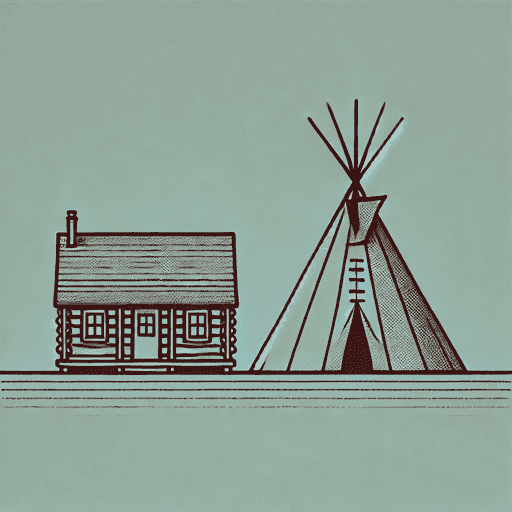
Jim returns and builds a tepee, physically separating himself from the family. A truce is formed when Jonnie is thrown from Buckskin and the brothers share a laugh. Jonnie wishes for a horse just like her, giving Jim an idea for a grand gesture to heal the rift. Soon after, local settlers report that their cattle have been stolen. Jim deduces the thief is a Cayuse Indian in disguise, not a white man as the others believe. He leads a posse to the Cayuse camp, where Rutledge insists they avoid bloodshed. Jim agrees to a non-violent recovery and successfully retrieves the cattle. He also steals a beautiful cream-colored mare as a gift for Jonnie. When he presents the horse, however, the settlers are horrified, explaining that stealing is wrong and against the law. Heartbroken and humiliated, Jim rides off alone to return the mare to the hostile camp.
Jim returns the mare but is discovered. In the ensuing chase, he is wounded but escapes after disabling a pursuer. Alone and in pain, he has a profound realization: He no longer desires the life of a warrior but a home with his family. He begins to reconsider where he belongs. He returns to the claim and is welcomed with relief and love. The sheriff, the legendary mountain man Joe Meek, arrives. He warns Jim about causing trouble but also offers him a job as his deputy. Believing he is a danger to his family, Jim says he is leaving for good. Jonnie forces him to say goodbye to Dan’l. When Dan’l insists he will grow up to be just like Jim, pointing to his braids, Jim realizes he must prove his transformation. In a dramatic gesture, he cuts off his braids and discards his coup feather. Sally keeps them as family mementos. Jim tells Jonnie that he fears he has lost his Crow “medicine,” and Jonnie explains that his medicine song is the 23rd Psalm, which their mother taught them when they were children.
Months pass, and Jim adapts to farm life, though he remains restless. In August, he is joyfully reunited with Tom Rivers, who has returned from California. Tom is lonely and adrift; the trapper’s world is gone. He stays for a month and a half, during which Dan’l is hostile, fearing Tom will lure Jim away. At a gathering, settlers discuss a new wagon train attempting an overland route through the Cascades. Tom declares it impossible, and Jim realizes his old friend is a ghost of the past, unable to adapt.
Jim leaves the valley with Tom and travels into the mountains. In the Cascades, they encounter a wagon train descending Laurel Hill, a route Tom had believed impossible for wagons. Seeing the settlers successfully complete the descent, Jim decides to return to the valley and his family. He and Tom separate, each continuing in a different direction.
Jim races back home but arrives to find the family distraught. Dan’l, heartbroken over Jim’s departure, has run away “to be a Injun.” Jim realizes Dan’l was likely captured by a party of Umpqua that they had seen days earlier. He sends word for Jonnie and the men to follow and rides south in pursuit. After a desperate 36-hour search, Jim finds the Umpqua camp. In a stealthy night raid, he kills two sentries and rescues a bound Dan’l from a hut. During their escape, however, Dan’l stumbles, and Jim is knocked unconscious and captured while trying to lift him to safety. At dawn, as Jim and Dan’l lie bound and awaiting their fate, Joe Meek, Jonnie, and the posse arrive. In the ensuing chaos, Jim creates a crucial diversion, allowing Meek and Jonnie to free them. Back at the claim, Jim, follows his brother into the cabin, committing himself to remaining with his family in the valley.

Unlock all 54 pages of this Study Guide
Get in-depth, chapter-by-chapter summaries and analysis from our literary experts.
- Grasp challenging concepts with clear, comprehensive explanations
- Revisit key plot points and ideas without rereading the book
- Share impressive insights in classes and book clubs