Moon Palace
52 pages • 1-hour read
Paul AusterMoon Palace
A modern alternative to SparkNotes and CliffsNotes, SuperSummary offers high-quality Study Guides with detailed chapter summaries and analysis of major themes, characters, and more.
Chapter 3Chapter Summaries & Analyses
Content Warning: This section of the guide includes discussion of illness, mental illness, sexual content, gender discrimination, and death.
Chapter 3 Summary
Fogg recovers in Zimmer’s apartment for over a month. Nevertheless, Zimmer is disgusted by Fogg’s pride-driven refusal to ask him for help. Fogg accepts Zimmer’s criticism, realizing that his behavior was cowardly. He resolves to think more selflessly.
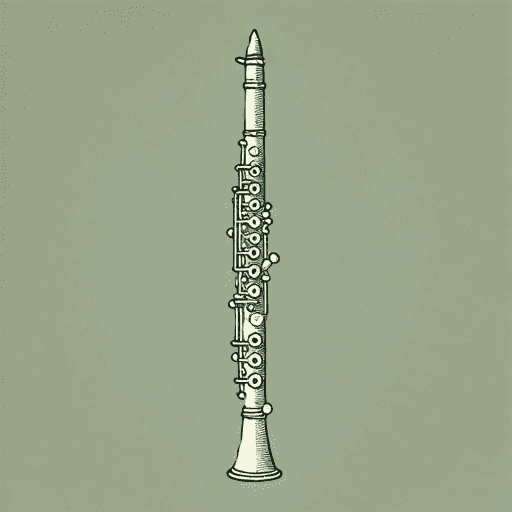
One evening, Fogg penitently examines Victor’s clarinet case, which was ruined during his time in Central Park. His draft letter falls out of the case, reminding him to attend his physical examination. At his physical, Fogg’s anemia is so severe that the doctor cannot extract his blood on the first attempt. Fogg weighs in at around 115 pounds, prompting the examiners to sequester him from the group. He speaks to a psychiatrist, who suspects that Fogg has a substance use disorder. Fogg explains his situation in its entirety, which makes the psychiatrist uncomfortable. This culminates in Fogg’s justification that he gave up making an effort in life so that he could find the harmony of the universe within the chaos of his existence. The psychiatrist determines that Fogg is unfit for military service.
Fogg continues to recover at Zimmer’s apartment, regaining weight and going out with Zimmer to bars. On one such night, Zimmer encourages Fogg to pursue Kitty, indicating that she is deeply in love with him. Fogg hesitates to accept this, arguing that she hasn’t visited him since his rescue at Central Park, but Zimmer reminds him that she has restarted classes and work, which Fogg doesn’t know about because he sits at home all day. Zimmer points out that Kitty is also trying to show discretion around him, but Fogg doesn’t believe this because Kitty kissed him at the end of their first encounter. Zimmer argues that Kitty is a person who obeys her impulses and accepts any situation as a matter of fact; she doesn’t want to show too eager an interest in Fogg because she doesn’t want him to think that he owes her for saving his life.
Kitty’s father was a Chinese Nationalist general who escaped to Taiwan after the Communist Revolution. He was then assigned to the embassy in Japan, and Kitty grew up in Tokyo. Despite her privileged upbringing, Kitty witnessed her father’s courtly affairs, which culminated in the betrayal of his last mistress, whom he caught in bed with a younger man. Following the death of her mother, Kitty was sent to boarding school in the United States and elected to stay in the country after her father’s death, pursuing her dance program at Juilliard. Zimmer implies that Kitty and Fogg’s lives have followed similar paths, given that they are both orphans who experienced tragedy at a young age. Fogg is skeptical about Kitty’s story, but he later learns that all of it is true.
Fogg begins to feel guilty about staying at Zimmer’s apartment and depleting his friend’s finances. He reasons that Zimmer may be extending his generosity in order to feel better about himself, given that Zimmer was always intimidated by Fogg in the early days of their friendship. Fogg describes Zimmer as an aspiring poet with scholarly intensity. The object of Zimmer’s affections is a childhood friend of his named Anna, who left the country to pursue a career in journalism. Whenever Fogg and Zimmer return from their outings to the bar, Zimmer checks his mail to see if Anna has sent him any letters, and this habit inspires pity in Fogg.
When Zimmer starts a graduate program in comparative literature, Fogg resolves to look for work. He volunteers to work on a translation job that Zimmer’s friend had outsourced, and this arrangement allows Zimmer to focus on his studies while Fogg earns money on the side. That fall, Fogg randomly encounters Kitty, and the two reconnect over a long-winding conversation that makes Fogg feel comfortable around her. They return to Zimmer’s apartment for coffee and soon have sex, and Fogg acknowledges that he has fallen in love with Kitty.
Fogg fills his days with translation work and his passionate romance with Kitty. In late October, he finishes the translation, and he, Zimmer, and Kitty celebrate at Moon Palace. At the end of the meal, Fogg opens a fortune cookie that reads, “The sun is the past, the earth is the present, the moon is the future” (97). He keeps the fortune in his wallet. The following morning, he looks for a new job and answers an ad sent out by an elderly man who is seeking a live-in assistant. Fogg interviews for the position and gets the job, only later learning that he is the only person who applied.
Chapter 3 Analysis
Chapter 3 details a drastic shift in Fogg’s fortunes, and this period of his life functions as a transitory stage before the broader arc of Auster’s narrative. After Kitty and Zimmer rescue him from his folly, Fogg realizes the limitations of his undeterred faith in the providence of the universe. His rejection from the military draft ironically confirms the problems involved in this whimsical worldview, for the psychiatrist deems Fogg’s idealistic mindset to be so dysfunctional that the government has no use for him. While this mindset saves Fogg from the draft, he must also admit the flaws that drive his reliance on The Paradoxical Interplay of Chance and Free Will. One such flaw is his prideful belief that his luck alone would be enough to sustain his life. Having rejected this extreme form of individualism, he resolves to think more selflessly and see himself as a member of an interconnected community. With this decision, Fogg chooses to take control of his life, rather than letting it follow the course that chance has set out for him.
The structure of the chapter mirrors his resolution to seek out community by diving into the backstories of Kitty and Zimmer. These expository passages mark the first narrative excursions that transcend Fogg’s own life and family background, and he begins to appreciate the similarities and differences between his own experiences and the lives of others. As Zimmer points out, there is a comparison to be drawn between Kitty and Fogg, as they both have learned to live without their parents from an early age. The tumult and tragedies they experienced explains Kitty’s willingness to sympathize with Fogg. As Fogg builds new connections with companions, he frees himself from his solipsism, realizing that others can recognize the impact of his early life on his character without having to know his story.
On the other hand, Auster also draws a contrast between Fogg and Zimmer, turning the latter into a foil for the protagonist. Whereas Fogg is defined by the very ambiguity and aimlessness of his life, Zimmer lives on a straightforward path, defining himself by his literary ambitions and his devotion to a childhood love. There is little tension in Zimmer’s life because Zimmer chooses not to court chaos the way that Fogg so often does. Even his decision to accept Fogg’s proposal for the translation job signals his focus on maintaining a stable existence, for he sees this arrangement as a way to immerse himself more deeply in his scholarly routine instead of distracting himself with additional work.
Yet as Fogg moves from one phase of his post-collegiate life to another, the narrative undermines his attempts to detach himself from the wishful thinking that dominated his earlier misadventures. This pattern becomes clear when he returns to the Moon Palace in the company of his friends and reads a fortune that resonates with his reliance on chance and The Search for Harmony in a Chaotic World. When the fortune tells him that the moon is the future, this nebulous sentiment emboldens him to undertake another quest in search of the limits of his experience. In this way, Auster will continue to bring Fogg back to his faith in the paradoxical interplay of chance and free will.

Unlock all 52 pages of this Study Guide
Get in-depth, chapter-by-chapter summaries and analysis from our literary experts.
- Grasp challenging concepts with clear, comprehensive explanations
- Revisit key plot points and ideas without rereading the book
- Share impressive insights in classes and book clubs