Moon Palace
52 pages • 1-hour read
Paul AusterMoon Palace
A modern alternative to SparkNotes and CliffsNotes, SuperSummary offers high-quality Study Guides with detailed chapter summaries and analysis of major themes, characters, and more.
Chapters 1-2Chapter Summaries & Analyses
Content Warning: This section of the guide features depictions of death, emotional abuse, substance use, illness, mental illness, disordered eating, sexual content, physical abuse, and addiction.
Chapter 1 Summary
The novel begins with the narrator, Marco Stanley Fogg, summarizing the events of the novel; the story begins with his decision to live perilously and ends with his arrival on foot in California. Now that he is older, he looks back on this story as the “beginning of [his] life” (1). The novel shifts to Fogg’s narration of the events that he just outlined.
As the narrator-Fogg relates, his younger self first arrives in New York in 1965 to study at Columbia University. In his second semester, he moves to an apartment that he fills with boxes of books, which were given to him by his Uncle Victor. Fogg repurposes the packed boxes to furnish his home. Victor dies in 1967, dealing a huge emotional blow to Fogg. (Victor raised Fogg after Fogg’s mother, Emily, died in a traffic accident when he was 11. Fogg never knew his father and was told that the man had died before Fogg was born.)
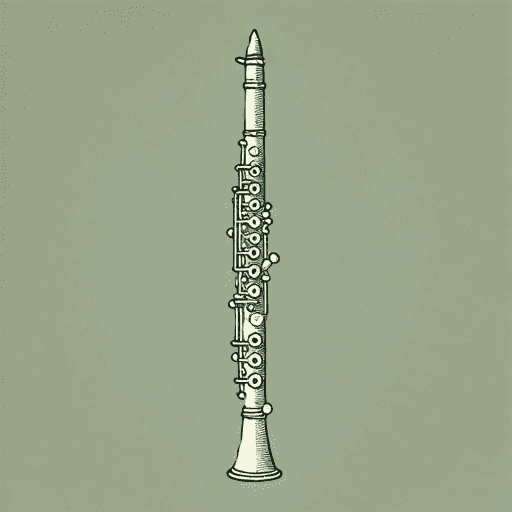
Victor was a clarinetist who first worked at the Cleveland Orchestra before getting fired for his unprofessional behavior. In 1958, when he took Fogg in, Victor made a living by giving lessons to young students and playing in small bands for formal gatherings. Fogg describes Victor as someone who was always so preoccupied with different ideas that it affected his attention span. This quirk suited the young Fogg nicely, since Victor always indulged him with imaginative games. Victor affectionately called him “Phileas,” a reference to the protagonist of Jules Verne’s Around the World in Eighty Days (1872), and he also used many other names that helped to insulate Fogg from the bullying he experienced at his new school. In time, Fogg eventually began referring to himself as “M. S.,” which Victor appreciated as a reference to the idea of his life as an unfinished book.
From Cleveland, Victor and Fogg abruptly moved to Saint Paul and then Chicago. Though Fogg had no musical talent, he and Victor bonded over a shared love of baseball. With the settlement he received from Emily’s death, Victor financed Fogg’s upbringing all the way through college. When Fogg was 14, Victor was briefly married to a widow named Dora Shamsky. Their tumultuous marriage had a negative emotional effect on Victor, and they divorced after he sent Fogg to boarding school. Victor soon joined a road band called the Moon Men. Because the start of their tour coincided with Fogg’s departure for New York, Victor bade Fogg farewell and bequeathed him his extensive library and his tweed suit, among other valuable belongings. He assured Fogg that all the correspondences in nature were signs that things would work out for them in the end.
In New York, Fogg wore Victor’s suit every day in order to feel connected to him. Through the suit, he styled himself as an intellectual who drank and smoked often. At the end of the first spring term, Fogg’s closest friend, David Zimmer, suggested that he and Fogg move in together, but Fogg declined in favor of moving into his own studio apartment instead. On one of his first nights there, Fogg saw the neon sign for a Chinese restaurant on Broadway, which read “MOON PALACE.” This made him feel connected to Victor and allayed his fears of living on his own.
When Fogg was 20, he received a letter from Victor, explaining that the Moon Men had disbanded and that Victor had become bankrupt. Fogg invited Victor to live with him in New York, and although Victor indicated that he would come, he never arrived. After asking an Idaho police sergeant named Neil Armstrong to investigate Victor’s whereabouts, Fogg learned that Victor had died of a heart attack just before leaving his lodgings. A grief-stricken Fogg took care of Victor’s burial arrangements during his brief visit to Chicago.
Now, in the aftermath of Victor’s death, Fogg’s personal funds begin to dwindle. He considers dropping out of college but reconsiders because abandoning his studies would disrespect Victor’s memory and force him to be drafted into the Vietnam War. However, Fogg opts not to apply for any financial opportunities at school because they all make him feel nauseous. He reasons that his inaction is a romanticized act of despair that will help him to understand the experience of doom. Instead of working, Fogg starts reading through Victor’s library as a way to honor his uncle. The sequence of the books allows him to live through his uncle’s literary life in chronological order. After he finishes reading them, he starts selling the volumes to a used bookstore to extend his finances, though the book buyer undervalues many of the titles that Fogg offers him.
As the 1960s come to an end, Fogg and Zimmer experience a brief period of incarceration after participating in a student protest at Columbia. Victor’s suit is ruined, and Fogg is forced to abandon it. His finances continue to dwindle, though he never tells Zimmer the truth, making up excuses for the sudden changes in his lifestyle to avoid his friend’s pity. By the time he graduates from college, Fogg is living under the looming threat of eviction and must sell all his other belongings, including Victor’s valuables. Upon failing an attempt to overcome his hunger through sheer force of will, Fogg starts experiencing hallucinations in his apartment.
Fogg sells the last of Victor’s books on the same day as the American moon landing. To his surprise, he enters a state of calm and happiness, which inspires him to perceive the coincidences between his life and the moon landing. This reverie ends just as abruptly a few days later. Fogg attempts to visit Zimmer several times but fails to reach him and ends up leaving messages at his friend’s apartment. One morning, Fogg tries again and learns that Zimmer has moved elsewhere. The current resident of the apartment invites Fogg inside after seeing that he is wearing the same Mets shirt that his friend, Kitty, is wearing. He introduces Fogg to his friends as Kitty’s twin. All the people Fogg meets there are performing arts students at Julliard.
Kitty Wu is a Chinese American dance student who suggests that Fogg join them for breakfast, which Fogg appreciates. He immediately becomes smitten with her. When someone at the breakfast posits that the moon landing was staged, Fogg launches into a speculative discourse about the history of moon landings, giving special focus to Cyrano de Bergerac’s visit to the moon and asserting that Cyrano was indeed a historical figure. He soon decides to go home, but Kitty asks him for a good-bye kiss before he leaves.
Fogg receives a second eviction notice on the day of the moon astronauts’ New York ticker-tape parade. It is revealed that he still has Victor’s clarinet, but he refuses to part with it because it is his only remaining link to his uncle. When an accident spoils the last of Fogg’s food supply, he splurges on a meal at the Moon Palace to comfort himself. He accepts that this is his final meal, then returns to his apartment to find a notice for an army physical in his mailbox. Throughout the night, Fogg hears several knocks at his door and deduces that at least two people came by to look for him. In the morning, Fogg answers the door to the superintendent, Simon Fernandez, who informs him that he must vacate the studio at once. When Fernandez encourages Fogg to find work, Fogg tells him that he works on trying to live through each day as a full-time job. Fernandez dismisses the remark as “strange,” comparing it to the foolishness of the moon landing. Fogg complies with his eviction order.
Chapter 2 Summary
In an aside, the narrator-Fogg reveals that the first person who knocked on his door the previous evening was Kitty, a fact that he only discovered much later. The narrator-Fogg explains that out of concern for him, Kitty reached out to Zimmer and told him about her encounter with Fogg at the breakfast. After Zimmer helped her to find Fogg’s apartment, Kitty waited outside his door until she could be sure that Fogg wouldn’t answer her. The following day, she came back to learn that Fogg had already left. From then on, she started working with Zimmer to determine where Fogg went next, which is how he eventually came to be rescued. The narrator-Fogg then picks up his story from the moment his younger self was evicted from his apartment.
The younger Fogg walks south, knowing that he is less likely to encounter people he knows on that side of the city. He is overjoyed to find $10 on the street, which he uses to buy breakfast, cigarettes, and coffee. He then spends the afternoon in a movie theater and is surprised when they start screening Around the World in 80 Days, which he takes as a sign that he is living according to the providence of fate. He weeps so much for the shape of his life that he decides to leave the theater, only to find that it is already evening. Trusting in his luck, he looks for somewhere to sleep and ends up under a bush in Central Park.
Fogg is relieved to wake up unharmed the next morning, and he continues sleeping in Central Park over the next few nights. He finds comfort in the solitude that the park gives him and refrains from leaving it in order to avoid feeling ashamed of himself around strangers. He lives purely within his inner life and survives on the kindness of people who are willing to share their money or food with him. However, he forces himself not to expect generosity, fearing that doing so will scare generosity itself out of his life. The only obstruction to this principle is his body’s material needs, especially hunger.
Fogg starts to scavenge for food in the garbage cans, giving each one a different name to distract himself from the truth of his actions. When a policeman confronts him, he explains his actions away as part of a school project. He gets embarrassed when children start making fun of him for going through the trash, though he accepts this experience as an essential part of his new life, seeing it as a way of testing his spirit. Fogg starts putting a toothpick in his mouth to stave off hunger.
Fogg never finds himself bored because he fills his hours with various activities, from reading the newspaper to exploring the other areas of Central Park. On one occasion, he meets a man who calls himself Frank and tells him a story about his gambling addiction. In the middle of his story, Frank attempts to steal Fogg’s clarinet case. Though Fogg gets the clarinet back, Frank insults him for treating him so roughly. In other moments, Fogg runs for his life, fleeing from young gangs and people who are drunk and aggressive. On yet another occasion, Fogg stumbles upon two people having sex, one of whom points a gun at him.
One night, Fogg gets caught in the rain and begins yelling out angry curses against God. The next morning, he gets soup to warm himself and ends up cutting his hair off in the bathroom. His clothes remain damp and odorous when he goes to the public library. When Fogg exits the library, he starts to feel sick. Over the next few days, he loses plenty of weight as he tries to weather the illness under some branches. As he tries to recover, he experiences several visions. In one, he perceives God looking at him through the O’s in the Moon Palace sign, and in another, he sees Indigenous Americans roaming through the forests that once stood over Manhattan. After the latter vision, he sees Kitty and Zimmer approaching; they are both relieved to have found him.
Chapters 1-2 Analysis
Auster’s novel begins with narrator Marco Stanley Fogg framing the chronicles of his life as a recollection. These stories are being told by a man far in the future, though the stories themselves constitute “the beginning of [his] life” (1). Because Auster makes it clear from the very start that Fogg will survive his misadventures, the novel can focus more precisely on the toll that these events will have on his thinking and his behavior around others. Auster reinforces this structural framework several times by having the narrator-Fogg foreshadow certain events so directly that he virtually spoils the narrative. In the first chapter, for instance, he reveals the event of Uncle Victor’s death before narrating his experience of it in greater detail, and in Chapter 2, he similarly begins the narrative of his life in Central Park with the caveat that Kitty and Zimmer will eventually rescue him. By delivering premature reassurances about the protagonist’s survival, Auster creates the impression that the narrator-Fogg’s current sense of well-being has always been predestined. Although his younger self will experience many problems over the course of his life, the very structure of this retrospective narrative suggests that Victor’s promise to Fogg—that “[e]verything works out in the end” (14)—will eventually prove to be true.
In the meantime, however, the framework of the first chapter juxtaposes the guarantee of Fogg’s survival against the specter of death that surrounds him. A great deal of Fogg’s early life is defined by the chaos of death, beginning with the accidental death of his mother, Emily, and the supposed death of his father, and culminating in the untimely death of his Uncle Victor. In the absence of Fogg’s parents, Uncle Victor has exerted an enormous influence on Fogg’s thoughts and general worldview, and Fogg even inherits his uncle’s unique perception on the underlying purpose of life. Specifically, he absorbs Victor’s belief that there is meaning in everything, and in his adult life, he takes every coincidence as a sign of harmony in the universe. In essence, his own awkward dance through life is consumed by The Search for Harmony in a Chaotic World.
Auster highlights this theme by introducing the moon as one of the novel’s main motifs. Victor’s death coincidentally takes place in the same year as the moon landing, and when Fogg tries to determine his uncle’s whereabouts, he speaks to a police sergeant who bears the same name as the most famous Apollo 11 astronaut, Neil Armstrong. Noting the appearance of the moon in different forms during key moments in his life, Fogg sees these synchronicities as patterns in the randomness of existence, reassuring himself that chaos is not the defining force in the universe and that everything leads toward a specific purpose. This thread is further emphasized on the day after he sells the last of Victor’s books, when he enters a state of associative reverie and reflects, “[W]hy does the American West look so much like the landscape of the moon?” (32-33). This scene also foreshadows the end of the novel, forecasting the fact that Fogg will explore the world to the furthest limits of his ability, just as the Apollo mission has taken the astronauts to the furthest limits of humanity’s reach.
However, despite these flights of fancy, the novel does not fully romanticize Fogg’s way of thinking, given that Fogg’s fixation on the nebulous often leads him into folly. In fact, he often disregards the more practical aspects of life to pursue his woolgathering. When he begins to realize that he is running out of money, he opts not to act productively, instead believing that it is better for him to embrace his imminent poverty and learn what “doom” feels like. Fogg mistakenly convinces himself that his uncle’s belief in destiny will insulate him from the consequences of failing to guard against outright destitution.
When Fogg is evicted from his apartment, the superintendent, Fernandez, offers a contrasting worldview, once again invoking the moon. He comments, “You send people to the moon, something’s gotta give… It makes people do strange things” (46). Whereas the novel initially frames the moon landing as a heroic act, Fernandez undermines the superficial value of this effort, and the comment also extends to Fogg’s failure to act on his own living and financial situation. By rendering Fogg vulnerable to folly, Auster revives some of the narrative tension. Though the novel guarantees he will not die, it leaves room for ambiguity by suggesting that he may experience deep suffering, and his near-death experience at the end of Chapter 2 underscores this reality by undermining Fogg’s inherited optimism.

Unlock all 52 pages of this Study Guide
Get in-depth, chapter-by-chapter summaries and analysis from our literary experts.
- Grasp challenging concepts with clear, comprehensive explanations
- Revisit key plot points and ideas without rereading the book
- Share impressive insights in classes and book clubs