Moon Palace
52 pages • 1-hour read
Paul AusterMoon Palace
A modern alternative to SparkNotes and CliffsNotes, SuperSummary offers high-quality Study Guides with detailed chapter summaries and analysis of major themes, characters, and more.
Summary and Study Guide
Overview
Published in 1989, Moon Palace is a postmodern novel by American author Paul Auster. The novel follows Marco Stanley Fogg, an erudite young New Yorker who falls into the company of various benefactors, from his uncle, a traveling musician named Victor, to a historian named Solomon Barber. These encounters lead Fogg to discover the long-kept secrets about his parentage and the ways in which chance leads him to better understand himself.
Best known for penning a series of novellas collectively referred to as The New York Trilogy (1985), Auster frequently borrowed from other genres and forms to explore identity in the late-20th-century United States. Whereas The New York Trilogy borrows from the structure of detective novels, Moon Palace deploys elements from the picaresque novel to explore the issue of Bargaining with Reality to Reinvent the Self, The Search for Harmony in a Chaotic World, and The Paradoxical Interplay of Chance and Free Will.
This study guide refers to the hardcover first edition of the novel, published by Viking in 1989.
Content Warning: The source text and this guide feature discussions of graphic violence, gender discrimination, racism, ableism, mental illness, disordered eating, sexual violence, emotional abuse, physical abuse, child abuse, illness, death, suicidal ideation, pregnancy termination, substance use, and addiction.
Plot Summary
The novel is told by an older version of the protagonist, Marco Stanley Fogg, who looks back to the content of the narrative and sees it as the start of his life.
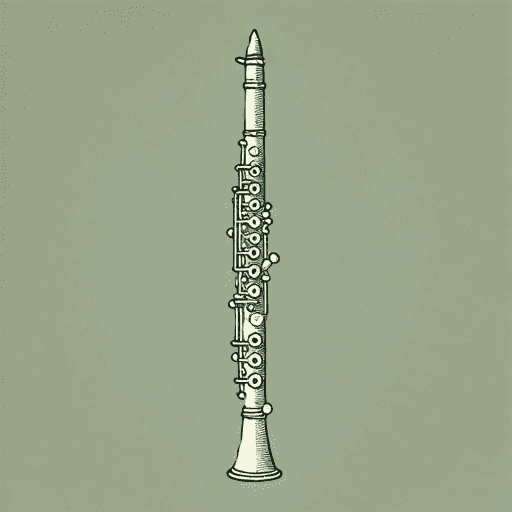
Born in the late 1940s, Fogg becomes an orphan at age 11 when his mother, Emily, dies in a traffic accident. Never having known his father, Fogg enters the custody of Emily’s only brother, Victor, a clarinetist who tries to support Fogg and pass on his optimistic view of the world. When Fogg moves to New York for college, Victor goes on the road as a traveling musician.
Fogg is an erudite college student who styles himself after Victor by wearing his uncle’s tweet suit daily until it is worn out. Just before he graduates, Fogg learns that Victor has died on the road in a state of bankruptcy. Fogg grieves Victor’s death but chooses to react passively to the impact of this event on his financial situation. As his funds gradually dwindle, he emulates his late uncle’s optimism, romanticizing the suffering that he anticipates experiencing once he runs out of money entirely.
After selling all his inherited belongings, Fogg meets a Chinese American dance student named Kitty Wu, with whom he becomes infatuated. Fogg is soon evicted from his apartment. He spends several days as an unhoused person, sleeping and scavenging for food in Central Park. After getting sick, Fogg is rescued by Kitty and Fogg’s college friend, Zimmer, who agrees to host Fogg as his guest.
Fogg recovers from his illness and begins looking for ways to redeem himself in the eyes of Zimmer, who believes that he acted cowardly by failing to ask for help. Fogg succeeds in avoiding the military draft when he explains his life philosophy to a psychiatrist, who declares him unfit to serve in the military. Fogg then offers to help Zimmer with a translation project so that Zimmer can focus on his graduate studies in comparative literature. Zimmer encourages Fogg to pursue Kitty, whose reticence reflects her desire to avoid making him feel that he owes her a debt for saving his life. Zimmer reassures Fogg that Kitty is genuinely interested in Fogg as a romantic partner, and the two soon reconnect and begin a passionate relationship.
Fogg answers an ad for a live-in assistant to an elderly gentleman. His new employer, Thomas Effing, is a cantankerous man with blindness and paraplegia. He requires Fogg to read to him and take him out on walks. Although their relationship is challenging at first, Effing trusts Fogg enough to enlist him in a special project: the writing of his obituary. Effing reveals that he once faked his own death, and that he used to be known as Julian Barber, a painter. At the start of his life, Effing used his father’s Wall Street fortune to support his artistic pursuits and married a wealthy woman named Elizabeth Wheeler, whom he came to despise. At a friend’s suggestion, Effing decided to journey to the American West to sharpen his artistic technique. Following the accidental fall of his companion, Effing was left for dead in the deserts of Utah, where he reinvented himself as a cave hermit. After defeating a band of outlaws, Effing used their stolen wealth to reinvent himself once again as a high society man in California. A random attack and fall left Effing with paraplegia. Several months later, Effing traveled to Europe, where he remained for several years before permanently residing in New York.
Fogg compiles Effing’s story into an autobiography. Effing says that after his death, the story must be sent to Solomon Barber, his son by Elizabeth. With Fogg’s help, Effing redistributes the outlaws’ stolen wealth to anonymous strangers in New York. As Effing unwisely ventures out in bad weather, he develops pneumonia, which eventually leads to his death.
After Effing’s cremation, Fogg receives a gift of $7,000 from his former employer. He fulfills Effing’s final wish and reaches out to Solomon Barber, who had long believed his father to be dead. This fact, along with the distant relationship that Solomon had with Elizabeth due to the mental illness she experienced in the wake of her husband’s presumed death, haunted Solomon’s early life. As a young man, he expressed his complex feelings over his father’s absence by writing a Western/science fiction novel entitled Kepler’s Blood. After pivoting into a scholarly career that investigated Indigenous history and the myth of the American West, Solomon became enamored with one of his students; she happened to be the same Emily who mothered Fogg. Solomon lost his job due to the scandal of his relationship with Emily, and although he continued his career by teaching in other schools, he yearned to reconcile with her. Upon discovering that Emily had died, Solomon also learned that Emily had had a child (Fogg), whom he intuited was his son. However, Victor ensured that the two would never meet, even going so far as to move Fogg to Chicago to prevent Solomon from finding him.
Fogg and Solomon become close friends. When Kitty becomes pregnant with Fogg’s child and decides to terminate her pregnancy, Fogg becomes so distraught that he leaves Kitty and moves in with Solomon. Solomon invites him to go on a trip to search for Effing’s cave in Utah. However, the trip is cut short when they make a stopover in Chicago, where Fogg realizes that Solomon is his father. Fogg antagonizes Solomon, causing him to experience an accidental fall that breaks his back and fractures his skull. Penitent over the fact that he had let the absence of his long-lost father define his identity, Fogg keeps Solomon company and comes to accept him as his friend and parent. When Solomon dies, Fogg tries to reconcile with Kitty, who resents him for trying to revive his love after keeping his distance for several months.
Fogg tries to complete the journey to Utah, but he learns that the area where Effing’s cave would have been located has been submerged in a lake that formed several years ago. Fogg loses his car and money, and he ends up walking to California, and all the way to the edge of the North American continent. There, he declares that his life has begun as he finds consolation in the rising moon.

Unlock all 52 pages of this Study Guide
Get in-depth, chapter-by-chapter summaries and analysis from our literary experts.
- Grasp challenging concepts with clear, comprehensive explanations
- Revisit key plot points and ideas without rereading the book
- Share impressive insights in classes and book clubs