My Cousin Rachel
60 pages • 2-hour read
Daphne du MaurierMy Cousin Rachel
A modern alternative to SparkNotes and CliffsNotes, SuperSummary offers high-quality Study Guides with detailed chapter summaries and analysis of major themes, characters, and more.
Chapters 14-20Chapter Summaries & Analyses
Content Warning: This section of the guide includes discussion of pregnancy loss.
Chapter 14 Summary
The day after their rift, Rachel behaves tenderly with Philip. While discussing her ambitious plans for the garden, she mentions his future children, prompting Philip to declare his intention to remain a bachelor. Rachel calls this idea selfish and stupid, then laughs heartily when he claims that a house can provide all the warmth and comfort a man needs.
October brings fine weather, and Rachel accompanies Philip on visits to the estate tenants. She charms them with her graciousness and distributes herbal remedies, including tisana (an Italian term for homebrewed herbal teas) to treat various ailments. She also creates a special blend for a painless childbirth, which Philip dismisses as witchcraft.
The county gentry begin calling on Tuesdays and Thursdays. Seecombe, who is in his element, announces the guests and briefs Rachel on various family histories. She entertains the guests skillfully while Philip hides from these visits. Later, she shares county gossip, revealing that Philip is considered “the despair of every mother within fifty miles” (179), with heavy betting on Louise Kendall or Belinda Pascoe (a local girl) to eventually win his romantic attentions. She mischievously suggests choosing Philip’s godfather, Nick Kendall, for herself, provoking Philip’s jealous fury.
At the next Sunday dinner, Philip sulks silently while Rachel and Nick laugh together. She later reprimands him for his mulish behavior, but when he continues to brood, she soothes him by asking him to hold silks for her needlework.
When the weather breaks at month’s end, Seecombe suggests sorting through Ambrose’s belongings. In Philip’s old room, Rachel opens a trunk containing Ambrose’s dressing-gown and slippers. The sight overwhelms her, and she breaks down crying in Philip’s arms. Philip comforts her, calling her “Rachel” instead of “Cousin Rachel” for the first time. As they sort through books, a scrap of paper falls out. Philip recognizes it as one of Ambrose’s notes; in it, Ambrose describes Rachel’s extravagance, likening her spending habits to “kleptomania or some other malady” (188) that she inherited from her spendthrift father, Alexander Coryn. Philip quickly burns it, but Rachel sees the handwriting. A silence falls between them.
Chapter 15 Summary
Rachel retreats to her room, and Philip eats lunch alone, haunted by the note. He and Seecombe spend the afternoon sorting Ambrose’s clothes for Christmas distribution. While shelving books, Philip furtively shakes each volume, searching for more notes. He looks up the term “kleptomania” but finds that it does not match Ambrose’s accusation of “extravagance.”
That evening, Seecombe mentions new Italian furnishings that Rachel ordered for the blue bedroom. After dinner, she shows Philip the expensive brocades and silk hangings, offering them to him as a gift. Uncomfortable due to the letter fragment, Philip awkwardly questions their cost, but she insists that the furnishings are a sound investment.
Philip then asks about her past. Rachel recounts her precarious upbringing with a spendthrift father and her struggles after his death. She married Cosimo Sangalletti at 21 and endured an unhappy 10-year marriage. She reveals she is 35 years old: much younger than Philip expected her to be.
Rachel suddenly asks what was on the burned paper. Philip tells a half-truth, saying that it was part of a letter where Ambrose worried about expenditures. She accepts this explanation with relief, confessing that Ambrose’s concern over her extravagance was constant. During his illness, he became suspicious and refused to give her household money, forcing her to obtain funds secretly from Rainaldi. When Ambrose discovered this, he forbade Rainaldi from visiting.
Rachel becomes distressed, saying that opening the trunks has revived her bitter feelings. She confesses that Philip’s resemblance to Ambrose sometimes frightens her. Philip comforts her, insisting that the past is over and that she belongs here. As she leaves, she wishes him some of the happiness she once knew. Left alone, Philip realizes that he is now jealous of Ambrose.
Chapter 16 Summary
November and December pass quickly. Philip and Rachel establish a comfortable routine, and he spends his days in anticipation of seeing her. Seecombe reveals Rachel has taken over managing the household menus; the staff all refer to her as the mistress of the house. Philip’s evenings with Rachel become the highlight of his day. After she retires at ten o’clock, he feels a new loneliness, often staying up late brooding. He worries she will leave after Christmas.
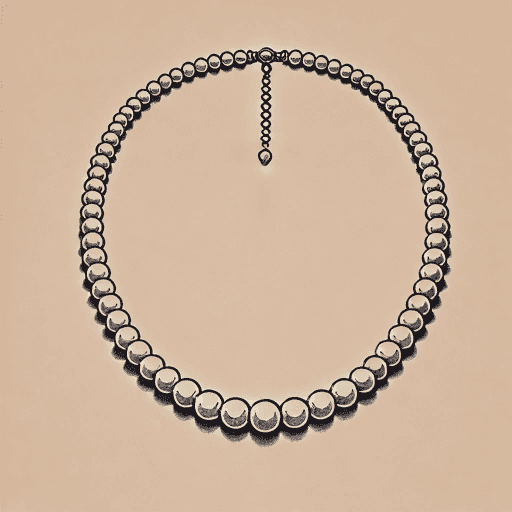
To create a reason for her to stay, Philip revives the family tradition of a Christmas Eve dinner for the tenants. Rachel is delighted and throws herself into preparations. Philip struggles to find a suitable gift for her and eventually remembers the family jewelry kept in a local bank vault. With Nick away, he persuades the reluctant manager, Mr. Couch, to show him the jewels. Philip chooses a four-strand pearl collar that Ambrose once showed him as a child. Couch explains the collar’s history as a traditional wedding day adornment for Ashley brides, last worn by Philip’s mother. Against Couch’s advice, Philip takes it.
On Christmas Eve morning, Philip and the servants decorate a large fir tree. Before the dinner, he sends the collar to Rachel with a note. When she appears in the drawing-room wearing the pearls with a new black gown, Philip thinks for the first time that she is beautiful. She embraces him passionately. As he kisses her back, Philip has the dark thought that it was “for this, that Ambrose died” (219). They walk hand-in-hand to the dinner as the clock strikes five.
Chapter 17 Summary
Philip and Rachel enter the long room to applause from the assembled tenants. The boisterous dinner proceeds, and Philip discovers that Rachel has placed personal gifts beside every plate. His gift is a gold chain for his keys, bearing both their initials and the date. They share a smile and a toast across the room.
After the meal, Philip greets the Kendalls and the Pascoes. He notices Nick staring disapprovingly at the pearl collar. After distributing traditional gifts from the tree, they return to the drawing-room. Mrs. Pascoe gushes over the collar while Nick remarks dryly on its value.
After the Pascoes leave, Nick confronts Philip alone. He reveals that Rachel is several hundred pounds overdrawn at the bank and recounts meeting travelers in Exeter who knew Rachel and Sangalletti in Florence, describing them as notorious for extravagance and “loose living” (228). Nick demands that Philip retrieve the collar, explaining that it is part of the estate trust and is traditionally worn only by Ashley brides on their wedding day. Philip furiously refuses.
Rachel and Louise enter, having overheard the conversation. Rachel calmly removes the necklace and hands it to Nick, who wraps it in his handkerchief and leaves. Philip is devastated. Rachel comforts him, and he tells her of the collar’s significance, asking if she understands why he gave it to her. She misunderstands his intention, saying that she knows Philip gave the pearls to her because “Ambrose would have given them to [her] on [their] wedding day” (233). She goes to bed, leaving Philip alone with his misunderstood gesture.
Chapter 18 Summary
Rachel ensures that they have a happy Christmas Day, visiting tenants and distributing Ambrose’s clothes. That evening, she surprises Philip with a small, decorated tree full of humorous gifts to distract him from the pearl incident.
A coolness grows between Philip and his godfather. To spite Nick, Philip initiates expensive repairs to the house and grounds, using them as an excuse to cancel the Sunday dinners. He and Rachel live a quiet, reclusive life as his infatuation grows. Spring arrives, bringing both torment and delight.
One day, Sam Bate, a lodge-keeper, summons Philip. Bate has found a sealed letter from Ambrose that had slipped between a coat’s lining and fabric. Philip takes it and walks to a granite slab in the woods that Ambrose planned to use for his tombstone. With great misgivings, Philip opens the letter.
Dated the previous April, it details Ambrose’s physical illness and mental anguish. He reveals that Rachel had a miscarriage and was told that she could bear no more children; after that, her character changed. He expresses deep suspicion over Rainaldi’s influence and suspects that he and Rachel are lovers. He mentions an unsigned will in which Ambrose left Rachel “the house and the estate for her lifetime only” (243), which he hesitated to sign due to her extravagance. The letter ends with Ambrose begging Philip to come to him, and then Ambrose wonders if Rachel and Rainaldi are “trying to poison [him]” (244).
Philip buries the letter under the granite slab. Returning home, he learns that his old dog, Don, has been fatally injured by a falling piece of slate during the repairs. He finds Rachel kneeling by the dying dog, tears on her face. She accuses him of being absent when it happened. As Philip kneels beside her, he realizes that for the first time, her sorrow is for him, not for Ambrose.
Chapter 19 Summary
Don dies near midnight. Philip finds Rachel grieving in the boudoir. He reminds her that on his upcoming 25th birthday, the estate pass into his control. She refuses his offer of the family jewels, saying they should be for his future wife. Rachel tells him that she must leave after his birthday because her position is “untenable.” As a woman, she expects people to gossip about her presence in the house.
Philip asks about the will that Ambrose made but never signed. After hesitating, Rachel retrieves it from her bureau. The will confirms what Ambrose wrote in his letter: that Rachel will take control of the estate during her lifetime, with Philip running the estate. While Philip copies it, he questions her. Rachel explains that she never knew why Ambrose did not sign it, but she believes that he lost his faith in her after learning that she could not have children. She confirms that Ambrose’s behavior changed afterward, with intense headaches and near-violent moods. When Philip asks what Ambrose suspected, she replies that he suspected everything, including infidelity and worse. She then angrily orders Philip to leave.
The next morning, they bury Don on the plantation. The following day, Philip rides to Bodmin to consult attorney Wilfred Tewin, who has not previously handled Ashley affairs. He secretly instructs Tewin to draw up a legal document transferring his entire property to Rachel on his birthday, based on the terms of Ambrose’s unsigned will. He adds a clause that the property will revert to him if she remarries. Tewin agrees to have the document ready by March 31.
Elated, Philip rides home, plotting to thwart Nick and bind Rachel to the estate. Upon his return, he finds an unfamiliar post-chaise at the house. Rachel brings him into the drawing-room to meet her visitor: Rainaldi.
Chapter 20 Summary
Philip is dismayed by Rainaldi’s arrival, but Rachel insists that he stay as their guest. Rainaldi appraises the property with a critical eye. At dinner, Rachel and Rainaldi reminisce about Italy, often speaking Italian and making Philip feel excluded. Rainaldi explains that he has come to discuss handling the Florence villa and brings documents for Rachel to sign.
Rachel and Rainaldi go to the boudoir to handle business. Philip declines to join them and walks the grounds for hours. He studies the light in her window, which stays on until 11 o’clock. Rachel comes to his room to say goodnight and chides him for his sulky behavior. He confronts her about Rainaldi staying so late. She laughs off his jealousy, embraces him, and tells him that she loves him “much too much” (268).
Rainaldi stays for seven days, treating Philip with condescending tolerance and mockery. He subtly suggests that Rachel will eventually return to Florence, then warns Philip that she is “strong medicine” (271) for someone so young and inexperienced.
On Rainaldi’s last evening, the Kendalls come to dinner. Rainaldi tells Nick that Philip and Louise make a charming couple, embarrassing Louise. Rachel announces her intention to visit London soon; she, Rainaldi, and Nick make plans to meet there.
After the Kendalls leave, Philip eavesdrops as Rachel and Rainaldi talk late into the night in Italian. The next morning, Rainaldi departs. As he leaves, Rachel tells him she will make no plans before April first, Philip’s birthday, smiling at Philip. Rainaldi’s parting shot reminds Philip that his birthday is on All Fools’ Day. After Rainaldi is gone, Rachel puts a primrose in Philip’s buttonhole and asks if he is glad that they are “alone again” (277).
Chapters 14-20 Analysis
These chapters are narrated through the filter of Philip’s escalating infatuation, rendering his account a study in subjective reality and exemplifying the novel’s focus on Emotion as a Catalyst for Misjudgment. As Philip’s emotional state dictates his interpretation of events, he succumbs to a sense of jealousy toward Nick when Rachel teases him playfully, brooding on her words and misreading her social adeptness as a personal slight. This emotional lens prevents him from seeing Rachel as an autonomous individual, and his self-centeredness compels him to cast her as a character in his own drama. Similarly, when they sort through Ambrose’s belongings, Philip perceives Rachel’s grief as an opportunity for him to ostensibly offer comfort, thereby asserting a new level of intimacy in his first use of her given name. In essence, he interprets her tears through the prism of his desire to supplant Ambrose, and this impetus taints all of his interactions with her.
The motif of inheritance functions as a central mechanism through which Philip attempts to script his destiny, and the issues involved vividly illustrate The Strain of Inheriting a Family Legacy. Disdaining conventional courtship, he turns to the material and symbolic legacy of his family in his attempt to possess Rachel, and the gift of the Ashley pearl collar is a calculated attempt to achieve this goal. Traditionally reserved for Ashley brides, the collar represents the family’s patriarchal lineage, so by bestowing it on Rachel, Philip seeks to write her into the family history on his terms. However, Nick’s forceful reclamation of the pearls underscores the fact that the very inheritance empowering Philip also constrains him, for he is clearly subject to the control of an older patriarchal authority. This frustration drives Philip to use his ultimate inheritance—the estate itself—as a tool of coercion. His secret plan to sign over the property is the culmination of his desire to bind Rachel to him irrevocably.
Throughout these machinations, the novel’s central ambiguity is deepened through the recurring motif of letters and documents, which function as tangible but malleable forms of evidence, allowing Ambrose’s accusing words to echo back from the other side of the grave. Philip’s emotional interactions with Ambrose’s unsent letters demonstrate his conscious decision to prioritize his idealized perception of Rachel over the more ominous details that his late mentor’s words reveal. Upon discovering the first fragment describing Rachel’s so-called “disease” of extravagance, he immediately burns the missive, engaging in an act of willful ignorance in order to protect his romantic fantasy. However, the discovery of the second, more explicit letter, which details Ambrose’s suspicions of poisoning and Rachel’s miscarriage, presents Philip with a greater moral test. By burying this letter beneath the granite slab that Ambrose designated as a memorial, Philip symbolically buries his loyalty to his cousin, actively suppressing evidence that complicates his idealized narrative. Yet the fact that he does not destroy this particular letter does suggest that he is not completely certain of Rachel’s role in Ambrose’s death. The unsigned will operates similarly; for Philip, it becomes a template for his gesture of signing over the estate, a legalistic pretext for his obsession. Taken together, these textual artifacts are active elements in the psychological drama, and their power lies in how Philip chooses to interpret, hide, or ignore them.
Philip’s obsession also highlights the novel’s sharp analysis of Female Autonomy as a Source of Male Anxiety. However precarious Rachel’s financial independence may be, it is nonetheless framed by the men in the novel as a sign of her inherent moral failings. For instance, Nick is disturbed by her overdrawn bank account, while Ambrose’s letter pathologizes her spending; even the smitten Philip is made uncomfortable by her purchase of expensive Italian fabrics. Because her management of money exists outside their control, the men perceive it as a threat. The arrival of Signor Rainaldi only heightens this anxiety, for as a fragment of her European past, he represents a facet of Rachel’s life that remains inaccessible to Philip. Their exclusive conversations in Italian emphasize this point, increasing Philip’s suspicion and sense of inadequacy as his insular, agrarian masculinity bridles at this evidence of a worldly, continental culture beyond his ken. Rachel’s ease within this foreign world marks her as an independent entity, and because Philip’s possessiveness cannot tolerate such an affront, he seeks to eliminate the issue by making her entirely dependent on his gift of the estate.

Unlock all 60 pages of this Study Guide
Get in-depth, chapter-by-chapter summaries and analysis from our literary experts.
- Grasp challenging concepts with clear, comprehensive explanations
- Revisit key plot points and ideas without rereading the book
- Share impressive insights in classes and book clubs