My Cousin Rachel
60 pages • 2-hour read
Daphne du MaurierMy Cousin Rachel
A modern alternative to SparkNotes and CliffsNotes, SuperSummary offers high-quality Study Guides with detailed chapter summaries and analysis of major themes, characters, and more.
Chapters 21-26Chapter Summaries & Analyses
Content Warning: This section of the guide features depictions of illness, death, mental illness, sexual content, and physical abuse.
Chapter 21 Summary
The final weeks of March pass swiftly, with Philip in high spirits as his 25th birthday approaches. Rachel teases him about his childlike excitement. On March 31, Philip decides to retrieve the family jewels from the bank so that he can give them to Rachel alongside the estate deed. To keep his mission secret, he walks to town and has the groom bring the dog-cart. At the bank, Mr. Couch reluctantly releases the entire collection when Philip insists that they are now legally his. Philip carries them away in a wicker cabbage basket, running into Mrs. Pascoe, with whom he jokes that he has fallen on hard times and must sell vegetables. He hides the basket in his wardrobe, then rides to Pelyn, his godfather’s estate, with both Ambrose’s unsigned will and the new deed. Nick Kendall confirms the will is invalid without a signature and warns Philip about the risks of transferring his fortune, saying Rainaldi admitted Rachel’s extravagance caused trouble with both Ambrose and her first husband, Sangalletti. Nick asks if Philip is “completely infatuated” (285) with Rachel and suggests marriage as the only solution to county gossip. Philip says he would not dare propose. Nick reluctantly witnesses the deed, warning that some women impel disaster through no fault of their own.
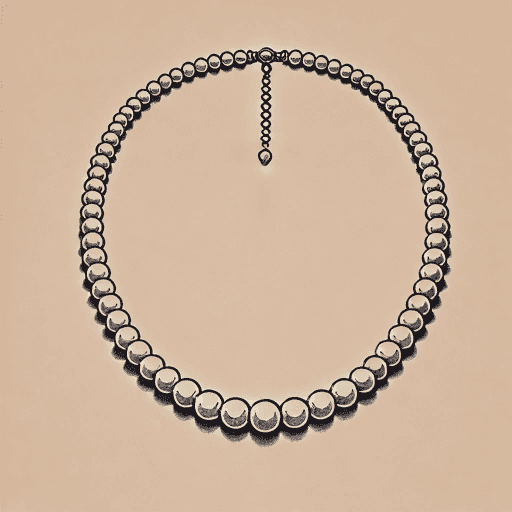
That evening, Philip goes to the beacon hill, passing the new terrace. He waits until just before midnight, then calls up to Rachel’s window and has her haul up the cabbage basket. He climbs the creeper vine into her room. As the clock strikes midnight, he gives her the deed and empties the jewel boxes onto her bed, fastening the pearl collar around her neck. She laughs and embraces him. She asks what else he wants for his birthday; he hints he now knows what he lacks. She encourages him to speak, then snuffs the candle. They spend the night together. At sunrise, Philip reflects that he has experienced tenderness and wonder, and that she was his “first, and last” (295).
Chapter 22 Summary
On the morning of April 1, his birthday, Philip feels utterly at peace, believing his future with Rachel is resolved. He picks every camellia on the estate and bursts into her breakfast room, showering her with flowers. Rachel is coolly amused and dismisses him before Seecombe can discover him in her bedroom. Philip notices the jewels have been put away, but the deed lies on her breakfast tray. Downstairs, Seecombe presents his own birthday gift—a portrait of himself—which Philip immediately hangs in the hall as a compliment. Too excited to work, Philip orders a picnic lunch and has the horse, Solomon, saddled for Rachel. When he learns she has taken the carriage out, he waits for hours, his elation turning to apathy. She returns mid-afternoon wearing a veil, explaining she visited Pelyn to clarify the deed with Nick, who informed her she must remain a widow to keep the fortune. Her manner is cool and businesslike; when she lifts her veil, her expression is serene and unmoved. She mentions that she still plans to go to London. Philip realizes that Ambrose has been dead only nine months, and he fears that society would condemn an early marriage as “wrong.”
They walk in the woods, where he kisses her passionately. His good mood returns before she gives him his gift, a pearl pin. However, when they come upon the granite memorial stone erected for Ambrose and read the inscription, Rachel grows silent and distant, and Philip feels that the stone has become a barrier between them. At dinner, she wears the pearl collar, but it makes her seem more remote to him. Philip drinks heavily to quell his unease.
When the Kendalls arrive afterward, Philip—now drunk and overwrought—proposes a toast and announces that Rachel is to be his wife. Rachel’s face becomes a frozen mask. She publicly dismisses his declaration as a “school-boy folly” (311) brought on by wine and asks the Kendalls to forget it. After they leave, Philip confronts her on the landing. She denies making any promise to marry him. He asks plainly when she will marry him; she replies never, telling him to take that as final. When he asks if she loves him, she says coldly that their intimacy was merely to thank him for the jewels. Philip suddenly understands what Ambrose suffered. He puts his hands around her throat and demands that she swear never to leave him. When he releases her, she bears red marks “on either side of the pearl collar” (315). She backs away and locks herself in her room. In his mirror, Philip sees his reflection and perceives his own face as Ambrose’s. He tears the April 1 page from his calendar, reflecting that All Fools’ Day is over.
Chapter 23 Summary
The next morning, Philip receives a note from Louise offering to meet him in town. Lonely and desperate, he agrees. They meet inside the parish church, where Louise bluntly tells him that Rachel came to Cornwall, intending to obtain his money. Philip defends Rachel as a woman of impulse, but Louise reveals that Nick knew Rachel had been sending her allowance abroad all winter, which suggests that she was building funds for her return to Florence. Louise also discloses a crucial detail: Her father told Rachel that the deed’s remarriage clause requires her to remain a widow in order to keep the fortune, and Rachel replied that this term suited her very well. Louise suggests that Rachel will not marry Philip because if she were to become his wife, the property would revert to him. Unconvinced, Philip insists that he will keep asking Rachel to marry him.
Returning home through a cold storm, Philip finds Mary Pascoe installed as Rachel’s companion. A note from Rachel states she can no longer be alone with him after his behavior. The guest room door connecting to Rachel’s suite is open. When Philip confronts her in the boudoir, Rachel’s demeanor is cold and deliberate. She says that Mary will stay as long as she chooses in order to silence gossip. When Philip begs to speak with her privately later, she refuses, reminding him that he threatened her the previous night. Despondent and unwell, Philip goes to bed, hoping that Rachel will visit him. She does not come, and when he tries her door late at night, he finds it locked.
The next morning, he experiences severe headache and neck pain, and Seecombe finds him collapsed in the office. Rachel recognizes that he is seriously ill and orders him to bed. Dr. Gilbert arrives, and Philip overhears Rachel telling the doctor that she recognizes the fever from Florence; she diagnoses it as a form of meningitis that attacks the spine and brain. In his delirium, Philip promises not to harm Rachel and begs her to send Mary away. She stays with him through the illness, and he has hallucinatory visions of Florence, including one of Ambrose’s body floating down the Arno, followed closely by “the body of the dead dog” (334).
Chapter 24 Summary
In the second week of May, Philip awakens after more than five weeks of illness. The trees outside his window are in full leaf, and he has grown a beard. Rachel, who has been sitting with him, is overjoyed at his recovery. She tells him that Mary Pascoe returned to the rectory shortly after he fell ill; she also explains that he nearly died from meningitis. She saved his life using herbal remedies that she learned from her mother, including a serum made from herbs that the English doctors called “poison.” During his slow convalescence, Rachel remains a constant, tender companion. Philip retains a confused memory that they were married just before his illness, and he now believes that their supposed marriage is being kept secret from the servants until one year after the date of Ambrose’s death.
When Philip is strong enough to go outside, he sees the completed terrace walk and the deep excavation for a sunken garden. Walking with Tamlyn, the gardener, through the plantation, Philip is reminded that laburnum seeds are poisonous. Tamlyn also mentions rumors that Rachel plans to leave once Philip is well. That evening, Philip questions Rachel, who is evasive but confirms that she intends to return to her villa in Florence. She suggests that she will winter in Italy and says that he can visit in the spring. Philip, still believing that they are married, finds the idea of separation absurd. He kneels beside her and asks when they can tell the servants that they are married. Growing rigid, Rachel gently tells him that they are not married. Philip’s illusion dissolves, and he breaks down sobbing. Rachel comforts him but insists that she must return to her life in Florence. Philip asks her to stay a few more weeks. She agrees not to leave until he is well, but his faith in their love is shattered.
Chapter 25 Summary
Through June, Philip and Rachel maintain a façade of cheerfulness, but the pain in Philip’s head returns whenever he grows stressed. He is tormented by visions of Rachel’s happy life in Florence without him, and he feels like a burden. His listlessness is noticed by the tenants and Seecombe. When the Kendalls visit, the atmosphere is strained and polite. Philip observes Rachel sorting her belongings and removing personal items from the boudoir—clear signs of departure. She also begins making frequent, unexplained trips to town. The stable groom mentions that Rachel spent an afternoon in the parlor of the Rose and Crown inn. The next day, Philip investigates and learns from the innkeeper’s boy that an Italian gentleman has been staying in the parlor. Philip takes a boat into the harbor to watch the inn and sees Rainaldi arrive.
That evening, Philip confronts Rachel, who admits that Rainaldi has been in town for two weeks at her request. Philip accuses Rainaldi of being in love with her; Rachel defends him as her only true friend. She is upset that she must “go through this all again” (356), as she did with Ambrose. When Philip demands that she send Rainaldi away, she refuses and threatens to bring him into the house for protection, reminding Philip that the house is now hers. He steps toward her, but she grabs the bell-rope, saying she has suffered violence before—even hands around her neck. Defeated, Philip tells her to invite Rainaldi to dinner. The next day, Rainaldi arrives and speaks with condescension, positioning himself as Rachel’s trustee and hinting at a future intimate relationship with her. During dinner, Philip feels nauseous; the tisana that Rachel serves tastes bitter. A weary Rachel comes to his room later, impatient with his jealousy. The next morning, Philip is ill again with fever. Rachel reveals that Rainaldi sailed for Florence the previous day.
Tormented by a dream, Philip returns to the granite stone and digs up Ambrose’s buried letter. He rereads Ambrose’s account of his illness, his suspicions that Rachel and Rainaldi were poisoning him, and his fears about the consequences of the will remaining unsigned. Philip tears the letter into tiny shreds and grinds them into the earth. Returning to the house, he finds that a letter from Rainaldi has arrived for Rachel. That night, after confirming that Rachel is asleep, Philip searches her boudoir for Rainaldi’s letter. He finds and opens a locked drawer, but inside there is only an envelope containing laburnum seeds, which are poisonous to humans and animals.
Chapter 26 Summary
Philip feels a strange, calm compassion for Rachel, believing that she is compelled by Rainaldi’s influence and lacks moral sense through no fault of her own. He empties his medicines out the window and inspects the dregs in their tisana cups from the previous evening, trying to determine if his concoction differed from hers. He concludes that his old oath to avenge Ambrose must be fulfilled. On Sunday, they attend church together. Rachel is serene and happy. Outside the church, the works foreman warns Philip that the temporary wooden bridge over the new sunken garden is unsafe and will not bear a person’s weight; anyone stepping on it “could fall and break their neck” (375). Rachel invites the Kendalls and Pascoes to dinner. Riding home with Louise, Philip asks if she knows that laburnum seeds are poisonous; she confirms they are deadly. He asks Louise to stay after the other guests leave.
At the house before dinner, Rachel serves wine, but Philip refuses to drink from the glass that she offers him. After the other guests depart, Rachel takes Philip and Louise to the boudoir to prepare a tisana. She offers Philip a cup, saying that she has made it double strength. Philip refuses. Rachel shrugs and pours the contents out the window. She announces she is going for a walk alone to the terrace, intending to visualize where a statue might stand in the sunken garden. As she leaves, Philip warns her to be careful walking beneath the sun.
Philip tells Louise of his suspicions, and they search the boudoir for proof. The drawer that held the seeds is now empty. They find a letter from the bank, which states that Rachel has returned the Ashley jewels to custody for Philip to inherit. They find Rainaldi’s letter, but it is in English and offers no evidence of a murder plot. They also discover a drawing of Ambrose from his final days, inscribed with a plea to remember only the happy hours. Louise concludes that there is no proof of wrongdoing, and they may have misjudged Rachel. Philip agrees that there will never be proof.
Realizing that Rachel has been gone too long, Philip tells Louise to ring the estate alarm bell and runs to the terrace. Near the work materials above the sunken garden, he finds Rachel’s open sunshade tipped aside. The temporary bridge has collapsed. He climbs down into the excavation, where Rachel lies, mortally wounded among the timber and stones. He takes her hands. She opens her eyes, looks at him, and calls him Ambrose before she dies.
Philip’s narrative ends with the observation that men used to be hanged at the crossroads of Four Turnings in the old days but “not any more” (387).
Chapters 21-26 Analysis
Cementing the concept of Emotion as a Catalyst for Misjudgment, Philip’s account of his 25th birthday is shaped by his infatuation, his patriarchal expectations, and his innate naïveté. He interprets the consummation of his relationship with Rachel as an unspoken marriage contract, a perception based upon his idealized, possessive worldview. However, when he is faced with Rachel’s cool, businesslike demeanor the following morning, as well as her public humiliation of him, this fantasy is shattered. Dismissing his marriage announcement as a moment of “school-boy folly” (311), she brusquely exposes the immense gulf between their interpretations of the same event, highlighting their wildly differing worldviews. In the aftermath, Philip’s emotional and psychological collapse, culminating in a fever that blurs memories with hallucinations, further compromises his credibility as a narrator. Because the story is told only from his increasingly unstable perspective, the narrative ensures that every piece of evidence is filtered through a lens of jealousy and paranoia, leaving Rachel’s true motives permanently inscrutable.
Philip’s psychological collapse also fulfills the thematic arc foreshadowed in the novel’s focus on The Strain of Inheriting a Family Legacy, for as the conflict progresses, Philip increasingly becomes a reflection of his deceased cousin, Ambrose. The inheritance thus transcends material goods to become a treacherous psychological legacy of obsessive love and suspicion. After Philip’s violent, impulsive attack on Rachel, he confronts his own reflection and sees Ambrose, and this moment confirms that he has fully absorbed his cousin’s identity and tortured mindset. Furthermore, the symptoms of his meningitis—fever, delirium, and headaches—mirror the illness that consumed Ambrose in Florence, forging a physical and psychological link between the two men. However, this sense of inherited doom only reaches its climax in the novel’s final moments, for as Rachel dies, her last act is to look at Philip and call him “Ambrose.” With this significant conflation, the scene confirms that Philip has completed his transformation; he has inherited the Ashley estate along with Ambrose’s tragic role as Rachel’s tormentor—and potentially her victim. These moments thus seal his own fate, and he will be forever haunted by the very ambiguity that he helped to create.
From her first appearance to her grim demise, Rachel serves as a catalyst for exploring the concept of Female Autonomy as a Source of Male Anxiety. Her refusal to conform to the patriarchal expectations of the Ashley world is the primary driver of the novel’s conflict, for both Philip and his godfather, Nick Kendall, view her financial independence and emotional self-possession as certain signs of duplicity. Her secret meetings with Rainaldi and her pragmatic inquiries about the deed that grants her the estate are likewise interpreted through a lens of suspicion, and the men instinctively cast her as a calculating schemer. As a woman who conforms to patriarchal demands, Louise Kendall offers commentary that further reinforces this societal anxiety, as when she frames Rachel’s prudent decision to send her allowance abroad as evidence of a long-planned deception. When Rachel finally asserts her legal power by reminding Philip that the “house is [hers]” (357), her declaration represents a full inversion of the established patriarchal order, and Philip views it as an intolerable usurpation of male authority. His subsequent rage and violence are the result of his inability to accept the idea of a woman who cannot be owned, controlled, or fully understood within his limited framework.
The ambiguous dealings between these two characters are further illustrated by their negotiations over the family jewels. Philip bestows them upon Ragel, seeing them as a marital contract and thus the ultimate symbol of ownership. However, Rachel sees his gesture as a simple gift that requires her to make a transactional gesture of gratitude—her show of intimacy. Likewise, when she later return of the jewels to the bank, she completely negates Philip’s attempt to assert ownership of her. The pervasive miscommunication between Philip and Rachel highlights their fundamental cultural and experiential differences, reinforcing the novel’s Gothic undertones. In essence, Philip’s straightforward, possessive desire is unintelligible to Rachel, for her life has been shaped by complexities that he cannot fathom. This dynamic casts Rachel as the inscrutable “other,” a common Gothic trope, and her foreignness is thus equated with moral ambiguity and potential danger.
Amid these uncertainties, Rachel’s herbal knowledge takes on a deeper symbolic meaning, for just as her tisana has the power to save Philip’s life, she is also implied to have the knowledge of how to poison a person. When Philip discovers the laburnum seeds in her possession, he therefore sees them as the ultimate proof of Rachel’s murderous intent. However, the seeds are discovered without context. Given Rachel’s known expertise with plants and herbal remedies, their presence alone is not definitive proof of a plot against him. As a result, these ambiguous objects become mirrors, reflecting back the observer’s biases and fears rather than revealing an objective truth about Rachel herself. As the novel winds to a close, the author continues to rely upon heavy symbolic imagery to articulate Rachel and Philip’s fraught interactions, and to this end, the fatal symbol of the unsafe, temporary bridge over the sunken garden serves as a stark metaphor for the fragile, ill-conceived, and ultimately lethal connection between the two characters. In the end, their relationship has been built on flawed assumptions and is therefore destined to collapse.

Unlock all 60 pages of this Study Guide
Get in-depth, chapter-by-chapter summaries and analysis from our literary experts.
- Grasp challenging concepts with clear, comprehensive explanations
- Revisit key plot points and ideas without rereading the book
- Share impressive insights in classes and book clubs