My Cousin Rachel
60 pages • 2-hour read
Daphne du MaurierMy Cousin Rachel
A modern alternative to SparkNotes and CliffsNotes, SuperSummary offers high-quality Study Guides with detailed chapter summaries and analysis of major themes, characters, and more.
Symbols & Motifs
Letters
The motif of letters serves as the narrative’s catalyst, representing the unstable nature of truth and the subjectivity of perception. Philip’s judgment is built upon the fragile foundation of his cousin Ambrose’s written words, which function as a mirror reflecting his own volatile emotions, rather than as anything more objective. Initially, Ambrose’s fragmented, desperate letters portray Rachel as a villain. Philip is utterly convinced of her guilt based on these disjointed accounts, culminating in the final, damning description of Rachel as Ambrose’s “torment” (35). This written testimony is all Philip has and it solidifies his perception of Rachel as a malevolent tormentor before he ever meets her. The letters are the supposed proof that drives him to Florence, intent on accusation and revenge.
Once Philip falls under Rachel’s spell, however, the meaning of the letters shifts dramatically. They are no longer proof of murder but become tragic artifacts of a mind diseased by a brain tumor, their accusations reinterpreted as paranoid delusions. Philip’s perception, rather than the letters themselves, is what changes, illustrating the novel’s central theme that obsessive love irrevocably warps judgment. The content of the letters remains constant, but their significance is fluid. This highlights how personal desire and emotional bias, not facts, ultimately shape an individual’s reality. The letters are a text upon which Philip inscribes his own changing narrative of adoration and suspicion.
The Pearl Collar
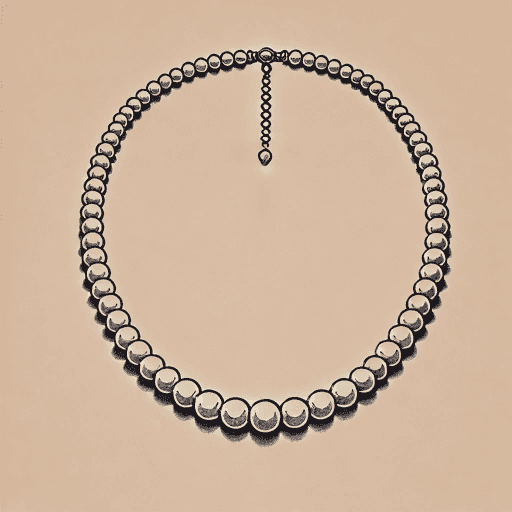
The pearl collar functions as a symbol of family legacy and, more critically, of Philip's compulsion to project his own desires onto Rachel. Passed down through generations of Ashley brides, the collar carries a specific ritual significance: Each woman wears it on her wedding day “as sole adornment” (230). When Philip retrieves it from the bank and presents it to Rachel on Christmas Eve, he is enacting a private fantasy of marriage that Rachel has neither invited nor agreed to. The collar therefore represents his inability to separate his desires from reality: a pattern that the novel identifies as the central flaw in his character.
Philip's godfather recognizes this issue immediately and demands the collar's return, realizing that its symbolism will be known to anyone who is familiar with the family. Philip, however, reads Nick’s demand as betrayal. As he unleashes his fury at his godfather and expresses anguish when Rachel unfastens the pearls, this scene reveals how thoroughly Philip’s emotions have overwritten his judgment. He cannot see the collar as an object with any social meaning beyond his own motives; to him, it is simply proof of love owed and love denied. Rachel's willingness to return it without protest only deepens the gulf between Philip and his godfather, as well as between Philip and Rachel. Her composure suggests that she always understood the collar's true significance and accepted it on different terms than Philip intended, though Philip fails to recognize this. The collar thus exposes the novel's central problem: the fact that Philip inherits both Ambrose's estate and his pattern of transforming a woman into a mirror for his own need.
Tisana and Herbal Remedies
The motif of tisana (an Italian word for the brewing of medicine herbal teas) and herbal remedies perfectly encapsulates Rachel’s essential ambiguity, symbolizing the fine line between healing and poison, and between care and malice. Rachel’s specialized knowledge of herbs is a source of her independence and power, yet this very autonomy provokes male anxiety and suspicion. For Philip, an act of nurturing (such as her brewing of a seemingly healthful tisana) can be interpreted as a gesture of care or of violence, depending on the state of his perception. This duality is established early during Philip’s visit to the Villa Sangalletti, where the servant Giuseppe recalls the couple’s routine: “they take their tisana here after dinner […] day after day, always the same” (45). What was once an innocent habit is retrospectively tainted with sinister possibility, embodying the novel’s central mystery.
This motif extends to the broader concept of gardens and seeds, which represent Rachel’s domain of knowledge. While she cultivates beautiful gardens, her expertise also includes a familiarity with nature’s more dangerous elements. The climactic discovery of the poisonous laburnum seeds in her bureau drawer serves as the ultimate manifestation of this ambiguity. Whether the seeds are intended for gardening, as a poison, or as a remedy whose properties Philip misunderstands, they represent the deadly potential hidden within Rachel’s seemingly nurturing character, leaving Philip in a permanent state of doubt about her true nature.

Unlock the meaning behind every key symbol & motif
See how recurring imagery, objects, and ideas shape the narrative.
- Explore how the author builds meaning through symbolism
- Understand what symbols & motifs represent in the text
- Connect recurring ideas to themes, characters, and events