my dream about being white
my dream about being white
A modern alternative to SparkNotes and CliffsNotes, SuperSummary offers high-quality Study Guides with detailed chapter summaries and analysis of major themes, characters, and more.
Themes
The Role of the Body in History
“my dream of being white” is centered around the theme of physical appearance. This is appropriate because it is physical appearance that governs so much of race, racial identity, and race-relations in addition to gender identity. The speaker is interrogating her relationship to her body, the relationship others have to her body, the judgments society puts on her body, and her reaction to those judgments. To wear a “white” (Line 10) body is also to wear “white history” (Line 12). Clifton is suggesting that a person’s body determines their history and their place in history.
At the same time, she questions the body-spirit connection. The speaker says, “me / only white” (Lines 2-3), suggesting that the speaker would be the same person, still “me” (Line 2), even if housed in a white body. This calls into question the validity of judging a person based on their physical characteristics, and it makes a case that she and all people are essentially made up of their spirit, not their physicality.
Internalized Judgments
Clifton puts specific attention on “hair” (Line 4), “lips” (Line 8), and the “behind” (Line 9). These are parts of the body that distinguish African Americans from European Americans and also women from men. They are doubly significant to the speaker as an African American woman, and they become doubly open for judgment by viewers.
Those who endure racism can internalize that judgment, feeling that their bodies are less desirable. However, as the saying goes, “beauty is in the eye of the beholder.” In this poem, Clifton plays with perspective. She asks the question, “what do I think about ‘white me?’” Significantly, she never introduces any other characters or points of view. She does not show “white me” (Line 10) in a social context and never remarks on what anyone else thinks about this white version of herself. This is a poem about interrogating one’s own relationship to one’s body. It is appropriate that this happens in the dream world, which is arguably the most private place a person has, the space of their imagination. Still, even in a dream world, a person carries with them their internalized prejudices and judgments. The speaker may be suggesting that even a dream of being white reflects an unconscious desire; alternatively, the desire to be white is no more necessary or serious than what a person would want in a dream. Like the superficiality of the body and its appearance, a dream is ultimately an illusion that speaks to fantasy rather than truth.
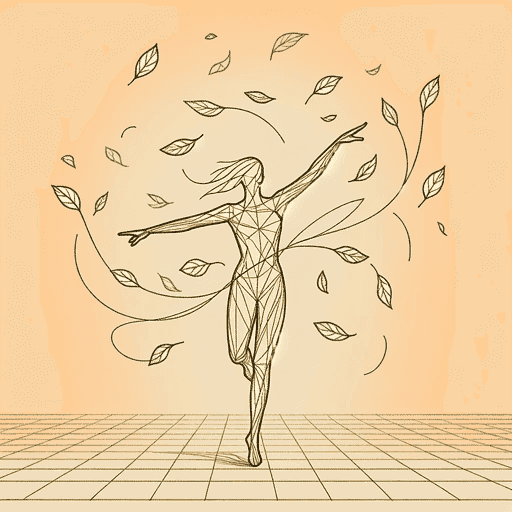
The way the speaker describes her “white me” (Line 10) and implies her “Black” self by comparison shows a conflicted and complicated attitude toward ideals of white beauty and Black beauty. The lines “perfect / line of a nose” (Lines 6-7) suggest that the speaker has internalized the aesthetic preference for typical white features. She therefore judges her white self’s “line of a nose” (Line 7) as “perfect” (Line 6). At the same time, she subtly undercuts that judgment, and, underlying her seeming praise of white beauty, there is detectable sarcasm. She describes the hair of the white woman as a “flutter of / fall leaves” (Lines 4-5). This could suggest hair of multiple colors—since the color of fall leaves are yellow, red, and brown—as opposed to her own black hair color. The image suggests the beauty and effortless grace of falling leaves, yet falling leaves are a little cliché, crumbling, and most importantly, dead. Falling leaves are the end of a life cycle that turns living plants into refuse.
The implication is that the non-white version of her body is stronger, bolder, and more fully in blossom by contrast. She also subtly undercuts the white standard of beauty when she suggests that the white version of herself has “no lips” (Line 8) and “no behind” (Line 9). Even by typical white standards, to be missing lips and behind would be considered unattractive. However, the speaker does not mean this literally. It is a figurative way to say that she does not have lips or a behind distinct from those of white women.
On the surface, the speaker could be implying that having “no lips” (Line 8) and “no behind” (Line 9) are positive attributes. She need not feel self-conscious about the size of her behind and lips, and she may be suggesting that this white body she sees in the dream is easier to manage, both physically and in terms of having access to greater social acceptance and freedom. At the same time, to have “no behind” (Line 8) and “no lips” (Line 8) would also suggest a lack of feminine qualities associated with sensuality and sexuality. The speaker’s appraisal of her white body is conflicted, thus exposing the internal conflicts people feel when their society denigrates their forms.
Freedom
Ultimately, the speaker takes off her white “clothes” (Line 14). This suggests multiple movements in her psyche as well as her external behaviors. To take off the clothes of whiteness in the dream might signify removing her internalized prejudices against her own Blackness, removing her own idealization of the white form. It might also point to the speaker’s decision to stop trying to wear white “clothes” (Line 14) in real life. This aligns with the times in which Clifton was living. A decade before this poem appeared in the book, those in the Black Arts Movement were seeking to reignite pride in traditionally Black aesthetics and Black bodies. Rather than promoting adoption of white culture—including white clothes, etc.—this and other pro-Black movements sought to encourage people of color to embrace and fully display their cultural heritage. It was a sign of liberation from white oppression at the aesthetic level, and from the belief that only one kind of aesthetic—white aesthetic—was beautiful.
Waking up from the dream signifies the speaker’s realization that her own and others’ prejudices against her body are not based in reality, but illusion. When she disrobes, she removes a fictitious idea that hides the truth. She is no longer trying to fit into a white world or a white beauty standard; rather, she is embracing her own aesthetic as being equally relevant, equally beautiful.

Unlock every key theme and why it matters
Get in-depth breakdowns of the book’s main ideas and how they connect and evolve.
- Explore how themes develop throughout the text
- Connect themes to characters, events, and symbols
- Support essays and discussions with thematic evidence