My Husband's Wife
55 pages • 1-hour read
Alice FeeneyMy Husband's Wife
A modern alternative to SparkNotes and CliffsNotes, SuperSummary offers high-quality Study Guides with detailed chapter summaries and analysis of major themes, characters, and more.
Chapters 1-10Chapter Summaries & Analyses
Content Warning: This section of the guide features depictions of sexual content, illness, and death.
Chapter 1 Summary: “Eden”
On October 30, Eden Fox sets out for a run in the Cornish Town of Hope Falls, where she and her husband, Harrison Woolf, have just moved. Eden and Harrison are empty nesters since their daughter moved out and are trying a “fresh start” in their country home. Eden is a burgeoning artist, and tonight she has her first exhibition. Eden sacrificed much of herself to care for her daughter’s needs, and now she looks forward to pursuing a life of her own.
Eden enjoys running, and she intentionally left her phone at home to separate herself from all her worries. The move hasn’t been easy on their marriage, but when she returns home, Eden is happy to see Harrison’s car in the driveway, as sometimes he spends the night at his office. Curiously, Eden’s key doesn’t work. When she knocks on the door, a woman who resembles her but is slightly older answers and states that she is Eden Fox.
Chapter 2 Summary: “Eden”
The stranger is wearing Eden’s dress, which she planned to wear to the exhibition, and even her wedding ring. Eden demands to know who she is and why she’s in her house. The woman threatens to call the police if Eden won’t leave. To Eden’s relief, Harrison appears, and she thinks he will recognize her and fix the situation. Instead, he appears not to know her and demands she leave immediately.
Chapter 3 Summary: “Eden”
Without a phone or any identification on her person, Eden has few options. Soon, a police car arrives, and Eden hides and watches as Harrison answers the door and gives the officer an account of what happened. The officer wants to interview the woman, whom Harrison calls his wife, but he says she went to bed with a migraine, having been upset by the encounter. Harrison notes in his description of the possible intruder that, strangely, the intruder resembled a slightly younger version of his wife. Eden accidentally steps on a stick, which gives away her cover, forcing her to run.
Chapter 4 Summary: “Birdy”
Six months earlier, Olivia “Birdy” Bird awaits an MRI to confirm what she already knows is something bad happening inside her body. On her recent 40th birthday, a routine physical caused her doctor to become concerned. Birdy considers how, “A life of crime has turned me into someone else. I suspect my heart is cold, and hard, and smaller than it used to be, and I don’t trust anyone” (18).
Inside the machine, she thinks of her dead mother and her lonely, isolated life. The doctor delivers the news that she has multiple tumors and not long to live. Birdy receives the diagnosis with cold stoicism and resolves to spend whatever time she has attending to unfinished business.
Chapter 5 Summary: “Eden”
Back in the present, Eden has no real friends in this new town and no one to help her. She watches Harrison walk the other woman to the car and open her door, something he didn’t regularly do for her. Remembering her exhibition, she runs to the venue and finds a room packed with people waiting to see her. In her place, the other woman is giving a speech to the adoring crowd. Just as Eden runs in to stop her, the police officer stops her and escorts her outside.
Chapter 6 Summary: “Birdy”
The narrative returns to Birdy’s timeline, six months in the past. After the MRI, Birdy returns home to her London flat situated above a bookstore. When she sees her beloved rescue dog, Sunday, the reality of her situation hits, and she finally cries, wondering who will care for him when she’s gone. After dinner, Birdy reluctantly answers a knock at the door. It’s an attorney bringing her news that her grandmother has died and left her a sizable inheritance, including a house in Hope Falls. Birdy believes he is lying because as far as she knows, she has no living grandmother.
Chapter 7 Summary: “Eden”
In the present timeline, Eden is at the police station, where she tries to explain what happened when she returned from her run. Since she can’t provide any identification, Sergeant Luke Carter, the officer, doesn’t believe she is the real Eden and wonders if she fell and hit her head. Eden doesn’t have social media accounts, but when Carter searches for information about her online, he finds an Instagram page with photos from her life. She insists the photos exist on her phone, but she has never uploaded them anywhere online. Carter must transport her to Falmouth, where she will be held overnight if she can’t provide some proof of her identity. Eden offers to call her daughter, Gabriella, but Gabriella isn’t currently speaking to her.
Chapter 8 Summary: “Birdy”
Six months in the past, the solicitor confirms that Birdy did have a grandmother who was estranged from Birdy’s mother, which leaves her confused about why she was placed in foster care after her mother’s death instead of being sent to her grandmother. Birdy grew up in Hope Falls until her mother died when she was 10. She learns that her grandmother’s house, called Spyglass, has now been left to her. She travels by train from London to see the house and feels an unsettling sense of familiarity inside, even though she has no clear memory of ever being there. While sorting through uncollected mail, Birdy finds a letter from a company called Thanatos advertising a method for predicting people’s futures. She assumes it’s a scam until she notices it’s addressed to her.
Chapter 9 Summary: “Eden”
Eden has only two phone numbers memorized: her mother’s and Harrison’s. She knows her mother won’t help, and recent events suggest that she can’t rely on Harrison either. The officer is handsome, and Eden briefly fantasizes about having sex with him since her and Harrison’s romance has gone cold since the move to Hope Falls. She uses Carter’s phone to call Harrison. She pleads with him to listen, but Carter takes the phone and proceeds to arrest her. She cries, and while Carter leaves to get her a tissue, she takes his keys, tosses them into the harbor, and begins running to her house.
Chapter 10 Summary: “Birdy”
Birdy continues exploring Spyglass, and the more she takes in, the more she recalls having been there. She examines photos of herself and her grandmother, but nothing in them looks familiar. She finds a pile of letters, all addressed to her, each containing a swallow feather just like the one she has tattooed on her hand. A knock at the door startles her, and she drops the photo frame, shattering the glass. The visitor is a young, handsome local police officer who identifies himself as Sergeant Luke Carter, the same man who arrests Eden six months later. When he asks why she is there, she is cagey with him, reluctant to give information, having a lot of experience evading the police. When she gives her name, Carter says that Olivia Bird is deceased.
Chapters 1-10 Analysis
The opening chapters alternate between two separate timelines and two female narrators, each confronted with destabilizing revelations that leave them feeling isolated and powerless. Although the women come from very different circumstances, both are forced to confront how easily their identities can be disrupted and how little authority they seem to have over their lives. Both women’s experiences foreground The Instability of Artificial Identities. Birdy arrives at the house she has inherited and is struck by an uncanny sense of familiarity, as if she has been there before, though she has no conscious memory of the place. Her body recognizes the space even when her mind cannot, suggesting that a buried self is on the verge of breaking through the superficial identity she has constructed. Eden’s experience at Spyglass House is a disturbing reversal. Although she has lived there and built a life within its walls, the people around her no longer recognize her or acknowledge her place in the home. In both cases, the women’s identity depends on social recognition rather than on their personal knowledge of their history. Birdy feels connected to a place she cannot identify, while Eden becomes a stranger in a place she knows is hers. This creates an intense loneliness and isolation for both.
Birdy’s sense that she has been at Spyglass before, despite lacking any memory, leaves her caught between instinct and evidence. Birdy thinks, “Sometimes what we don’t know can teach us more than what we do” (40). In contrast, Eden becoming an outsider and being forced to hide makes her reconsider what she thought she knew about herself and her life. Both women are discredited as authorities over their own histories and identities. Not knowing who her grandmother was, what really happened in her past, or even what the letter from Thanatos means makes Birdy feel off balance, destabilizing her sense of identity even as she is dealing with the existential threat of a cancer diagnosis. In a way, the things she doesn’t know are teaching her more about how little control she has, which is true for Eden, too, as both women are learning from the gaps in their lives as much as from what they can see or understand.
This instability is intensified by Gaslighting and the Manufacturing of Reality. Everything Birdy learns about her past comes from official sources rather than from memory, which compounds her confusion about Spyglass. Legal documents, solicitors, and unopened mail tell her who she was supposed to be, leaving her unsure whether to trust her instincts or the paperwork that defines her inheritance. Eden, meanwhile, is actively erased. Others’ acceptance of the imposter version fractures her reality; the more convincingly the substitute plays Eden’s role, the less credible the real Eden becomes, isolating and humiliating her. A stranger in her home, the imposter forces Eden into a defensive position, where she must justify herself rather than be believed. The gaslighting dynamic intensifies in her exchange with Sergeant Carter, who pushes Eden to question her experiences. Spyglass symbolizes a place where reality is rewritten for both women, as Birdy meets a past she cannot remember, while Eden is denied a present she knows to be true.
Birdy’s storyline also emphasizes The Dangerous Illusion of Certainty regarding mortality. Her doctor has told her that she has no more than a few months left to live, speaking with a degree of certainty that later turns out to be unwarranted. Birdy’s false certainty that she is dying deepens her sense of alienation. Her cancer diagnosis transforms her visit to Spyglass into both a beginning and an ending. Knowing her limited time intensifies her sense of isolation and urgency to understand her identity. The letter from Thanatos, a company bearing the Greek name for death itself, is ironic because Birdy has already received a far more immediate and personal prediction of her mortality from her doctor. Eden reflects, “Life is filled with sliding doors and dead ends, and I’m sure everyone wonders what if from time to time” (2). This idea of “sliding doors” applies to both Eden and Birdy. For Birdy, knowing her time is short makes every choice feel heavier, and every path seem final. For Eden, the metaphor reflects the pressure of the decisions she has already made in her marriage and life, showing how thinking about what could have been affects both women’s sense of control and their view of the future.
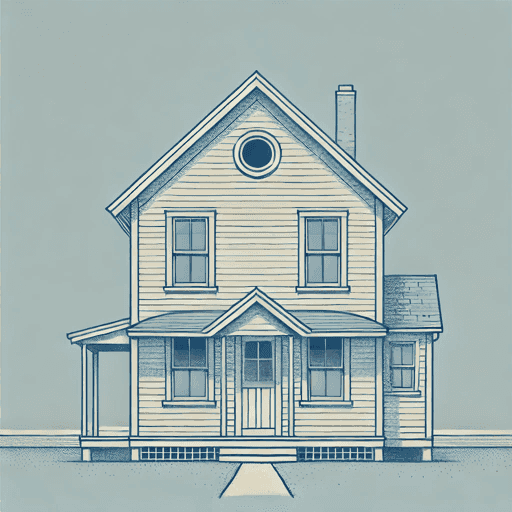
Although Eden and Birdy experience Spyglass in opposite ways, their stories illustrate how easily identity can disintegrate when others refuse to acknowledge it. Feeney uses the house as a pressure point, a place where reality shifts depending on who believes which story. A spyglass is meant to help a person see more clearly, yet it also narrows and distorts vision, making it an apt symbol for a house where truth is easily misinterpreted. In both narratives, Eden and Birdy doubt their own intuition and must rely on how police officers, doctors, and even strangers perceive them. Eden and Harrison move to Spyglass, hoping to start fresh as empty nesters, but the transition has brought more stress than peace. Likewise, Birdy’s inheritance of the house, combined with her recent terminal diagnosis, raises more questions than it answers, leaving her uncertain about both her past and her future. Carter’s presence in Birdy’s story heightens the mystery when she tells him her name. His assertion that Olivia Bird is dead leaves her and the reader uncertain about her identity.

Unlock all 55 pages of this Study Guide
Get in-depth, chapter-by-chapter summaries and analysis from our literary experts.
- Grasp challenging concepts with clear, comprehensive explanations
- Revisit key plot points and ideas without rereading the book
- Share impressive insights in classes and book clubs