My Name Is Emilia del Valle
52 pages • 1-hour read
Isabel AllendeMy Name Is Emilia del Valle
A modern alternative to SparkNotes and CliffsNotes, SuperSummary offers high-quality Study Guides with detailed chapter summaries and analysis of major themes, characters, and more.
Part 1Chapter Summaries & Analyses
Content Warning: This section of the guide includes discussion of sexual content, antigay bias, and death.
Part 1, Chapter 1 Summary
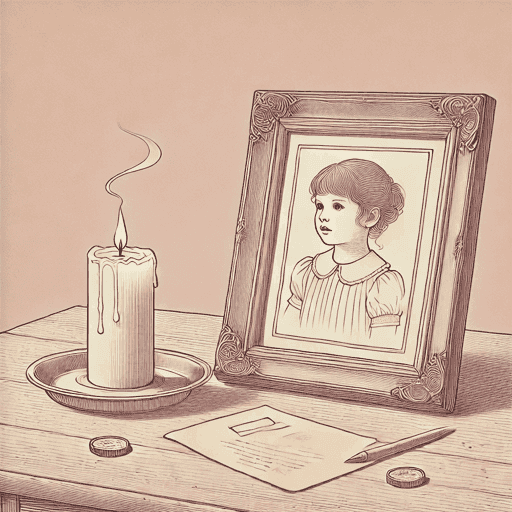
The novel opens on Emilia Del Valle’s seventh birthday, April 14, 1873. Her mother, Molly Walsh, takes her to have her photograph taken. They then go see the head of Joaquín Murieta, a bandit whose head was preserved in a jar, a moment that gives Emilia nightmares. They live in the Mission District of San Francisco, surrounded by German, Irish, and Italian immigrants and the Mexicans who have long inhabited California.
The next day, they go up to a wealthier part of the city. At his home, Molly asks to see Gonzalo Andrés del Valle, Emilia’s biological father, but he is not there. He lives in Chile and occasionally visits San Francisco. The gate attendant promises to send Molly’s letter to del Valle, and she agrees. In the envelope are a picture of Emilia and a letter.
Emilia explains that she knew her father was a rich Chilean man and that she could inherit his money, though her mother and stepfather had little wealth. She had a wonderful childhood and confesses to worrying that her father would one day force her to leave her mother and stepfather.
Emilia recounts the story of her mother’s life. Molly’s father brought her to San Francisco in 1849 during the Gold Rush. When his wife died, he split Molly and her siblings up and took her to a Catholic orphanage. Molly was very religious and became a novice, planning to become a nun. At 17 years old, she was assigned by the Mother Superior to a school called Aztec Pride in the Mission District. The school was run by a man named Francisco Claro, also known as Don Pancho. Because Molly was white, he tasked her with fundraising for the school.
Three years later, Gonzalo Andrés del Valle seduced Molly, though Emilia is unsure of how. Several weeks later, she discovered she was pregnant and believed it was a punishment from God. When Molly told Gonzalo, he refused to believe her, suggesting that she could have slept with someone else. Molly returned to Aztec Pride to find Don Pancho. He suggested that they get married and that she comes to live with him. When Emilia was born, Molly gave her the name Emilia del Valle Claro. While, at first, Molly was not in love with Don Pancho, they eventually grew closer and had three more children.
In the present, Emilia reflects that Francisco Claro has been the best father she could ask for.
Part 1, Chapter 2 Summary
Emilia discusses how close she is, even as an adult, with her stepfather, who cultivated her deep curiosity. They share many hobbies, including reading dime novels. When Emilia is 17, he suggests that she should write one herself, seeing it as a way to explore. Her story, which she calls The Damsel’s Revenge, features a woman as the protagonist who saves herself after being wronged. Emilia decides on Brandon J. Price as her penname, and Pancho Claro takes it to a publisher because Emilia would have been ignored as a woman. The novel’s popularity leads Emilia to writing a second novel, and Brandon J. Price gains popularity. To celebrate her success, Don Pancho gives Emilia a medallion of Our Lady of Guadalupe.
When she is 22, Emilia meets with the editor-in-chief of a local newspaper, The Daily Examiner, hoping to get a job. She explains her writing background, and he initially tries to place her in the social pages. However, Emilia insists that she can cover crime. He tells her that it’s not a job for a woman but gives her 18 hours to write a column on a local murder. She has to do better than the man he’s already got covering it, and no matter what, her work will be published under her pen name.
Emilia investigates the murder of Senator Arnold Cole, a member of the upper class in San Francisco. His death is the subject of much gossip in the Mission District, and while Emilia does not have the same police connections as other reporters, she knows to make use of her community’s knowledge. She learns that Cole believed that the United States was a white Protestant country, and he died when someone shot him.
Emilia speaks with Josefa Palomar, who cleaned Cole’s house. While Cole’s body was found on the street on Wednesday, Josefa tells Emilia that he was dead when she arrived at his house on Tuesday to clean. She was scared and didn’t know what to do, so she fled. She also tells Emilia that she frequently saw men coming and going from Cole’s apartment.
Emilia turns in her story to the editor, who calls in Eric Whelan, the other reporter covering the case. The editor hands Eric the column, and when he wonders who Brandon J. Price is, points to Emilia.
The column appears, recounting how Cole’s body was found on the street and that his wife had not seen him since Tuesday. Emilia also alludes to the likely possibility of Cole’s secret affairs with men. The editor hires Emilia as a columnist while Eric will continue to cover the news. Her columns will offer a more personal perspective on events through the lens of Brandon J. Price.
Emilia continues to investigate Cole’s death for her second column. She interviews the custodian at the morgue and meets with Eric, who admits that Cole was gay. In return, she tells Whelan where to find the apartment where Cole met with men but does not reveal how she knows.
Eric becomes Emilia’s mentor and friend. He encourages Emilia to travel, and she does, pitching a travel column in which she’ll spend one month in New York. Paid a paltry wage as a woman at The Daily Examiner, Emilia dreams of writing a novel under her own name.
Part 1, Chapter 3 Summary
Emilia enjoys a smooth ride to New York via a first-class train ticket. She opts to stay at a boardinghouse where many immigrants live, noticing how her new surroundings are much more crowded than the Mission District. She meets up with Eric’s brother, Owen Whelan, and gives him the box of cigarettes Eric sent for him. They quickly begin sleeping together, and Emilia falls in love, even though Owen warns her that he is not interested in a relationship. He also introduces her to Victoria Woodhall’s writings and the idea of “free love.”
Emilia writes several columns on her life in New York, including one on a séance and one on an exotic dancer. When she tries to write about a suffragist march or a strike led by female workers, however, her editor does not think that the events are relevant to their San Francisco readers.
She spends her last night with Owen at her hotel. When she departs, he does not kiss her goodbye, much to her disappointment. On the way back to San Francisco, she travels third-class, realizing how different it is from her initial journey to New York. Many who share her car are immigrants, and their journey is extended when their car is unhooked from the train to make room for cargo or first-class cars.
Eric meets Emilia at the train station. From him, she learns that Owen is married, though he does not know that Emilia had sex with him. Emilia resolves to never sleep with a married man again.
Eric and Emilia grow closer, and she learns about his childhood. He and Owen came to the United States from Ireland when Eric was 14. He started his career by writing ads, and Emilia thinks he “is the best journalist in California” (63).
Brandon J. Price gains fame as a journalist, as Emilia’s travel chronicles perform well with readers. Emilia has to keep her identity secret, and though she is invited to give lectures, she turns down the opportunities, garnering a reputation for Price as “mysterious.” When she tells her editor that she cannot remain anonymous forever, he refuses. However, an opportunity presents itself in 1891 that changes Emilia’s life.
Part 1, Chapter 4 Summary
Mr. Chamberlain assigns a story about Chile and its civil war to Emilia and Eric. The rebels are trying to get weapons in New York and then send them to Chile via California. The United States government supports the Chilean government, making any efforts by rebels on US soil antithetical to America’s position on Chile. However, the US also has a stake in Chilean mineral deposits, which are controlled by the English.
Emilia volunteers to go since she speaks Spanish and her father is Chilean. Eric decides to go, too, and cover the war, while Chamberlain charges Emilia with writing human interest stories. She and Eric also agree to each cover one side of the war. Eric plans to cover the rebels while she follows the government.
Emilia’s first story under her own name comes out in April 1891, and she introduces her readers to Chile and its situation: The United States continues to back the Chilean government because of its interest in nitrate, which is found in both fertilizers and explosives, while the British support the rebels.
Emilia sees the assignment as a way to learn about her history, and she prepares to travel. Before she leaves, Molly gives her a letter addressed to Gonzalo Andrés del Valle. When she reads it, Emilia learns of the resentment Molly holds for her birth father and isn’t sure whether she wants to deliver the letter. Emilia also reassures Don Pacho that he will always be her father.
She goes to Los Angeles, where a crate of weapons has been discovered en route to Chile. In Los Angeles, Emilia has to plan her attire strategically, knowing that she will walk a lot. She is jealous that Eric’s appearance does not matter, but because she is a woman, hers does. She meets with a sheriff tasked with stopping weapons from leaving the US. He explains that although the rebels purchased the weapons legally, the American government can seize them because they are to be used against an allied nation. When they try to transfer the arms from one ship to another out at sea, he will stop them. Emilia wishes to accompany him but is not permitted because she is a woman.
The US port authorities foil the weapons transfer in San Diego. Emilia is not present but learns what happened from Eric. Emilia carries on to Chile aboard the USS Charleston—a favor from a senator to her editor permits her to board the all-male ship. She spends three weeks at sea.
Part 1 Analysis
My Name is Emilia del Valle is meant to be understood as the writings of Emilia herself, as she narrates her life and backstory through her adventures in Chile and eventual return to the land she inherited from her father, Gonzalo Andrés del Valle. By choosing to open with Emilia’s memory of having her portrait taken and then journeying to see the head of Joaquín Murieta, Allende highlights the significance of the moment. This significance is further highlighted by the fact that this photograph becomes a recurring motif that Emilia refers back to several times in her narration. She also associates Joaquín Murieta with her biological father—having no image of Gonzalo but knowing that her mother sent her portrait off to him the day after she saw Murieta’s head forms the connection between the two men in her mind. She eventually replaces this image when she finally meets Gonzalo herself.
Part 1 establishes one of the important themes of the novel, Self-Discovery Through Travel and Storytelling, by describing Emilia’s background and family history. Allende makes it clear from the start that Emilia has a fervent wish to explore the world, as the protagonist even uses her dime novels as “an outlet for my desire to explore beyond my limited reality” (26). However, she also highlights the importance of Emilia’s family and friends, and the ways in which they support her during her adventures, even when they aren’t present. Throughout the novel, Emilia returns to the lessons she learns from her family, especially Don Pancho, to gird herself against the trials she faces. Although family is essential to her growth, at the core of Emilia’s self-discovery is writing, the vocation that spurs her travel and also becomes her means of understanding her experiences.
Emilia is also no stranger to The Trials of Womanhood and Work in the 19th Century, and Allende uses Part 1 to establish the challenges that she faces. While her family raises her to be a strong, independent woman, they do not shield her from the typical social standards and expectations for women. At first, Emilia decides to subvert these expectations by appearing to obey some of these standards, as when she publishes her dime novels as Brandon J. Price, “the most macho name we could think of” (27). However, she eventually becomes more overt in her attempts to thwart gendered expectations, as when she confronts her boss at The Daily Examiner to convince him that she is best suited to covering crime. Throughout the novel, men tell her that certain areas are no place for women, but Emilia finds her way into those spaces whenever she can. Moreover, she also works against how “critics considered [women’s] literature to be inferior, claiming that we women didn’t have the same experience of the world as men, that our minds were not as rational” (44). Emilia subverts this notion by talking to women about the stories she covers, gaining insights that would have otherwise gone unnoticed and untold. For example, by going to Josefa Palomar and using her network within the Mission District, Emilia provides information to her editor that no other reporter would have gotten.
Additionally, Part 1 gives readers the first glimpse into the theme of The Effects of War Across Social and Economic Classes. Growing up in the Mission District of San Francisco, Emilia is attentive to the lives of the working class. Riding to New York in a first-class train car and returning in third class symbolizes her ability to move across social classes, but it also juxtaposes the stark contrast between the two, showing her how wide the disparity is. She values how, in the third-class car, “[t]hose endless days of discomfort allowed each person’s true character to shine through” (58). Her care for and understanding of marginalized people who are often unseen in the US foreshadows her approach to journalism in Chile, where she begins to understand that those who feel the most devastating effects of the civil war are not the elites waging it but people in poverty who have no choice but to fight. Throughout the novel, she feels a constant pull toward their struggle, eventually surrendering her impartiality as a journalist to help those wounded on the front lines. This choice puts her in danger, though her privilege as both an American citizen and a member of the prominent del Valle family ultimately saves her.

Unlock all 52 pages of this Study Guide
Get in-depth, chapter-by-chapter summaries and analysis from our literary experts.
- Grasp challenging concepts with clear, comprehensive explanations
- Revisit key plot points and ideas without rereading the book
- Share impressive insights in classes and book clubs