My Name Is Emilia del Valle
52 pages • 1-hour read
Isabel AllendeMy Name Is Emilia del Valle
A modern alternative to SparkNotes and CliffsNotes, SuperSummary offers high-quality Study Guides with detailed chapter summaries and analysis of major themes, characters, and more.
Part 2Chapter Summaries & Analyses
Content Warning: This section of the guide includes discussion of racism and illness.
Part 2, Chapter 5 Summary
In June 1891, Emilia arrives in Iquique, Chile, where rebels have established their own government. Emilia notices the harsh class disparities within the town. Many of the wealthy, she notices, descend from Europeans while more of the workers are of Indigenous heritage. She also learns that Chilean surnames are all positioned within a social hierarchy, and this places her in the upper class.
Emilia’s first column in Chile describes the importance of the nitrate industry in Iquique, from where it is exported around the world, and describes the mining process. She interviews a man who describes how Chile’s president didn’t listen to the workers during a strike the previous year when they were asking for pay raises and better working conditions. She also speaks to four workers’ wives and concludes that the war is more about the wealthy than it is about the lives of the working class. Regardless of the outcome, they will remain in poverty, but they want better living conditions.
Eric arrives in Chile, and Emilia informs him about the nitrate trade. They also notice signs of Britain’s influence on Chile all around them. While Eric thinks that Emilia communicates quite well with the Chileans, she admits that the Spanish in Chile is much different from that which she speaks at home in San Francisco. However, she is adapting.
They decide that Emilia will go on to the south to report on the president’s activities while Eric will head north. He worries that her ship to Valparaíso will get caught up in the war, but she says that there is no way to avoid the risk. They plan to stay in touch, encoding their findings to prevent being accused of espionage, using terms from romantic novels as code for elements of war.
She makes it to Valparaíso safely. There, Emilia meets Patrick Egan, the head of the US Foreign Consulate. He is an Irish immigrant and former revolutionary there. He does not take her seriously as a journalist and suggests that she travel with him to Santiago so she can meet his wife.
Part 2, Chapter 6 Summary
Emilia arrives in Santiago, where she stays at a boardinghouse for young women. She does research on Chilean history by reading old newspapers and talking to anyone willing to speak with her.
Egan invites Emilia to a fancy party at his home. The other guests are all still loyal to the president. When someone asks her last name, Emilia notes that she is related to the del Valles of Chile, but no one knows the Claro family in Mexico. Egan explains that this is their way of placing her in the social order. In Chile, he tells her, power lies with the upper class, who often abuse those working their land. They can also sell the workers if they sell their property and while the workers are free to leave, there is nowhere for them to go.
Emilia nearly ends up in an argument when Egan and a Catholic priest discuss how women’s place is not in the workforce. However, Mrs. Egan cuts in, emphasizing that women are not feeble while ushering everyone into another room for a brief performance.
Later in the evening, Emilia meets another journalist, Rodolfo León. She also discusses the president with Egan and his other guests. When they discuss elections, she points out that the president always appoints his successor, a member of the upper class, even if there are elections. At the end of the night, Emilia learns from the other women at the party that Paulina del Valle, the head of the del Valle family, has sided with the rebels. She determines that she now knows how to find her father.
The next day, Emilia meets with Rodolfo, who was a doctor before a he became journalist. Now, he runs a newspaper aimed at attacking the president’s political enemies. He tells her that the problem with the revolution was that its basis was the “greed of those who owned the mines, the land, and industry” (101). The real problem, Rodolfo reveals, is the aristocratic society in which they live. From what he has seen of war, Rodolfo reflects that victory means that the winners get to write the history, but there is no right and wrong side. Their conversation leads Emilia to wonder what side she would be on, even as she tries to maintain her objectivity. The president is clearly ruthless in his efforts to quash the rebellion, but he is at least working for those in poverty. She wonders what Eric’s perspective is.
Rodolfo arranges an interview for Emilia with the president a few days later. He is an authoritarian ruler, but he also believes in democracy. Still, Emilia notes that his economic interests affect the way that he rules.
The novel features a reproduction of Emilia’s July 18, 1891, article that describes the president, José Manuel Balmaceda. She recounts hearing of Balmaceda’s reputation as a “tyrant” but also writes that, when asking him about the suppression of the newspapers he shut down, he said that they were only speaking for the wealthy and causing violence. However, when she discusses how he violently put down a strike, she recalls his assertion that the government must keep order. Balmaceda also describes his efforts to nationalize the nitrate industry, which would negatively affect British mining companies.
After the interview, Emilia feels overwhelmed by the complexity of the political situation in Chile. She also senses that she is meant to be in Chile.
Part 2, Chapter 7 Summary
While many of the upper class who supported the rebels fled Santiago, Paulina del Valle remains in her home. She also maintains her friendship with Balmaceda’s mother. Emilia uses her connection with Mrs. Egan to ensure that Paulina finds out that another woman with the del Valle name has arrived in Chile.
The matriarch invites Emilia to her home. When Paulina asks Emilia about her del Valle heritage, Emilia notes that Gonzalo Andrés del Valle is her biological father. Paulina, Gonzalo’s aunt, comments that he is a sly man, even if she must care for him as family. Emilia asks to meet him, but Paulina reveals that he is in hiding.
During their meeting, Paulina speaks candidly about both Gonzalo and the government. She agrees to notify Gonzalo about Emilia but only out of her desire to see a spectacle. Paulina’s husband Fredrick also tells Emilia that Gonzalo is ill.
Three days later, Emilia receives an invitation from the ambassador of Argentina—Gonzalo is friends with the ambassador and is staying there. While Emilia waits to meet him, she talks with one of the servants, a woman named Rufina. She feels a kinship with Rufina and explains her situation. Rufina, in turn, shares that she’s been working for the Argentine government since she was young and that she has been caring for Gonzalo. She adds that he has become very religious.
When Emilia meets her father, she feels no connection to him and is surprised by his advanced age. He comments that she looks like him when he was younger, and she asks if he has a message for Molly. When he does not respond immediately, she realizes that he is crying. He is sick and very different from the image of an evil man her mother has carried with her all these years. She lets her resentment fade.
Then he asks her to pull an envelope from a drawer. Inside is the portrait of Emilia that Molly had taken when Emilia was young, along with a letter from Molly. Gonzalo cries that he cannot imagine dying and being before God after he abandoned Molly just before she became a nun. He says that Molly is right; he will rot in hell.
Emilia corrects him, saying that no person can decide whether someone is going to heaven or hell. They spend the afternoon talking. Gonzalo critiques the president’s harsh treatment of ordinary people. He also says that he will ask his great-aunt to give Emilia an allowance so that she no longer has to work—he doesn’t think it is proper. Emilia tells him about Molly and her stepfather, and Gonzalo thanks her for giving him peace. Later, she burns her mother’s letter.
Emilia visits Gonzalo again over the next several weeks and learns that she is very similar to her father. She listens to him talk about his life: Gonzalo squandered his family’s money after his father passed away when he was younger. He racked up many debts, which Paulina paid off. He had little money when he met Molly, though he lived as though he was wealthy. Emilia continues to tell him about Molly.
Part 2, Chapter 8 Summary
Emilia travels with Rodolfo to Valparaíso because much of the army and press are there. While Rodolfo continues to publicly support the president, he dislikes how the government uses military force to put down protesting workers. He arranges a meeting between Emilia and General Barbosa, the leader of Chile’s armed forces. However, Barbosa limits Emilia’s time with him to three minutes.
When they meet, Emilia notes the general’s ill health. She uses her time with him to get a letter of safe conduct that permits her to travel freely, speak to soldiers, and send telegraphs.
She and Rodolfo then depart to a military encampment, and Emilia writes a column describing the conditions. She focuses in particular on the canteen girls, describing how the women deliver water to soldiers during battle and how they find her nice clothes impractical for the environment. The women serve as cooks, cleaners, and nurses at the camp as well. Emilia also admits that she worries that the women she’s met will be abused and killed if captured by the other side.
Eric’s reports are openly critical of Balmaceda, and because they are published nationwide, American readers start to criticize the Chilean government. Emilia vows to stay objective, but her editor censors several of her columns. Rodolfo even admits that support for the government is declining, but he believes that once the Chilean navy arrives on the front, the war will quickly end.
Paulina’s husband Fredrick summons Emilia back to Santiago. When they meet, Fredrick confides that Gonzalo has come down with pneumonia and wishes to publicly acknowledge Emilia as his daughter. Paulina does not support Fredrick’s meeting with Emilia to tell her this, but he thinks that she deserves to know. She says that she already has a father, but Fredrick pleads for her to think about it, saying that it would make Gonzalo feel better.
Two days later, Emilia joins Paulina, Fredrick, and Gonzalo at the consulate. Because Gonzalo is so ill, Paulina is to sign the document acknowledging Emilia, but she initially refuses to do so. There is a priest present, however, and he convinces her to sign. She then expresses her belief that heaven does not exist and that the priest has led Gonzalo astray.
After they return to the house, everyone else leaves, and Emilia stays with her father until he passes away.
Shortly afterward, Emilia returns to the canteen girls in Valparaíso. She corresponds with Eric, who warns her to flee to safety in Santiago. He also confirms that he’s seen members of the army defect to the rebels’ side during battle. Emilia concludes that the president has not earned his troops’ loyalty. She decides to stay at the encampment.
Part 2 Analysis
Once Emilia arrives in Chile, she immediately notices The Effects of War Across Social and Economic Classes, an insight that grows throughout her time in the country as she watches the civil war and its aftermath play out. Allende also complicates the novel’s representation of class, drawing a connection between race and class. Emilia begins to notice this immediately upon her arrival, commenting, “That contrast between the people of means and the masses was also visible in their semblance: Those in power, who controlled politics, commerce, banks, and, of course, the war, looked to be of European descent” (84). This colorism—the notion of bias or discrimination against those with a darker skin tone—provides a visual and racial demarcation between the wealthier and poorer classes in Chile.
Emilia’s position as a journalist allows her to get further insight into these class tensions, but her Chilean heritage also plays a part in people’s understanding of her. She is surprised to find herself placed in the upper class on the strength of her last name, and her experience at Ambassador Egan’s party demonstrates how much class matters. Emilia’s social standing as a del Valle immediately provides her with a certain amount of privilege, foreshadowing this identity’s importance in gaining journalistic access and even, eventually, saving her life. However, Emilia continues to draw on her background in the Mission District, understanding the value of the communities that often go unnoticed, as when she interviews the workers’ wives. By incorporating their voices, Emilia wishes to uplift them, thinking, “I have lived my entire life in the Mission District surrounded by women like Rufina, with whom I feel an easy comradery. From the moment I began to practice the peculiar profession of journalism, these women have always proven invaluable” (116). Emilia uses her role as a journalist—and the work that she has done to get into such a position—to show how important women’s perspectives are. Additionally, her conversations with working-class people highlight how even though members of the upper class sometimes want to improve conditions for the working class, their lack of lived experience means that they don’t understand the everyday trials and problems faced by those of lesser means.
Emilia also contends with The Trials of Womanhood and Work in the 19th Century while in Chile. The motif of writing manifests throughout the novel as her published newspaper columns are interspersed with her narration, but in Chile, it takes on a new meaning because her name is attached to each article. The existence of each column symbolizes a triumph over those who do not believe that women should work, let alone be journalists covering the war. Egan, the general, and many others actively discourage Emilia and her work. Allende contrasts her difficulties with Eric’s ability to move freely to do his job in order to emphasize men’s privilege during this time. While others try to stifle Emilia, they encourage her male counterpart. Still, she persists, highlighting her characteristic determination.
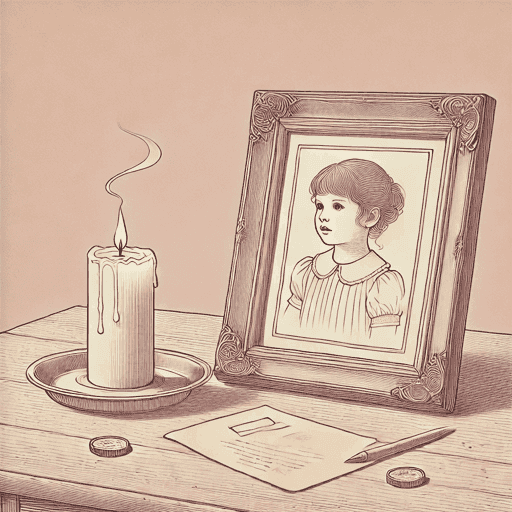
The longer Emilia spends in Chile, the more she begins to see its importance to her identity, continuing the development of the theme of Self-Discovery Through Travel and Storytelling. She reflects, “I was a stranger in Chile and could not aspire to understand it, but the country was pulling me, as if in a mysterious way I belonged in this land” (106), signifying the beginning of her understanding that her Chilean roots will only grow more meaningful to her. Emilia’s strong familial foundations in San Francisco led her to believe that her connection to Chile was only beneficial in terms of the access she could get for her work as a journalist. However, her innate sense that something is “pulling” her speaks to her larger quest for self-discovery. Part 2 includes a crucial step in this journey as Emilia meets her birth father. Their reunion is not one she expects to be meaningful, but as she hears his apologies and regrets for how he treated her mother, she experiences catharsis. She is finally able to let her “craggy bitterness dissolve into gravel, into sand, into nothing” (106). The return of her photograph from her youth also recurs in this section, symbolizing how that fleeting moment for her as a child was also meaningful for Gonzalo and proving that his regret is authentic. Emilia’s forgiveness of Gonzalo and her acceptance of her Chilean heritage are milestones in Emilia’s journey of self-discovery as she recognizes the complexity of her heritage.

Unlock all 52 pages of this Study Guide
Get in-depth, chapter-by-chapter summaries and analysis from our literary experts.
- Grasp challenging concepts with clear, comprehensive explanations
- Revisit key plot points and ideas without rereading the book
- Share impressive insights in classes and book clubs