My Name Is Emilia del Valle
52 pages • 1-hour read
Isabel AllendeMy Name Is Emilia del Valle
A modern alternative to SparkNotes and CliffsNotes, SuperSummary offers high-quality Study Guides with detailed chapter summaries and analysis of major themes, characters, and more.
Part 4Chapter Summaries & Analyses
Content Warning: This section of the guide includes discussion of physical abuse, death, and death by suicide.
Part 4, Chapter 13 Summary
Having been kicked and insulted by her captors, Emilia wakes in pain. She has little sense of time in the dark cell, and she can hear the firing squad outside. She prays to Our Lady of Guadalupe, resorting to religion in a time of little hope.
Eventually, two soldiers come to interrogate her, asking if she knows Rodolfo León. She denies it, and they accuse her of being a government spy. Rodolfo is in the cell next to hers, and she can hear as they torture and kill him.
Emilia is brought before a war council. They accuse her of being on the government’s side because she wore its uniform during the Battle of Concón. She knows that they won’t believe anything she says. Eventually, they return her to her cell, where a soldier asks if she wants to see a priest. Spitefully, she asks for a bishop.
Waiting for her death, Emilia imagines her loved ones with her. She thinks of her childhood and finds comfort in the idea of heaven, where she can one day be reunited with Eric. She wishes that she had a pencil and paper because she has always used narrative as a way of making sense of life. She believes that, like so many soldiers, she is going to die for no reason. Before she falls asleep, she prays again. Emilia believes that Our Lady of Guadalupe appears to her and consoles her, saying that she will be with her.
Soldiers wake Emilia and take her to be executed. She comes before the firing squad. The last thing she hears is the sounds of the guns. She falls to the ground.
Part 4, Chapter 14 Summary
Chaos reigns as the new government and its supporters take over Santiago. Many people are killed for supporting the government (or being accused of doing so). Eventually, order is restored. Paulina del Valle ventures out with her husband to find her friend, Balmaceda’s mother. The woman’s house is ransacked, and a servant reports that she sought asylum in a foreign consulate.
Emilia’s firing squad had loaded their guns with blanks as a cruel joke. Other journalists meet a similar fate as the Revolutionary Junta determines that they cannot kill foreign journalists because they need to maintain goodwill from foreign governments. Because Emilia is a woman, they believe that her tortured and messy condition will not look good. She is brought fresh clothes and treated as though no abuse has been carried out at all. She bathes and changes her clothes. Eric and Fredrick wait for her. When the two men point out Covadonga, who had waited for her outside the prison, Emilia claims the dog as her own.
Eric had worked to secure her release, eventually sending a telegram to the ambassador. He also found a naval captain with whom he was friends. Now a leader in the Revolutionary Junta, the man wrote a letter demanding her release just in time. Fredrick had been contacted by the ambassador, and Paulina agreed to host Emilia. The del Valle’s support for the rebels pays off; no one will bother them.
Emilia spends weeks recovering in her great aunt’s home. Eric continues to correspond about the war, but he signs his articles with both of their names.
Emilia also gets to know Paulina better, and they share about their respective lives. Paulina fully accepts her into the family, admitting that there have been other children born out of marriage. She also reveals that Emilia has inherited property from her father, land taken from the Mapuche. It has not been settled, however, and is not worth much. Eventually, Emilia tells Eric that they should go see it.
The next day, Emilia and Eric receive news that President Balmaceda died by suicide. Emilia speaks to Rufina, the woman who cared for her father and had also, as it turns out, cared for the president. She writes an article delineating Rufina’s story: The president decided to go to the Argentine consulate to protect his family from potential violence. However, he also worried for the Argentine ambassador’s safety, so he decided that dying by suicide was the only way out. A letter was found with his body in which he condemned the revolution and emphasized the importance of democracy.
The country’s mood toward the former president shifts to respect. Copies of his letter circulate.
Part 4, Chapter 15 Summary
Emilia and Eric talk about marriage, and Paulina buys them rings and throws a “ring ceremony” for them. It also becomes the occasion on which she announces Emilia’s formal relationship with the family. While her husband thinks that throwing a party while so many are still suffering is wrong, Paulina sees that the lives of the upper class have returned to normal.
Emilia is skeptical of marriage and feels terrible that her parents aren’t there to witness it. She wants to let their relationship grow, but she also worries about what marriage will mean for her career. She and Eric agree to do the ring ceremony and then marry in San Francisco. She writes to her parents back home.
The ring ceremony goes off without a hitch, and that night, Eric sneaks into her room. They make love, and Emilia reveals her relationship with his brother. They let it stay in the past.
Mr. Chamberlain demands that Emilia return now that public interest in the Chilean war has faded. He sends a more delicate request to Eric to come back to San Francisco. Eric begins to make arrangements to return home. Emilia, however, feels changed by her time in Chile. She feels older, having been so close to death. She also wants to see her father’s land.
Eric is upset when she tells him of her plans to travel south, worried that something will happen. She emphasizes that she needs to do this soul-searching on her own, and he replies that he will respect her choice. He departs for San Francisco, and Emilia goes with Covadonga southward.
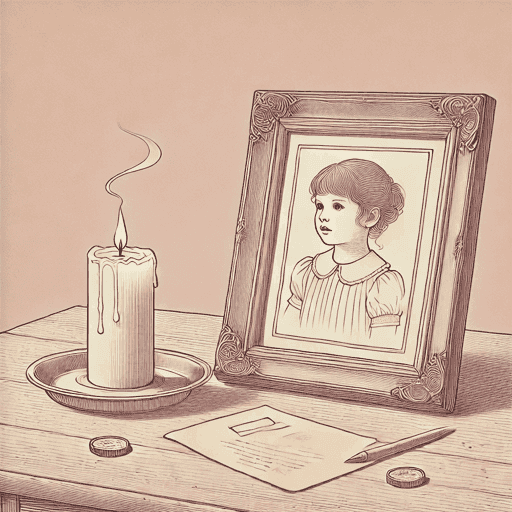
Emilia travels by boat, aboard the Niña Juanita. She spends the voyage writing about her life, beginning with the day she had her portrait done and her mother took her to see the head in a jar. The captain, a man named Janus, is interested in what she is doing and thinks that he wants to write his life story. He asks for her help, and Emilia advises him to take notes on his memories.
On her journey, Emilia meets many people, including immigrants who’d settled on land seized from Indigenous people. Eventually, they arrive in Valdivia, a major port that is influenced by its German settlers. The captain knows everyone and ultimately decides to accompany Emilia on part of her trek to her land.
Part 4, Chapter 16 Summary
The next part of Emilia’s journey puts her on a boat up the Calle-Calle River. Emilia feels grateful to witness the extraordinary beauty of her surroundings, from the many trees to the mountains.
When they next arrive on land, Janus’s friendship with the toqui Aliwenkura aids Emilia—the Indigenous tribe distrusts whites because of both the Spanish conquest and the Chileans’ attempts to control their lands. Janus convinces them to lend them horses, and a young girl rides with Emilia so she can take the animals back to their family. They make it to a smugglers’ outpost where they spend the night.
The next day, they travel further, until the young girl announces that they have gone far enough. A day later, they make it to Lake Pirihueico. Seeing its beauty, Emilia recognizes that she could never own the land; she is only a visitor. They wait for a boatman to help them cross the lake. Janus tells her it may take days for the boatman to arrive, and while they wait, she shares about her life, including her encounter with Our Lady of Guadalupe while in prison. He tells her to believe that it was real.
When the boatman comes, Janus says it’s time for him to return to his ship. He tries to convince her to come with him, worried that she is ill. Emilia replies that she needs to see her journey to its end. She can already imagine herself returning to this place to live out the end of her life. She feels like this place holds the roots of her ancestors, Spanish and Indigenous.
Part 4, Epilogue Summary
The epilogue is narrated by Eric Whelan.
Eric goes months without hearing from Emilia and prepares to leave for Chile to find her. Then, he receives a letter from Captain Janus, who recounts his time with Emilia. After he left her, he continued to worry and discovered that she had become very ill. He is writing to Eric to let him know that he is happy to help him find Emilia. Eric departs immediately.
He meets Janus, and together they travel to the Mapuche, who recount how a foreign woman had stayed with them. She was tended by a healer, and they gave her a new name: Ailen, “meaning luminous and transparent” (283). She eventually continued in her journey, giving one of them the medallion of Our Lady of Guadalupe she always wore pinned to her dress.
Janus advises Eric to return home, as Emilia is one who must always travel onward. However, Eric thinks that Emilia also wants love in her life. He understands why she would want to carry on, but he also wants to be with her when she desires to return home.
Captain Janus leaves. Several Mapuche ultimately help Eric find Emilia atop a steep hill. They immediately embrace. She’d heard he was with the Mapuche and had been waiting for him, wanting him to see where she was living. The Mapuche had cared for her, and she had spent her time writing. Covadonga was also still with her. She shows him her completed journals, and Eric recognizes that he will never be able to fully grasp her, only hope that their love can keep them together.
Emilia tells him that she is ready to go home.
Part 4 Analysis
In Part 4, Emilia takes an unexpected turn in both her literal journey and her journey of self-discovery. While Emilia comes to Chile to cover the war, expecting to remain an observer, she becomes too involved to just return home unscathed. The war’s effects reach their climax in these chapters when it appears that Emilia has died, which Allende implies with a cliffhanger ending to the firing squad scene: “The last thing I heard before falling to the ground was the thunder of the rifles. Nothing else, no pain, only darkness, emptiness” (226). This moment is full of tension, as readers are left to wonder if Emilia will continue to narrate the novel from beyond the grave, and Allende continues to build this tension until she reveals the cruel trick of the firing squad. She uses a similar move during the Epilogue, as the narration shifts to Eric, who learns that Emilia is ill in Chile.
Though these two moments are similar, they have different narrative purposes. The first speaks to the effects of war in general, as the cruelty of the guards illustrates the violence and chaos in the aftermath of a conflict, particularly one that includes a regime change. Emilia knows that “the life of each and every soldier in that war was worth the same as mine, that all our souls were precious and all of us were at the mercy of forces beyond our control” (224), and her own near-death experience exemplifies how she is at the mercy of those in power. However, her womanhood places her in a unique position in prison, speaking to The Trials of Womanhood and Work in the 19th Century. The fact that she is allowed to shower and change into fresh clothes before being released shows how the image of a woman as appearing to have been treated with a specific form of dignity mattered in 19th-century culture, even if Emilia’s reality in prison was much different. This contrast between her actual treatment and the outward presentation continues as Emilia notes that a guard who had just been a member of the firing squad that played a cruel joke on her “spoke to [her] in a formal, respectful tone, as if nothing of the previous mistreatment had occurred” (232). With this juxtaposition, Allende highlights the vast disparity between how society treats women and how it publicly represents that treatment.
In the Epilogue, Emilia’s fate remains unconfirmed, but her trip to her father’s land underscores her continued Self-Discovery Through Travel and Storytelling. Emilia’s agency and desire to learn more about herself by traveling through her homeland is important because she believes that at least having tried to reach her land in Chile will lead to some level of fulfillment. In this section, Allende invokes magical realism to highlight Emilia’s turn toward religion in prison and then again in the remote parts of Chile. When Our Lady of Guadalupe seemingly appears to her and “respond[s] that She would stay with [Emilia], that there was nothing to fear” (224), it feels so real to Emilia that she believes it actually happened. When she recounts her experience to Janus, his words emphasize a key element of magical realism: It combines small elements of the fantastical and treats them as though they are part of reality. He states, “Do not try to understand what happened, my friend. It is an enigma. Guard that moment in your memory like a treasure” (276). Emilia feels a similar supernatural sense as she travels through Chile, though this time she leaves the Virgin of Guadalupe medallion behind with the Mapuche, an indication that she is leaving modern organized religion behind. She thinks, “This magical place in the south of Chile holds my most ancient roots” (278). Allende alludes to the fact that Christianity was brought to Chile by missionaries, while Indigenous spiritual traditions—what Emilia connects to when she invokes her own likely Indigenous Chilean ancestors—would have existed much longer. Like Eric, readers discover a new Emilia (or Ailen), in Chile, one enchanted with the land and feeling that she has soaked up every bit of her time there. With her successful journey, Emilia also continues to subvert society’s expectations of women. She has gone farther than any man expected her to go, traveling alone and focusing on telling her story. Even though Eric narrates the Epilogue, it is Emilia’s words that close the book when she states simply. “I finished my story. I am ready to go home” (287). With these words, she declares her journey of self-discovery to be completed.

Unlock all 52 pages of this Study Guide
Get in-depth, chapter-by-chapter summaries and analysis from our literary experts.
- Grasp challenging concepts with clear, comprehensive explanations
- Revisit key plot points and ideas without rereading the book
- Share impressive insights in classes and book clubs