52 pages • 1-hour read
My Name Is Emilia del Valle
A modern alternative to SparkNotes and CliffsNotes, SuperSummary offers high-quality Study Guides with detailed chapter summaries and analysis of major themes, characters, and more.
Summaries & Analyses
Plot Summary
Background
Chapter Summaries & Analyses
Character Analysis
Themes
Symbols & Motifs
Important Quotes
Book Club Questions
Reading Tools
Symbols & Motifs
Photographs
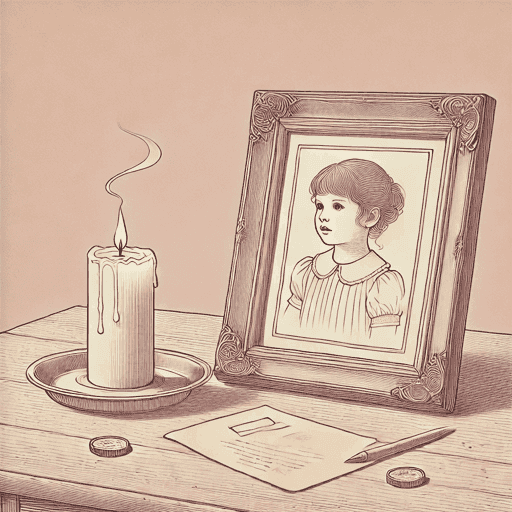
Two photographs of Emilia appear in the novel, and their appearances all illustrate how she changes over the course of the novel. Photographs in the 19th century were much less readily available than they are in modern times. Allende emphasizes both the difficulty and the expense through the scene of Emilia being photographed at the opening of the novel.
The photo of Emilia taken as a young child plays an important role in two scenes. The first is when Molly commissions the photograph to show Gonzalo Andrés del Valle that he has a daughter and to reproach him for denying them. Emilia and Molly spend much of their lives thinking that Gonzalo was apathetic toward his daughter’s existence; however, the second appearance of her childhood photograph proves this to be untrue. Showing Emilia the photograph, Gonzalo comments, “I am dying of sadness over a wasted life, over my frivolity and selfishness” as he “blubber[s]” (120). To him, the photograph does not symbolize his apathy; rather, it signifies his great regret. For Emilia, seeing this photograph once again and gaining a different understanding of its context shows her that her relationship with her father is much more complicated than she first assumed.
Emilia’s second portraiture experience in the novel shows her as an adult, though it includes the presence of another young del Valle, Paulina’s granddaughter Aurora. The inclusion of Aurora symbolizes how Emilia herself has grown so much since her first photograph was taken and how different her relationship with the del Valles is now. However, as with the first photo, this portrait does not fully represent Emilia. When Eric shows it to the Mapuche at the end of the novel, they say nothing, with Janus even commenting, “The rigid woman in fancy clothes, with an elaborate hairdo, staring forward with a startled expression—she didn’t look like the Emilia he knew” (283). His words emphasize the fact that on her travels, Emilia has continued to grow, and a new woman has emerged.
Religion
Religion appears throughout the novel as a way of understanding and coping with the world. Emilia frequently sees people turn to it (and to Christianity, specifically) in times of need. While she grew up in the Catholic tradition, it is not until her life is put to the test that religion and the supernatural take on meaning for her. Allende incorporates religion into the novel to show how people turn to the idea of something larger than themselves in order to cope with war, death, and violence.
Molly’s history with Catholicism and her training for a religious life provide important context for Emilia’s childhood. Raised by a devout mother and supportive father, she knew of Catholicism and its practices. Yet despite growing up religious, Emilia herself does not pray or demonstrate an affection for Christianity, noting that she “had distanced [herself] from religion years prior” (218). The closest act to religious expression is her choice to wear a medallion of Our Lady of Guadalupe, but this act is, at least at first, because she associates it with Don Pancho, who gave it to her. Therefore, when Emilia begins to pray while in jail, it marks a distinct shift in her typical attitude. Like many that she saw on the battlefield and like her father, she too turned toward religion to make sense of the horrific experience of war and the possibility of her impending death.
At first, Catholicism is what comforts Emilia as she “pleaded with the Virgen de Guadalupe, Sacred Mother of Jesus, rescue me from this terrifying cell, please do not abandon me now and if I must die, oh Mother of God, please do not abandon me in the hour of my death” (218). Our Lady of Guadalupe’s appearance introduces an element of magical realism into the narrative, and Janus’s acceptance of it as real, too, suggests the possibility of such experiences. However, Emilia moves beyond the Catholicism of her youth when she travels further into Chile; her spirituality evolves into a connection with nature. She uses religious language as she takes in the landscape, saying, “I pray that he will come here with me, that he too will grow old and die here” (278). Her decision to leave her medallion with the Mapuche signifies her final break from Catholicism to embrace an even older sense of spirituality, one that connects to her “most ancient roots, the roots of my indigenous, Spanish, and mestizo ancestors, running much deeper than my mother’s connection to Ireland or mine to California” (278).
Writing
Emilia’s greatest passion is writing, and her love for it is a motif that runs through the novel, as she turns to it in order to process her experiences. She finds this connection at a young age when she discovers “an outlet for my desire to explore beyond my limited reality. Through writing I could go anywhere and do anything I wanted” (26). For Emilia, this is especially meaningful. Growing up as a woman in the late 19th century, Emilia isn’t given many opportunities. She uses writing as a way to explore beyond societal restrictions; in addition, from a practical perspective, the relative anonymity of a writer allows her to use a male pen name to get paid and open doors to further her career.
Allende presents the novel as Emilia’s own account of her life and time in Chile, narrated by herself. Near the end of the novel, she reflects, “Thanks to this notebook, which keeps me occupied, the hours slip by easily and the morning has soon been spent” (277). With this choice, Allende offers insight directly into Emilia’s thoughts and perspectives, and she suggests that Emilia learns about herself through the act of writing. Charting her growth through writing, first in dime novels and her columns for The Daily Examiner as Brandon J. Price and later under her own name, allows Emilia a longer perspective on her life, one from which she recognizes how different she is from the woman who left the Mission District. The shift from incorporating her columns into the narrative to focusing specifically on her story also demonstrates how Emilia finally values her own story as much as she has valued so many others. Just as she uplifted the voices of women who were often ignored, she now understands that her own voice is equally important.

Unlock the meaning behind every key symbol & motif
See how recurring imagery, objects, and ideas shape the narrative.
- Explore how the author builds meaning through symbolism
- Understand what symbols & motifs represent in the text
- Connect recurring ideas to themes, characters, and events