My Next Breath: A Memoir
53 pages • 1-hour read
Jeremy RennerMy Next Breath: A Memoir
A modern alternative to SparkNotes and CliffsNotes, SuperSummary offers high-quality Study Guides with detailed chapter summaries and analysis of major themes, characters, and more.
Prologue-Part 1, Chapter 3Chapter Summaries & Analyses
Content Warning: This section of the guide includes graphic descriptions of serious injury and a near-death experience.
Part 1: “Incident”
Prologue Summary: “One Shot”
In the Prologue, Renner presents his core belief that action is the most important thing in life, then shows this philosophy through a dangerous accident that happened on New Year’s Day 2023. Renner believes that while thinking and feeling matter, real change only happens when people take action. He argues that emotions by themselves cannot solve problems or save lives.
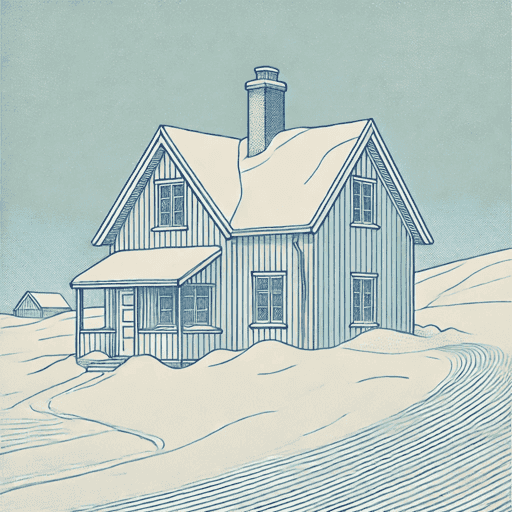
He demonstrates this idea through a life-threatening emergency involving his 27-year-old nephew Alex, with whom he has a close father-son relationship. The crisis began when a huge 14,000-pound snowcat—a large machine Renner uses to clear snow on his mountain property near Lake Tahoe—started sliding out of control across ice toward Alex, who became trapped against a Ford Raptor truck that was pushed against a snowbank with nowhere to run.
With only seconds to act, Renner needed to prevent his nephew from being crushed to death between the truck and the snowcat’s steel blades. His plan required a very difficult jump: Leaping about three feet up and three feet across to reach the snowcat’s driver compartment, grab the door handle, get inside, and press the emergency stop button. Renner explains that in this moment, he was not the actor famous for doing his own stunts or playing Hawkeye in movies, but simply a family member whose love drove him to protect someone important to him. He describes his split-second decision as pure instinct, similar to an animal protecting its family, with no time to think or prepare.
The Prologue ends with Renner’s failed jump and the ominous statement that everything then “crunched,” hinting at the serious injuries that followed and introducing the memoir’s focus on how this single moment completely changed his life.
Part 1, Chapter 1 Summary: “Snowmaggedon”
Renner describes a New Year’s celebration that became unexpectedly meaningful. Each year, he hosts about 25 family members at his mountain home near Lake Tahoe, which he calls “Camp Renner.” This gathering is his most important family tradition.
The narrative begins with a series of travel mishaps that nearly prevented Renner from reaching his own celebration. Renner, his daughter Ava, and his nephew Alex missed their flight from Los Angeles by mere minutes. With no other flights available and a major storm approaching, Renner decided to drive eight hours to Lake Tahoe instead. The trip got more complicated when he accidentally left his car keys on the roof, forcing Alex to go back and find them.
Renner recalls that the storm that hit was historic: Weather forecasters predicted a record-breaking storm that would dump five feet of snow and bring 100-mile-per-hour winds. Despite the dangerous conditions, the family gathered at Camp Renner just before the storm struck. Once the storm began, it knocked out all power, cell service, and internet for days. The family was completely cut off from the outside world. Rather than seeing this as a problem, Renner found it transformative. Without phones or television, the family talked, played games, and connected in deeper ways. His niece Kayla noticed that Renner himself seemed more present and affectionate than usual, which was significant because he typically keeps to himself in large groups.
The storm created practical challenges, especially with cooking. Renner’s sister Kym tried to make a roast dinner but struggled without reliable power. On New Year’s Eve, Renner and his friend Rory went to Reno for food supplies. Renner recounts the story of how he met Rory, an “approachable and goofy-funny” (15) Canadian who didn’t recognize Renner when he first met him despite having just seen one of his movies. On the way back from their food run, Renner and Rory found that authorities had closed the mountain road. Renner refused to give up and convinced local police to escort him back up the mountain.
The actual New Year’s celebration was simple but meaningful. The family watched the ball drop on a phone with weak signal, seeing the Times Square celebration hours late. Renner contrasts the crowded New York scene with their quiet mountain gathering, emphasizing how real their family connection felt.
The chapter ends with Renner watching his family have a massive snowball fight, seeing adults become playful like children again. Looking ahead to 2023, Renner felt optimistic about his work projects but acknowledged the tension between his career and spending time with his daughter Ava, whom he calls his “home.” He resolved to make different choices, especially about work that takes him away from her.
Part 1, Chapter 2 Summary: “Snowcat”
Chapter 2 recounts the catastrophic accident that nearly killed Renner on New Year’s Day 2023. Stranded by heavy snowfall at his property, Renner and his companions—including his nephew Alex and longtime friend Dave Kelsey—attempted to clear snow and escape to go skiing. After sharing a moment of gratitude and optimism about the new year, the group faced multiple equipment failures while trying to dig out vehicles.
When Renner’s Ford Raptor became stuck in a snowbank near the main road, they decided to use the snowcat for extraction. Alex operated the snowcat to pull the truck free, but during the disconnection process, Renner made a critical error. Unable to see Alex from the cab due to the raised blade, Renner stepped onto the machine’s tracks to communicate with his nephew but failed to engage the parking brake. The snowcat began sliding on ice toward Alex, who was handling chains on the ground. Recognizing that his nephew would be crushed between the 14,000-pound machine and the truck, Renner attempted to leap back into the cab to hit the emergency stop button. Motivated purely by love and family devotion, he made what he describes as an impossible jump across the spinning tracks.
Renner’s feet lost their grip, and he was catapulted forward, striking the ice head-first and opening a severe gash. The snowcat continued forward, crushing his body beneath its six wheels and 76 steel track ridges over approximately five seconds. The chapter provides graphic detail of the crushing process, describing the sounds and sensations as his skull split, bones cracked (38 total fractures), and his left eye was displaced from its socket. From Alex’s perspective, he managed to escape into the Raptor at the last second, repeatedly saying “please be quick” as he expected to die. After the machine passed, Alex—drawing on his previous crisis experience—calmly assessed Renner’s injuries and recognized the severity of the situation.
Regaining consciousness face-down on the ice, Renner immediately identified his compromised breathing as the most critical threat. Unable to breathe naturally, he realized he would need to consciously control each breath while enduring excruciating pain. The chapter introduces what Renner calls “cheat codes”—mental frameworks that emerged during the crisis. The primary mantra, “THE ONLY OBSTACLE IN YOUR WAY IS YOU,” provided a foundation for his survival efforts (38). Additionally, his understanding that stress represents a fear-based response helped him focus on body awareness techniques developed through his acting career.
A crucial element of Renner’s survival psychology involved his connection to family members, with images of loved ones flooding his consciousness and providing him with the determination to live. His background as an actor, particularly his body awareness and breathing techniques, also proved crucial for survival. The chapter concludes with Renner’s recognition that he faced a 40-minute ordeal on the ice, during which he would need to manually control his breathing while his family remained unaware of the disaster occurring half a mile away.
Part 1, Chapter 3 Summary: “Lamaze”
Chapter 3 establishes the crucial childhood experiences that prepared Renner for survival during his life-threatening crisis. The chapter’s central revelation concerns Renner’s unexpected participation in Lamaze breathing classes when he was 12 or 13 years old. As the oldest of seven children, Renner often served as a caregiver to his mother. When she became pregnant with his sister Nicky and needed to attend Lamaze classes, she brought him along to the YMCA sessions instead of leaving him at soccer practice.
Renner learned controlled breathing techniques designed to manage pain during childbirth. The experience provided him with intimate knowledge of breathing as a pain management tool. Renner reflects that this seemingly insignificant childhood experience represented one of the most valuable lessons his mother ever gave him, though neither could have predicted its life-saving importance decades later.
Renner connects this lesson to his broader philosophy about information as his primary defense against fear and anxiety. Growing up as a latchkey child after his parents’ divorce when he was eight, Renner developed self-sufficiency through various adventures and mishaps, including building tree houses and engaging in dangerous games with friends. Through these experiences, he learned that knowledge and information consistently defeated anxiety and fear.
Renner illustrates this theme with an anecdote about a car accident during his childhood. While riding without a seatbelt in the 1970s, his mother became distracted and rear-ended another vehicle, causing Renner’s head to strike the windshield. Despite receiving a concussion, he remained calm while his mother panicked. This incident taught him that once something happens, the key lies in how one responds to new circumstances rather than dwelling on what occurred.
He then returns to the immediate aftermath of the snowcat accident, emphasizing how his childhood lessons became essential survival tools. Unable to breathe naturally due to his crushed ribcage, broken ribs, punctured lung, and dislocated shoulder, Renner had to manually control every breath as Alex squatted down to support his arm and hold it away from his body. Renner describes each breath as requiring the effort of a complete push-up. He explains his systematic survival approach, beginning with establishing a breathing rhythm and conducting a mental inventory of his injuries. Despite having a gashed head, displaced left eye, and numerous broken bones, he maintained cautious optimism rather than panic. His actor’s training in body awareness proved crucial, as his profession required intimate knowledge of physical presence and control.
Alex’s quick thinking proved critical in securing help. After assessing the severity of Renner’s injuries, Alex ran to find assistance, eventually reaching neighbor Rich Kovach’s garage. Rich’s partner, Barb Fletcher, who had medical training from working in surgical centers, immediately gathered towels and supplies to control Renner’s bleeding and keep him conscious. Her motivation was intensified by having witnessed her uncle’s death the previous day, making her determined not to experience another loss.
Rich coordinated with emergency dispatch while navigating the challenges of their remote mountain location. The 911 call reveals the complexity of emergency response in the isolated area, with services 15 miles away in opposite directions. Rich and Barb advocated for helicopter transport, suggesting the Tanenbaum Event Center as a landing site.
During the 45-minute wait for emergency services, Renner maintained manual breathing while experiencing waves of pain and varying consciousness levels. His mental state oscillated between practical problem-solving and dark contemplation about survival or permanent disability. His thoughts ranged from fears about living as a “brain inside a ruined body” to the optimistic hope that he could merely “release this cramp, and get some ice on my eye” and walk back to the house (56). Renner focused on one breath at a time as Alex continued to hold his arm in position, Barb pressed a towel to the gash in his head, and Rich stayed on the line with emergency services.
Prologue-Part 1, Chapter 3 Analysis
My Next Breath opens with the catastrophic snowcat accident that fundamentally altered the trajectory of Renner’s life on New Year’s Day 2023. The narrative structure begins in medias res, plunging into the immediate aftermath of a 14,000-pound machine crushing Renner’s body while he attempted to save his nephew Alex from the same fate. This opening establishes the memoir’s central organizing principle: The examination of how a single moment of crisis reveals the essential elements Renner believes define human existence. The author employs a non-linear narrative approach, weaving between the immediate trauma and the prior formative experiences that prepared him for this ultimate test of survival.
The Importance of Information permeates every aspect of Renner’s survival narrative and philosophical framework. Renner consistently identifies knowledge as his primary defense against fear and uncertainty throughout his life and career. He recounts how “information was everything” and served as “[his] savior, the thing that saved [him] from fears, from being too afraid to do things” (42). This principle became literally life-saving during the accident, as Renner rapidly assessed his injuries, understood his breathing limitations, and made calculated decisions about positioning his body to maximize oxygen intake. The author demonstrates how his lifelong commitment to gathering and processing information—from understanding body mechanics as an actor to learning Lamaze breathing techniques as a teenager—created a cognitive foundation that enabled him to survive a potentially fatal situation.
The theme of Mastering Fear and Taking Action operates as both a personal philosophy and a survival mechanism throughout these chapters. Renner presents action as the antithesis of passivity, arguing that “the most important thing in life is to take action” (1) rather than remaining trapped in contemplation or emotional response. This philosophy manifested during the accident when Renner attempted his impossible leap to reach the snowcat’s emergency stop button, knowing that hesitation would result in his nephew’s death. The author’s commitment to action over contemplation extends beyond crisis situations to encompass his general approach to life, as he consistently chooses engagement over safety. Even while crushed beneath the machine, Renner’s focus shifted immediately to actionable problems—learning to breathe manually, positioning his body for optimal lung function, and conducting systematic injury assessments.
The Centrality of Love and Family drives both Renner’s initial crisis and the subsequent fight for survival. His decision to attempt the dangerous leap that ultimately crushed him stemmed from an instinctual protective response rooted in familial love rather than calculated heroism. The author describes this moment as “pure action, motivated by love” and emphasizes that his nephew Alex represents “[his] blood” (3). Throughout his ordeal on the ice, thoughts of his daughter Ava, his extended family, and the holiday gathering waiting at his house provided the emotional fuel necessary to sustain his manual breathing for 45 minutes. The memoir reveals how family connections operate as both motivation and meaning-making structure, transforming what could be viewed as a random accident into a purposeful test of devotion and commitment.
Renner’s rhetorical strategy relies heavily on sensory imagery and technical precision to convey the physical reality of trauma while maintaining narrative momentum. The author employs mechanical metaphors—e.g., comparing his breathing efforts to performing push-ups—and describing the snowcat in terms of its specific weight, track configuration, and operational mechanics. This technical language serves to ground the surreal experience of being crushed in concrete, measurable terms while also reflecting Renner’s analytical approach to crisis management. The juxtaposition between clinical descriptions of injury and emotional responses to family danger creates a tension that drives the narrative forward while illustrating the author’s dual nature as both analytical problem-solver and devoted family member.
The memoir’s structure demonstrates how seemingly disparate life experiences—from childhood Lamaze classes to professional stunt work—converge to create the skills necessary for survival. Renner presents his attendance at his mother’s birthing classes as prophetic preparation for manual breathing under extreme duress, while his career as an action performer provided the body awareness necessary to assess and manage injuries. This retrospective coherence suggests that individual experiences gain meaning through their contribution to survival and service to others, rather than through personal achievement or recognition. The author’s analytical framework positions each element of his background as data points in a larger survival algorithm rather than as separate biographical details.

Unlock all 53 pages of this Study Guide
Get in-depth, chapter-by-chapter summaries and analysis from our literary experts.
- Grasp challenging concepts with clear, comprehensive explanations
- Revisit key plot points and ideas without rereading the book
- Share impressive insights in classes and book clubs