Night Shift
A modern alternative to SparkNotes and CliffsNotes, SuperSummary offers high-quality Study Guides with detailed chapter summaries and analysis of major themes, characters, and more.
Summaries & Analyses
Quizzes
NEWReading Tools
Stories 1-4Chapter Summaries & Analyses
Story 1 Summary: “Jerusalem’s Lot”
“Jerusalem’s Lot,” a prequel to King’s second novel ’Salem’s Lot (1975), is set in Maine in 1850. The narrative is epistolary and unfolds through a series of letters predominantly from Charles Boone to his colleague, Bones. The letters begin on October 2, 1850. Boone and his attendant, Calvin (Cal) McCann, arrive at Chaplewaite, which is Boone’s ancestral summer home. Locals believe that Chaplewaite is “bad” and that anyone who willingly lives there is “either a lunatic or run[s] the risk of becoming one” (5). Inside, Boone is disturbed by noises that he believes are rats in the walls. Tidying the house, McCann finds an old map to an abandoned nearby village named Jerusalem’s Lot. Intrigued, McCann and Boone set out to survey its remains.
When they arrive, Boone and McCann investigate a “spiritually noxious” church that leaves both men repulsed. The altar’s gold cross is upside down, an indication of Satanism, and there is an obscene painting of a Madonna and child. Boone discovers an ancient book bearing Latin and Druidic runes, entitled De Vermis Mysteriis, which translates to “The Mysteries of the Worm.” When Boone touches the book, the pulpit beneath it shakes. He senses something huge “turning” beneath him.
A few days later, Mrs. Cloris, a former maid of Chaplewaite, reveals Boone’s family history. An interfamilial fracture started with Boone’s grandfather, Robert, who took control of Chaplewaite from Philip, Boone’s great-uncle. In 1789, Phillip, a pastor dedicated to occult pursuits, discovered Robert attempting to steal De Vermis Mysteriis and disappeared with the inhabitants of Jerusalem’s Lot.
The following day, Boone and McCann investigate the sounds in the walls. They enter the cellar and discover the undead corpses of two of Boone’s ancestors, Randolph and his daughter, Marcella. Boone recognizes his ancestors as “nosferatu—the Undead” (24). While Boone recovers from his shock, McCann discovers Robert Boone’s diary, which gives a history of Jerusalem’s Lot and of the days leading up to the massive disappearance. The village of Jerusalem’s Lot was founded by a distant antecedent of Boone’s—a schismatic preacher named James Boon whose hardline beliefs in demonic possession and interbreeding led to “a community of incest and the insanity and the physical defects which so often accompany that sin” (26). Two generations later, Robert and Phillip built Chaplewaite nearby, ignorant of their familial connection to the village. Phillip was drawn into Boon’s cult. Phillip later acquired De Vermis Mysteriis for Boon, as the two planned to summon “The Worm,” a terrifying netherworld presence. For this reason, Robert stole De Vermis Mysteriis.
Boone is compelled to return to the church, and a reluctant McCann accompanies him. Inside the church, the two men find a butchered lamb draped over De Vermis Mysteriis. When Boone touches the book, he becomes possessed, and a crowd of undead acolytes appear and begin summoning the Worm. McCann knocks over Boone, breaking the spell, and the two attempt to escape. The Worm breaks through the floor of the church and devours McCann. The Worm withdraws, and a new horror surfaces. Boone sees the rotting corpse of James Boon—“Keeper of the Worm!” (36)—rise from the hole and flees.
Boone concludes his final letter to Bones with a promise to kill himself to quell his family legacy and prevent The Worm from rising.
A letter from James Robert Boone to a publisher follows Boone’s letters. Although Boone believed himself to be the last of his line, James is his living descendent and inherits Chaplewaite. James dismisses Boone’s letters as the delusions of “brain fever.” He believes that Boone murdered Calvin McCann and forged the notes in his name. James’s letter concludes with a statement regarding “some huge rats in the walls” (38), and it is dated October 2, 1971, the same date as the first of Charles Boone’s letters.
Story 2 Summary: “Graveyard Shift”
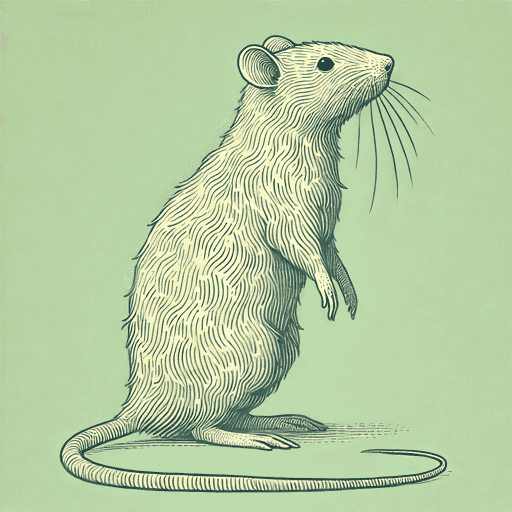
The story unfolds in timestamped segments taking place over a six-day period, from Friday to the following Thursday. Told in limited third-person narration, “Graveyard Shift” focuses on Hall, a “solitary” man who has drifted from job to job after graduating from college. He works the overnight shift in a decaying textile mill in Gates Falls, Maine, where he has little personal connection. He passes the time at work by pegging stray rats with crushed up aluminum cans. Hall has little patience for both people and pests. His manager, Warwick, a petty and abusive man who constantly calls Hall “college boy” (41), enlists him as part of a crew tasked with clearing out the colossal rat infestation in the ancient basement under the mill.
On the first day of the cleanup, Hall is partnered with Harry Wisconsky, whom Hall derisively regards as a “fat Pole.” The two are tasked with using a high-pressure hose to disperse the rats and clear out the detritus that has lain down there for years. It is a hard, smelly job, and disgust wears on the cleaning crews immediately. Over their break times, the crews exchange stories of being attacked by bizarre rats. The rats, locked away for so many years, have evolved into strange and distorted forms; some fly on bat-like wings, others are albino and burrow though the ground, and large armored rats viciously attack anyone they come across. The crews want to quit. Hall advocates for their safety, but an increasingly frustrated Warwick only pushes them deeper into the dark of the basement.
When Hall discovers the entrance to a sub-basement he suspected existed, Warwick attempts to force Hall down to clean it. Hall protests, citing zoning ordinances, and Warwick fires him. Unmoved, Hall continues his rant about health violations and threatens to reveal to the local health board the extent of the rat infestation. Warwick quickly rehires Hall and assigns Wisconsky as his cleanup partner. Hall cunningly announces that he’ll need three flashlights, and Warwick allows Hall to select the third worker. Hall smugly remarks that a manager should also be present and chooses Warwick. Warwick, determined to maintain his authority, acquiesces. Hall, Wisconsky, and Warwick descend into the sub-basement. Hall, determined to “break” Warwick, forces the men forward despite hearing the scuffling of thousands of rats. When Warwick tries to retreat, Hall grabs him by the neck and says, “You’re not going anywhere, Mr. Foreman” (52). Frightened, Wisconsky relinquishes the hose to Hall and scrambles back to the trapdoor, leaving Hall and Warwick alone.
The two men encounter more varieties of horrifically evolved rats, and Warwick pleads with Hall for them to turn back. Hall coolly counters, “The rats have business with you, I think” (53). The rats have begun gnawing through the hose, and Warwick tries to reason with Hall, explaining that they will not be able leave. Hall responds, “I know” and turns the hose on Warwick as he tries to run, pushing him out of sight.
Hall hears the snapping of Warwick’s bones and approaches the gulley. He sees a huge rat, the size of a calf, eating Warwick. Hall dubs the monstrosity “their queen [...] the magna mater. […] It was a huge and pulsating gray, eyeless, totally without legs” (55). Hall says “goodbye” to Warwick and makes his hasty retreat. Unable to fend off the mutant rats, Hall does not escape the sub-basement. He falls to his knees and laughs as the rats devour him.
In the basement, the workers nervously await the return of Hall and Warwick. Wisconsky refuses to join the search party, and the men mock him. After some time has passed, the crew descends into the wet darkness.
Story 3 Summary: “Night Surf”
“Night Surf” focuses on a small group of six survivors: Bernie, Susie, Kelly, Joan, Corey, and Needles. Due to a deadly pandemic, the group is sheltering at Anson Beach, New Hampshire. The pandemic was caused by the Captain Trips virus, a virus later utilized by King as the apocalyptic mechanism for his novel The Stand.
The story is narrated in the first person by Bernie, a twenties-something man who visited Anson Beach during his teens. Bernie and the other survivors nonchalantly immolate Alvin Sackheim, a man they find dying of the plague, after Corey suggests the man serve as a “sacrifice to the dark gods” (60). They build a pyre and burn the man alive. The group half-heartedly believes a human sacrifice will prevent them from contracting A6, the most recent and deadliest wave of Captain Trips. In the delirium that follows, the tensions in the group become obvious. Bernie survives with his girlfriend, Susie, but his distaste for her grows. He berates her in front of the others and fat-shames her in his thoughts. When Susie asks Bernie if he loves her, he says “No” and thinks: “She was getting fat, and if she lived long enough, which wasn’t likely, she would get really flabby” (57). Throughout the story, Bernie equates Susie to a horse, dog, and pig.
After the fire, the group disperses. Bernie and Needles smoke cigarettes and watch the surf. Needles reveals that he has contracted Captain Trips. Needles’s revelation surprises Bernie because the group is believed to be immune to A6 due to their previous contraction of A2. Needles’s admission forces Bernie to reckon with the reality of the pandemic rather than the nostalgic beach vacation the survivors sought. Bernie admits to himself that their belief in A2 providing immunity to A6 may be wishful thinking. He imagines that they will all be “dead by Christmas” (62). He walks around and observes the remnants of beach life before the pandemic—gaudy jewelry, beach towels, Fourth of July sparklers. He thinks about Maureen, his high school girlfriend, and their trips to Anson Beach. That night, he dreams about Alvin Sackheim: “He was nothing but a bloated, blackened head and a charred skull” (63). He grabs a warm beer and heads outside to the landing.
Susie wakes up and sits with Bernie. He tells her that Needles has A6. She too realizes that they all may contract A6 and die. Rather than confirm his own fear that they are just as vulnerable as others, Bernie mollifies her by suggesting that Needles simply lied to them about having A2. Susie rationalizes that Needles lied: “I would have lied if it had been me. Nobody likes to be alone, do they?” (64). She goes back to bed.
Bernie remains outside alone and watches the lulling night surf. He reminisces of his old summers in Anson Beach right after high school, seven years before A6.
Story 4 Summary: “I Am the Doorway”
“I Am the Doorway” is a first-person account of Arthur, a former astronaut who is paraplegic after the calamitous landing of his space module. Arthur relates the details of the space expedition, in which he and another astronaut transited the backside of Venus before crash-landing back on Earth. Arthur suspects that in this transit, an alien entity invaded his body. Over the course of his recovery from the crash-landing, Arthur’s hands itch increasingly. One evening, to his horror, several eyes start appearing through the split flesh on his palms and fingers. Even with his own eyes closed, Arthur can see through those in his hands. He is immediately aware that he is not the only one perceiving his world. Arthur describes an alien perspective that abhors the grotesque proportions of humans and despises the civilization they built.
Arthur persuades his friend Richard to help him search for the unmarked grave of a young boy Arthur suspects he might have killed. Richard questions whether Arthur simply dreamed the murder, but Arthur is insistent. Arthur keeps his hands bandaged and out of Richard’s view; he complains that they itch. As he and Richard drive a dune-buggy through the sand dunes around the Gulf of Mexico, Arthur indicates where the boy is buried. While he watches Richard dig into the sand, Arthur realizes that the alien entity—which is powerful enough to move his body despite his paralysis—would have come back while Arthur slept and moved the child’s corpse. This escalation of the entity’s strength unsettles Arthur, and he admits, “They’re forcing their doorway open” (74). He suddenly recalls several past incidents of the entity using his body to examine the world and then remembers the night before, when the entity used his body to kill the boy.
Distraught, Arthur strips the bandages from his hands and reveals the eyes to Richard. When Richard flees, the entity summons a lightning bolt that kills him. Arthur awakens in his home, horrified by what he has done. He douses his hands in kerosene and plunges them into a fire.
Seven years later, Arthur notices the entity has returned. There is a circle of 12 golden eyes on his chest. He plans to shoot himself with a shotgun before they grow any stronger.
Stories 1-4 Analysis
King opens the collection with “Jerusalem’s Lot” and evokes the cosmic horror of H. P. Lovecraft (see “The Call of Cthulhu” and “The Colour Out of Space”). The first four stories in the collection develop the idea that the universe is a hostile environment governed by indifferent and inhuman forces that ultimately destroy all human life. In this section, characters face a gigantic worm, horridly evolved rats, a relentless pandemic, and an inscrutable yet malicious alien presence. With these antagonists, King depicts humans as vulnerable presences battered about by processes that exceed their understanding. Their only certainty is that these colossal processes will survive long beyond their petty and mundane human existences. King suggests that these same indifferent forces control human lives and that humans are therefore incapable of preventing their fates. Nevertheless, the characters rarely find solidarity in their shared vulnerability. Each of these four stories explores how human beings segregate each other: Charles Boone encounters community alienation for his familial legacy; Hall’s education distances him from his blue-collar coworkers; Bernie and his fellow survivors rationalize burning a man alive because he is infected; and Arthur experiences a dissociative alien perspective that isolates him from humanity. These separations lead to an examination of the prevailing themes of the collection: The Nature of Human Relationships, The Relationship Between the Conscious and Unconscious Mind, and Maliciousness and Human Motivation.
King sets the collection’s bleak tone and ominous mood with “Jerusalem’s Lot.” Charles Boone’s suggestion that the sound of his undead ancestors is akin to “rats in the walls” is a clear nod to Lovecraft’s short story “The Rats in the Walls” (1924), which is also about a man who takes over his ancestral home only to fall victim to his ancestors’ aberrant occult practices. The epistolary structure of the story allows King to thematically explore the relationship between the conscious and unconscious mind. It also evokes the common modes in which Lovecraft and Bram Stoker (whose Dracula inspired King’s ’Salem’s Lot) regularly worked. The cosmic aspect of Lovecraft informs the figure of the Worm, as well as the Worm’s awakening via De Vermis Mysteriis—itself a text drawn from Lovecraft’s writing. The Worm, with its colossal body, fundamental unknowability, and slumbering presence, is strikingly similar to Lovecraft’s Eldritch (meaning “coming from a foreign realm”) Gods. Even the garbled Latin speak of conjuration, “Gyyagin vardar Yogsoggoth!” (35), is heavily inspired by Lovecraft’s style of “magick” speech. Within the stylistic context, the intimate yet platonic relationship between Boone and Cal emphasizes the basic bonds that hold people together. Conversely, the references to incest call into question the nature of human inheritance and the invisible bonds between humans that carry forward the sins of the past. Ultimately, it is the blood-sins of the past that prove more powerful, subsuming all contemporary human action into atonement for past transgressions.
The deep power of an indifferent universe also features in “Graveyard Shift,” which explores maliciousness and human motivation. In this story, that power manifests as the inexorable process of evolution, which creates mutated rat monstrosities. When confronted with this power, the characters can do little but turn their incomprehension and suffering into antagonism against one another. Written while King was in college, “Graveyard Shift” examines the tension between college-educated people and the blue-collar community they wish to escape from. It is Hall’s ability to observe and perform research that empowers him to lure Warwick to his death. King depicts a type of class-warfare but suggests that in an indifferent cosmos, there are no winners. However, the message remains: Humans, facing the maliciousness of a universe they cannot understand or communicate with, will turn on each other as quickly as hungry, trapped rats.
Nostalgia, one of humans’ primary sanctuaries against the bewildering universe, is examined in “Night Surf.” This story affords much of its attention to the nature of human relationships, as well as maliciousness and human motivation. Against the backdrop of a pandemic, King explores what bonds people to one another. Society has crumbled, but the strangers come together for a moment of shared purpose: the immolation of an infected man. No one seems disturbed by the action, and in this distance from their humanity, King locates his perspective. With its bonfires, interpersonal drama, and seaside heart-to-hearts, the story contains elements of a typical adolescent beach vacation (something that many of the characters are trying to emulate to comfort themselves). Each of these elements, however, becomes darkly ironic and inevitably points back to the disaster that has consumed the world. Their heart-to-hearts are admissions of infection, their interpersonal dramas involve life-and-death stakes, and their bonfire burns another human alive. Amidst the nostalgia are reminders of the vast power of the mutating virus. King’s depiction of human “togetherness” cast against this backdrop is pessimistic.
“I Am the Doorway” more literally depicts the universe’s incomprehensibility. In seeing the world through alien eyes, Arthur cannot maintain the fiction that humans are more significant than other earthly animals. Although Arthur is paraplegic, the alien entity can control and animate his body. In the jarring moments when Arthur shares the alien consciousness, he becomes aware that human forms and human achievement can be perceived as grotesque and transitory. This depiction prompts readers to question their own assumptions of human sovereignty and societal righteousness. Readers witness Arthur’s alienation from his own body, and through this lens, King examines the liminal spaces of the mind. He suggests that the relationship between the conscious and unconscious mind is perhaps more antagonistic than people suspect. King casts human relationships—including one’s relationship with the self—as utterly unreliable. The story implies that humans are powerless against the coldly calculating entities who are far more at home in the uncaring universe.
In each of these stories, humans are fractious and incapable of dealing with the larger powers around them. Characters are at the whim of violent supernatural forces. King uses the motif of possession in “Jerusalem’s Lot” and “I Am the Doorway” to highlight this powerlessness. Similarly, King uses the motif of body weight in “Graveyard Shift” and “Night Surf” to illustrate human pettiness and to signify that even in extreme circumstances, humans resort to degradation over empathy. The first four stories present a cynical portrayal of humanity in a perpetual state of disintegration, much like the fading industrial societies around them.

Get in-depth, chapter-by-chapter summaries and analysis from our literary experts.
- Grasp challenging concepts with clear, comprehensive explanations
- Revisit key plot points and ideas without rereading the book
- Share impressive insights in classes and book clubs
Related Titles
By Stephen King