Symbols & Motifs
Moths
Content Warning: This section of the guide includes discussion of illness and child abuse.
Moths have both a functional and metaphorical purpose within the narrative. The Noctisoma that Lilia and Devryck study often infect a species of moth specific to the island of Dracadia, and these moths are used in the research conducted by them and the rest of the parasitology class. Lilia imagines a romantic connection between two moths in particular, who breed when the Noctisoma toxin within them increases their hormonal responses, as she projects her growing bond with Devryck onto the moths. Lilia and Devryck are united in their ambitions, with the Noctisoma being central to their life’s purpose, so the moths are crucial to them both.
Moths are also very delicate and, despite their fragility, drawn to flames. This results in Devryck’s nickname for Lilia, “Curious Moth” or just “Moth,” as she incessantly tries to unearth the truth behind Dracadia’s conspiracies. He first says this to her when he finds her curiosity endearing yet dangerous and informs her that she may be putting herself in danger. The name reappears several times, though, including when Devryck jokes that he “thought it was the moth who would succumb to the fire” (455). He means that he thought Lilia would be at risk, but instead, he was the dangerous entity—the fire—who fell victim to the power of the “moth,” or his love for Lilia. In the end of the novel, Lilia notices that the two moths she had personified and given a romantic story to were framed after their deaths and hung in Devryck’s office.
Plague Masks and Disguise
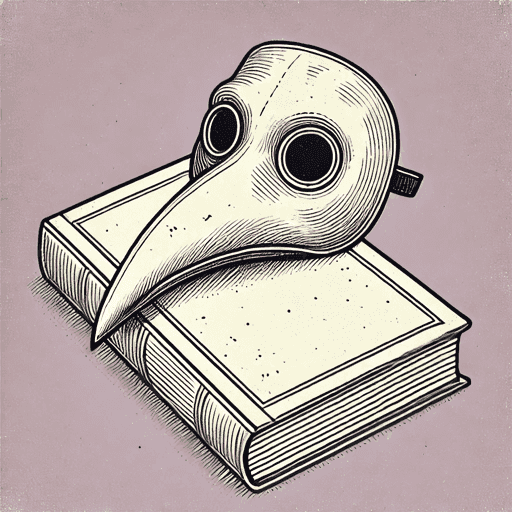
A subplot throughout the novel involves the Seven Rook Society, a secret organization operating throughout Dracadia that involves many current or former students or members of staff, many of which have gone on to hold major positions of power in business or government. Devryck, being the son of a wealthy and influential researcher, became a part of this society, like his father, to serve his own aims in finding the cure for his illness through research that the society helped fund. The garb of the society is that of a stereotypical plague doctor, including the robe and beaked mask thought to be prominent during the Black Plague.
These masks are held by many who seek to hide their identity, including Devryck’s brother, Caedmon, who stalks Lilia throughout the novel as he tries to sabotage Devryck’s career and reputation. The mask is vaguely threatening and harkens back several centuries, to when doctors wearing the same mask unethically experimented on women and marginalized people with the goal of scientific discovery. This alludes to how the university is still stuck in the past. The masks also signify that Lilia is constantly unable to see the true faces of those around her; many people she encounters are hiding something from her.
Disguise is a recurring motif in Nocticadia, with the plague mask serving as its most visible representation. Beneath its literal function, the mask symbolizes the many false personas adopted by characters to protect their secrets, manipulate others, or survive dangerous systems. From Devryck’s emotionally detached demeanor to Lippincott’s performance as a benevolent administrator, many of the novel’s key figures operate behind social, institutional, or emotional masks. Lilia herself must learn to wear metaphorical disguises—navigating academia, grief, and her growing relationship with Devryck—without revealing too much of her vulnerability or origin. The motif ultimately points to how secrecy and hidden agendas drive the novel’s central conflicts and how stripping back those disguises is the only path toward truth, justice, and healing.
Touch
Devryck’s major internal conflict regards The Impact of Past Trauma on Present Actions. He was severely physically abused by his father, to the point that an injury to his head triggered a dormant, rare genetic disease that permanently decreased Devryck’s quality of life, brought on dangerous seizures, and restricted his ability to register physical sensation in his limbs. He often misses if someone brushes him or if there is a temperature change, to the point that Lilia notices a burn on his skin before he does later in the novel. He is introduced as a character as an unfeeling person in an affair with Professor Gilchrist, whom he is disgusted with for touching his arms in their most recent sexual encounter. He expresses how the dissonant feeling of knowing he is being touched yet not feeling it is extremely upsetting to him.
This is a metaphor for his deep emotional disconnect from others. He can engage with them physically, especially if he is dominant, but he is unable to develop a genuine connection with anyone before Lilia—he refuses to be vulnerable. His traumatic past has left him as unwilling to bond with others as it has left him unable to feel their touch. This changes when his Noctisoma toxin research enables him to mitigate the symptoms of his disease and feel sensation again, if only for short times at first. This initially happens with Lilia, well after they’ve developed an attraction to one another, and his elation at being able to register touching her parallels the growing emotional vulnerability they have with one another. They have sex that night, but they also express numerous facts about their personal lives that they hadn’t yet broached before. In the novel’s end, he has improved his medicine and can regularly feel touch, metaphorically communicating that both his emotional and physical walls have been let down.

Unlock the meaning behind every key symbol & motif
See how recurring imagery, objects, and ideas shape the narrative.
- Explore how the author builds meaning through symbolism
- Understand what symbols & motifs represent in the text
- Connect recurring ideas to themes, characters, and events