Nomadland: Surviving America in the Twenty-First Century
Nomadland: Surviving America in the Twenty-First Century
A modern alternative to SparkNotes and CliffsNotes, SuperSummary offers high-quality Study Guides with detailed chapter summaries and analysis of major themes, characters, and more.
Summaries & Analyses
Quizzes
NEWReading Tools
Games
Part 2, Chapters 5-9Chapter Summaries & Analyses
Chapter 5 Summary: “Amazon Town”
Linda May turns sixty-three in 2013, when she begins working as a campground host for the first time for $8.50 per hour, 30 hours per week. She enjoys not working for Home Depot and the independence that comes with living and working in the wilderness. The summer season is slow and easy until August when an illegal campfire sparks the third-largest wildfire in California history, eventually forcing Linda’s work to come to an early end.
Later that year, she drives to Fernley’s Amazon warehouse to join CamperForce for the holiday season. Linda is not deterred by headlines published as early as 2011 detailing harsh working conditions, heat waves, chronic injuries, and employee productivity surveillance. She believes her previous experience in construction and waitressing has prepared her and that she is physically fit enough for the job.
During her first week of orientation Linda is taught how to be a “stower,” a worker who distributes items into bins on shelves in the warehouse. The rest of her first week is devoted to “work-hardening,” the process of working half-day shifts to allow CamperForce workers to prepare for the long hours and demanding physical toll the job will take on them. Linda works the overnight shift, which pays seventy-five cents extra per hour; she earns a total of $12.25 per hour plus overtime.
The first few weeks are challenging for Linda, particularly walking up and down the aisles of the massive warehouse in addition to the squatting, lifting, climbing, stairs, and other physically demanding tasks she must endure. Linda, a recovering high-functioning alcoholic and drug user, uses the strength she has gained from getting sober to get through her first few weeks at CamperForce. This tenacity helps her fight both the physical strain of the job as well as the repetitive, boring nature of the work.
Silvianne and Linda meet through CamperForce. Unlike Linda, Silvianne struggles with the tedium of working in a warehouse, as well as back strain and an unintended injury resulting from an electrical static shock.
Both women also befriend a young couple named Jen Derge and Ash Haag, who are living in the same RV park while working as stowers at the Amazon FC. Jen grew up watching her family work hard for little pay, but she couldn’t see the point in staying in school past her associate’s degree, especially when her coworkers and contemporaries who held bachelor’s or master’s degrees couldn’t find work. Ash had watched her own family struggle financially after her father was laid off in the early 2000s. She is burdened by debt, having accrued $30,000 of student loans and thousands in interest while trying to earn her bachelor’s degree before dropping out.
Jen and Ash, disillusioned and seeking an alternative way to live, decide to live out of their van. Their van, however, runs into problems, forcing the women to get creative and find ways to heat themselves and arrive at work on time by bicycle. Yet they struggle with the physical demands and monotony of the work. Both women sign up to work night shifts to save money on heating, becoming two of the “Amazombies,” or Amazon warehouse night-shift employees.
As temperatures drop, Linda offers her CamperForce neighbors the use of her warm RV while she is at work. She invites Jen and Ash to join her in going to Quartzsite after CamperForce, where they can all attend RTR, enjoy the warmer weather, and get some rest.
Linda struggles with dizzy spells and wrist strain as the holiday season grows more hectic, but doctors are unable to diagnose her with anything besides a potential pinched nerve. Meanwhile, on Cyber Monday in 2013 alone, Amazon made more than $74.45 billion in sales.
Her health struggles make it difficult for her to get into the holiday spirit. While other workampers leave early to visit family for the holidays, she decides to work until December 30th to earn extra money. Tired and defeated, Linda works through the holiday and rejects her fellow workampers desire to call themselves “Santa’s elves.” Still, she completes her goal and finishes her last shift before heading to Arizona.
Don Wheeler stays to keep working at the FC, becoming a “blue badge,” or a permanent associate worker who oversees workampers. He requests that Bruder no longer use his real name as he tries to make a new life for himself as an Amazon employee (who are not allowed to speak to the media) and restore his finances.
Chapter 6 Summary: “The Gathering Place”
Bruder introduces the town of Quartzsite, a town with a population of about 4,000 people in Arizona. Each winter, it becomes destination for retirees and senior citizens seeking a respite from cold weather by moving for part of the year down south. Nomads call it “The Gathering Place” (116).
During the RTR, the town attracts thousands of people living in their RVs, campers, vans, and other mobile homes. Many stay in one of the town’s seventy RV parks (there are only three motels), while others gather and park on public lands just outside of town. Businesses and restaurants in Quartzsite cater to these nomads, and many vendors travel to set up shop. Bruder characterizes the scene as “a sprawling tailgate party” while National Geographic once called it “America’s Largest Parking Lot” (122). It is also called “Spring Break for Seniors” and “Poor Man’s Palm Springs” (122). Quartzsite is estimated to attract nearly forty thousand visitors each winter.
Bruder is first told about Quartzsite by Iris Goldenberg, a sixty-two-year-old CamperForce worker she interviews who lives in a trailer with her pet birds. She admires “the blurring of class lines” (123) that happens at Quartzsite as people from all walks of life gather each year.
Some RV group gatherings allow like-minded people to join together, grouped by age or interest. Bruder describes coming across them as similar to “stumbling on suburban tract housing—with its cookie-cutter neighborhoods—in the middle of nowhere” (125).
Quartzsite originated in 1856 when white settlers set up the small town of Fort Tyson in order to engage in warfare against the Mojave Indians. Fort Tyson would later evolve into a seedy stagecoach stopover and eventually a mining town (hence the name “Quartzsite”). Despite the town’s oddball reputation and declining population over the decades, by the mid-twentieth century the gem, mineral, and flea-market economy had taken over.
Bruder chats with Cherie, a quirky local swamp meet owner originally from Minnesota whose scrappiness and resourcefulness are the result of her own struggles to make ends meet back in Minnesota. She tells Bruder she thinks she is crazy for wanting to live in New York City, preferring instead to live closer to nature.
Quartzsite finds itself within the American boom-and-bust economic cycle. Bruder notices boarded-up businesses in town. The number of visitors every year to RTR is declining for unknown reasons. Many RVers are struggling financially and don’t spend their money as freely as they might have in the past. Bruder is told, “transient old folks flock to Quartzsite because it’s a ‘low-incoming retirement town and ‘a cheap place to hide’” from worried family members and freezing cold weather (130). She visits church dinners and the town food pantry to see how the town helps feed many nomads who are experiencing hardship.
Bruder returns to Quartzsite three winters in a row in order to see what the town is like during the winter for herself. Each winter, she meets up with Barb and Chuck Stout, CamperForce laborers who journey there each year. During their third winter, they are “veterans,” and she watches them “[perform] a rite of joyful catharsis: burning their old bankruptcy papers” (134).
Chapter 7 Summary: “The Rubber Tramp Rendezvous”
Linda heads to Quartzsite for RTR, stopping along the way in Needles, California, a town made famous by John Steinbeck’s novel The Grapes of Wrath. Craving company and a larger community after the soul-crushing work at Amazon, Linda is excited.
Bob Wells, the organizer of the gathering, does not make a profit off of it. His generous spirit attracts similarly generous people, including cosmetologists, mechanics, bakers, bartenders, and skilled people of all kinds to share their knowledge and services with their fellow nomads.
Linda is thrilled to learn new skills and attends seminars on all kinds of subjects pertaining to RV and nomad living each morning. One of these seminars focuses on stealth parking and camping tips, as well as camouflaging oneself to avoid the eyes of police. Bob hosts a seminar on budgeting, and Linda learns about higher paying jobs that don’t involve working at CamperForce.
During this inaugural trip, Linda meets LaVonne Ellis, a sixty-seven-year-old writer who once worked in broadcast and radio journalism. After “aging out” in her fifties, she tries to find piecemeal work but struggles to make ends meet. She decided to try van dwelling, blogging about her experience and finding a community with “a ragtag bunch of misfits who surrounded me with love and acceptance.” She continues:
By misfits I don’t mean losers and dropouts. These were smart, compassionate, hardworking Americans whose scales had been lifted from their eyes […] they had come to the conclusion that [the American Dream] was all nothing but a big con” (150).
LaVonne is initially skeptical of Bruder, fearing that she will portray the nomads as undesirable vagabonds despite Bruder’s assertion that that is not her intention.
Many labor recruiters also attend RTR, trying to attract nomads as seasonal workers for Amazon’s CamperForce as well as campground hosting, amusement park staffing, and sugar beet harvesting. As RTR winds down, the nomads begin to disperse. Linda and LaVonne decide to work as campground hosts together soon. First, Linda wants to visit the desert in Cochise County, Arizona, where she hopes to buy land for her Earthship.
A few months later, Linda works as a host at Sherwin Creek Campground for the spring season. She tells Bruder that she is happy and enjoying herself. Despite her lingering wrist issues from her time at CamperForce, she is considering returning again in the fall. Linda reminds Bruder, “The happiest I’ve been is when I’ve had very little” (162).
Chapter 8 Summary: “Halen”
Bruder opens with a discussion of some of the research she did while interviewing workampers, specifically regarding media coverage of the movement. Many portray workamping as a quirky or fun thrill rather a choice made out of financial necessity. However, many workampers Bruder meets talk about those who may need an “attitude adjustment” in order to think positively while living their lifestyle.
Positive thinking is an American phenomenon and coping mechanism during hard times. Yet Bruder doesn't see workampers as merely being in denial. She notes, “It’s possible to undergo hardships that shake our will to endure, while also finding happiness in shared moments, such as sitting around a bonfire with fellow workampers under a vast starry sky” (165). In order to better understand the nuances of workamper life, Bruder decides she too must try out van dwelling for herself so she can better relate to her subjects. She scours Craigslist and finds a van listed that needs some work, which she purchases. In the tradition of pun-based names that other workampers had for their van, she christens her van “Halen” (an allusion to the rock band Van Halen).
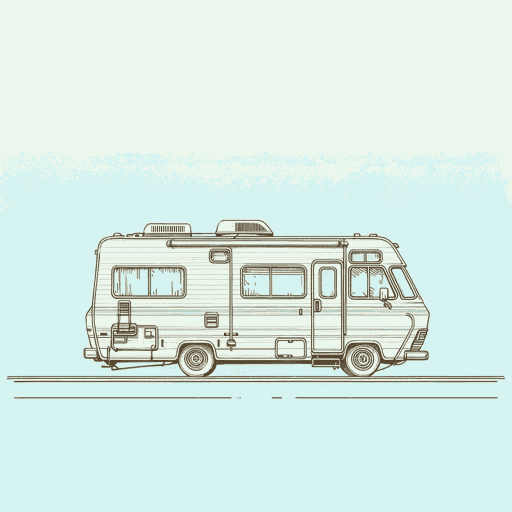
She and her best friend Dale pick up the van and get to work restoring it so that it can be habitable. Bruder finds the van difficult to drive at first, but eventually begins to get the hang of it. They clean the van and install solar panels as well as a power inverter for charging electronics. Halen would be her constant companion during the next two years of interviewing and researching Nomadland while driving through the United States and Mexico.
Bruder quickly realizes that despite her many interviews with subjects for her book, she is not actually prepared to live in a van full-time. She encounters issues as she drives around, ranging from getting stuck in a desert to fleeing tornado warnings to being unable to fill a prescription without giving a home address. She dubs these experiences the “background music” (169) of her research. Eventually, she will drive Halen up a mountain to meet Linda during a campground hosting job.
However, Bruder also visits Linda while she is staying with her daughter in San Clemente. Bruder sleeps in Halen overnight, finding herself growing increasingly nervous and paranoid of lights and sounds outside of the van. Over the next few days, Linda graciously helps Bruder get used to van life, and gives her directions on how to park.
Eventually Bruder heads to Quartzsite to “boondock” (or live off RV park utilities) for a few months, with the intention of staying for RTR. She receives a potluck invite from a boondocking expert named Charlene Swankie, also known as Swankie Wheels. Bruder is grateful for the opportunity to potentially learn some of the ropes from her.
When she arrives at Swankie’s camp just south of Quartzsite, she meets 27-year-old novice van dweller Vincent Mosemann, who is also learning from Swankie. Mosemann had been living in Montana with his mother until two months prior. Burdened by student loan debt from his unfinished bachelor’s degree, Vincent bought his mom’s van and converted it to a living space, naming the vehicle “Tillie.” Although they both have very different personalities, Swankie and Mosemann have been helping one another out; Swanky lets Mosemann, who is a trans man, use her post office box as a mailing address to receive his hormone therapy.
Bruder stays the night with them and meets 47-year-old couple Kat and Mike Valentino who live in a van with their nine-year-old son and a pet ferret. After Kat was diagnosed with multiple sclerosis, she and Mike, were in need of cash. As they grew interested in van dwelling and tired of living in cheap, unsafe motels, the couple decide to buy a van and convert it into a mobile dwelling. Their son is being homeschooled out of the van.
On a particularly cold night, Bruder, Swankie, Mosemann, and the Valentinos all struggle to heat their vans. Alex’s birthday arrives a few days later and Kat throws him an ice cream party. Swankie tells Bruder that once you stay in her camp for more than half a day, you’re a part of her family. Bruder notes that while driving with the group, she feels like a member of an outlaw posse.
When Bruder’s second annual RTR occurs, she begins to notice what she calls “the unbearable whiteness of vanning” (178). Most vans at RTR and in the van dwelling community are painted white, which means they are often stereotyped as potential kidnappers or perverts while out on the road.
But this “whiteness” also refers to the majority of van dwellers being white people, with only a handful of exceptions. Bruder theorizes that people of color may be less likely to want to van dwell because they also are less likely to go camping (which is stereotyped as a white activity). Moreover, living outside without fear of danger—from police and others—is a privileged position that is perhaps unavailable to people of color. While Bruder does not observe overt racism herself, she does speak to workampers who have overheard others using racial slurs. Given racist violence, profiling, and police brutality, Bruder says it ought not to be a surprise that van dwelling simply may not feel like a safe option for people of color. She notes instances in which her white privilege likely helped her to stay safe and out of harm’s way while she was driving and living out of Halen.
Bruder stores Halen and flies back to her home in New York City. Despite the small size of her apartment, she is amazed at how much room she has and notes that her van had begun to feel womb-like. Although she enjoys returning to certain comforts from her city life, she misses the nomads and living on the road more than she expected.
Chapter 9 Summary: “Some Unbeetable Experiences”
While attending RTR, Bruder meets labor recruiters looking for seasonal workers to harvest sugar beets. She is confused by this idea, citing the physically demanding toll of farm work specifically on aging bodies. She asks around Quartzsite, hearing about sugar beet harvesting experiences from others. Bruder decides on a whim to apply to work the sugar beet harvest, and months later, her application is accepted.
Bruder arrives for the sugar beet harvest in late September, located in Drayton Yard, North Dakota. She is assigned to work 12-hour shifts as a “piler” inside a large open warehouse, shoveling spilled beets back on to a conveyor belt and keeping the machines clean. The work is difficult, with beets whizzing by at high speeds, overwhelming smells, physically exhausting tasks. As Bruder describes it, “It felt like catching bowling balls in a pillowcase” (187). Despite being in her late thirties, Bruder finds herself completely exhausted and sore all over, with old injuries resurfacing. Reluctantly, Bruder decides to quit, fearing the dangerous working conditions and recognizing that participating when she knows she will go home to write about it still would not compare to the lived experience of the workampers.
Bruder also submitted an application for CamperForce while visiting recruiters at RTR. Right after quitting her job as a laborer in North Dakota, she had smoked a joint. When Bruder is notified she’s been accepted as a CamperForce laborer at the Haslet, Texas warehouse, she is also informed she'll need to take a drug test. Unable to pass it by herself, she smuggles in pee for her drug test so she can be cleared to work.
Bruder attends orientation, where she learns that CamperForce employees are known for their “can-do, Eisenhower-era work ethic that rubbed off on younger, less experienced laborers” (191). Despite this, she does not notice younger workers looking any more motivated in the coming days. Bruder is assigned to Inventory Control Quality Assurance, scanning items all day long within the warehouse.
She runs in to Barb and Chuck Stout, whom she had met in Quartzsite. Chuck has an accident and hits his head, but medical professionals say he is not concussed so he is cleared to walk the 15 or more miles per day necessary to work at Haslet. Bruder also sees Kivas, or robots, in action at the warehouse, although they are often more harmful than helpful. The warehouse is run based on “takt,” a business term for the amount of time necessary to process one product. Bruder struggles with the dissonance between the cheerful start of shift meetings and the monotony and physical exertion that came with the rest of her shift.
Bruder works at the Haslet FC for a week. She considers making a scene as she quits by running into the Kiva’s pre-determined work “field” and messing up their instructions. However, fearful of losing her carefully concealed notes, Bruder decides against it.
Part 2, Chapters 5-9 Analysis
The middle section of Nomadland focuses on Linda’s difficult experience at CamperForce, the nomad community that has formed around Quartzsite and RTR, and Bruder’s own attempts at van dwelling. By juxtaposing the grueling conditions at CamperForce with the open and eclectic world of Quartzsite, the reader sees the disparity between the optimistic nomad community mindset and the menial labor required in order to sustain their lifestyle. Bruder ends the section with her own experience working in sugar beet harvesting as well as at CamperForce, both of which she quits after one week, unable to endure the harsh conditions and physical toll on her body. This gives Part 2 a form of symmetry that highlights Linda’s tenacity in Part 1 and, at times, her unwillingness to admit just how draining her life as a van dweller can be.
Bruder showcases her own experience with Halen and workamping towards the end of the chapter, and the prose becomes more personal and intimate when it centers her as a first-person narrator. This is a purposeful rhetorical choice. She steps into the shoes of her previous subjects however briefly in order to verify just how challenging and exhausting this life can be. Bruder is nearly half the age of women like Linda, LaVonne, and Silvianne, yet she struggles to survive even one week doing hard labor. Bruder makes clear that she is not a workamper after having these brief experiences, but merely that she can attest to just how much workampers like Linda are exploited in order to boost a company’s profits. This shift to first-person also allows for some levity within the story, particularly Bruder’s honesty about her inability to pass a drug test and her initial struggles to drive Halen.
The town of Quartzsite, home to the infamous RTR, also becomes a hub for Bruder as she interview subjects and researches her book. This small town has turned into a low-income retirement community of sorts, but one that is beginning to struggle financially as more and more downwardly mobile senior citizens begin to congregate there, unwilling to spend extra money the way that tourists would. Just like other industries and places in America, it too is subject to boom-and-bust economic rollercoasters. Quartzsite and all of its quirks, as well as its ability to bring nomads together, becomes another character Bruder profiles to give the reader a better sense of the broader community.
The reader also encounters the paradox of the optimistic nomad attitude and disposition in the face of grinding poverty. This mentality makes them valuable, hard-working laborers who are generous with Bruder and others. It also contributes to the nomadic love of sharing one's skills, services, ideas, and experiences to help one another. Yet this positive attitude can also be seen as a form of denial, making women like Linda may be vulnerable to exploitation. Other nomads prefer to call themselves “houseless” rather than “homeless” to deflect from social stigma or fully face the reality of their situation. Bruder tries to understand this balance of positivity as a counterweight to financial struggle, ultimately recognizing that joyful moments can still be found amidst the strife that comes with being impoverished.
Although Bruder specifically focuses on retirement-age Americans in her book, she also speaks with young millennial workampers like Deb, Ash, and Vincent, many of whom became van dwellers due to crushing student loan debt, stagnant wages, and lack of career opportunities. While their stories are not as central as Linda’s, they do contribute to Bruder and Wells’ theories that more and more people will end up living as van dwellers and workampers in the future, particularly as more and more social safety nets dry up or disappear. Older generations of workampers act as mentors to these young adults and teach them where they can, but unlike their older counterparts, these millennials never started off with the chance for real middle-class jobs or security, making their future prospects all the more precarious.
Bruder also acknowledges the whiteness of the contemporary workampers, citing police brutality and racial profiling as major hindrances for people of color who may be struggling financially and would otherwise consider van dwelling. Living off of the grid is, in this sense, both a survival tactic and a privilege. Van dwelling has its dangers, and marginalized groups who are already vulnerable are unlikely to choose this lifestyle when they don’t have assurance of their safety once they are off the grid.

Get in-depth, chapter-by-chapter summaries and analysis from our literary experts.
- Grasp challenging concepts with clear, comprehensive explanations
- Revisit key plot points and ideas without rereading the book
- Share impressive insights in classes and book clubs