Odd and the Frost Giants
45 pages • 1-hour read
Neil GaimanOdd and the Frost Giants
A modern alternative to SparkNotes and CliffsNotes, SuperSummary offers high-quality Study Guides with detailed chapter summaries and analysis of major themes, characters, and more.
Background
Cultural Context: Norse Mythology
Odd and the Frost Giants makes extensive use of Norse mythology throughout the entire plot, presenting the gods and their realm as not just myth, but tangible reality. Through works like The Prose Edda and Poetic Edda as well as archeological and medieval records, a variety of stories from Norse mythology have survived to the modern day, including details about Norse cosmology, creation myths, and myths surrounding the apocalyptic war between the gods known as Ragnarok. Gaiman makes Norse mythology accessible to younger or newer readers by borrowing small elements from many of these myths, but Odd’s story also functions as a new myth in itself. Even though Odd is human, unlike the protagonists of the traditional myths, the novel’s events closely map to the structure of many other myths, weaving together plotlines and recognizable elements without relying too much on the reader’s preexisting knowledge.
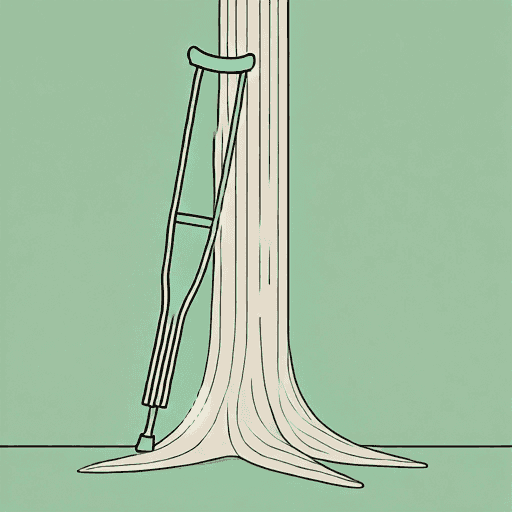
Although the book is written accessibly, knowledge of the myths it references also helps develop the humor and depth of the book. One example is Loki, who references taking the form of a female horse; the book never explicitly states it, but the outcome of this transformation is that Loki gave birth to a foal. Odd also notices Tyr in the throne room, a god with one hand, linking disability to the powerful realm of the gods. (Tyr lost his hand in an encounter with the fierce wolf Fenrir, or Fenris, also a child of Loki’s.) While the Frost Giants (called jötnar) are present in the story as antagonists, jötnar are not a cohesive group or even necessarily giants in the myths. While they often served as enemies to the gods, some experts argue that they should be viewed as culturally different rather than biologically different. Though the Frost Giant serves as an antagonist in Odd and the Frost Giants, he is not a straightforwardly malevolent character. Rather than acting out of pure evil, he acts out of a desire for beauty and to avenge his brother, exemplifying the complex characterization of figures in Norse mythology.
Historical Context: Viking-Age Norway
While many people call the entire Norwegian people group during the historical period of 800-1050 “Vikings,” this is technically incorrect. Norsemen were a people group, but “Viking” was a job, specifically the sailors, raiders, and explorers who set out from their homelands to explore, settle, and colonize other countries. The book is careful to note this distinction, using the term “Viking” only to refer to the sailors.
Odd’s home village is specifically located in Norway, which was one of many Scandinavian countries inhabited by Norse cultures. It is realistic for Odd’s mother to be from Scotland, as Scotland was one of the primary targets for raiding and colonization by Norwegian Vikings. The book makes many other references to hallmarks of broader Nordic culture, such as mead halls, large buildings that served as centers of celebration and social life in Scandinavian villages. Also mentioned are the Viking ponies, likely a reference to the predecessors of the Icelandic horse. The Icelandic horse has genetic roots in a variety of Scandinavian and Scottish horses and was vital to survival and transport during the Viking era.
Also notable is Odd’s mother’s relative independence, which is realistic to the early, pre-Christian Viking era. Although she was kidnapped (and likely enslaved despite her romance with Odd’s father), her later years show her living independently and eventually divorcing her second husband when he mistreats Odd. Women in the Viking era were able to own property and divorce at will, and they typically inherited their husband’s property when he died, if any existed. While they were not fully independent—marriage was expected and sometimes forced on them by their families, and they were expected to run households—they possessed more political agency and power than many women in other areas of the world.

Unlock all 45 pages of this Study Guide
Get in-depth, chapter-by-chapter summaries and analysis from our literary experts.
- Grasp challenging concepts with clear, comprehensive explanations
- Revisit key plot points and ideas without rereading the book
- Share impressive insights in classes and book clubs