72 pages • 2-hour read
Omeros
A modern alternative to SparkNotes and CliffsNotes, SuperSummary offers high-quality Study Guides with detailed chapter summaries and analysis of major themes, characters, and more.
Part 7Chapter Summaries & Analyses
Content Warning: This section of the guide includes discussion of death.
Part 7, Chapter 56 Summary
In January, Derek observes the beach from a hotel window. In the distance, he sees something floating strangely in the water. This is Seven Seas, though the waters know him as Omeros. The “marble head” of Omeros morphs into the familiar face of Seven Seas and then back (280). Derek ventures down to speak to the figure. On the way to the beach, Derek feels as though he is going to his own death. To die at sea, he remembers, is the best way to die. He passes familiar spots—those crossed by Philoctete—and imagines Saint Lucia in a whole new way, which he attributes to his mind clearing due to his impending death.
On the beach, Derek tells Omeros about seeing him be kicked out of the London church. Omeros is considered a heathen. The hero of his story, Omeros says, is a drifter like himself. Derek makes a confession: He has never read Omeros’s book all the way through. The conversation becomes awkward and stilted until Derek praises Omeros as a talented writer and the voice of the sea. Omeros announces that they are going on a journey. Derek explains that he learned the true name of Omeros from an old girlfriend. This flatters Omeros, who asks about Derek’s sex life with the woman in question. Derek blurs the truth. To Omeros’s dismay, Derek explains that wars are no longer fought over women. Omeros believes that “the love of your own people” is greater than the love of a beautiful woman (284).
Part 7, Chapter 57 Summary
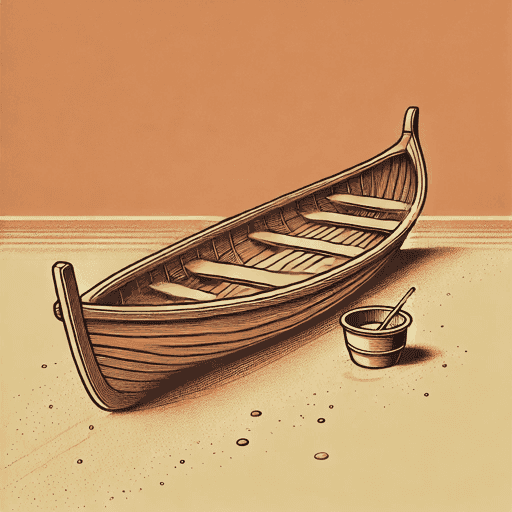
Omeros leads Derek to the shore, where a canoe is waiting for them. The canoe has a ferryman, like Charon from Greek mythology. The canoe has no physical presence and leaves no mark in the water. Omeros continues to shift into Seven Seas and back. The “charred ferryman” rows them away from Saint Lucia while Omeros sings in praise of the island (287). Though he is hesitant at first, Derek joins in. The ferryman seems drunk. He has the same voice as Derek’s island friends, which pleases Derek. Seven Seas give directions to a lagoon that resembles the underworld. Seven Seas draws attention to the fleet of ghosts and ghost ships, “a rotting fleet in a dead silence” (288).
Part 7, Chapter 58 Summary
To Derek, the underworld resembles Saint Lucia. They travel past the sulfur mines near the Plunkett pig farm. As they approach the volcano, Derek thinks of Dante’s Inferno and its many layers of hell. He reimagines Dante’s hell so as to punish people for crimes relevant to Saint Lucia, such as officials who sell land to developers to turn into hotels and casinos. Derek passes victims burning alive; they try to drag him in. Derek recounts the island’s sins and their punishments as he follows Seven Seas through the hell for people who have betrayed Saint Lucia.
Seven Seas criticizes the idea of traveling to learn, as everything is all a fiction anyway. The writer and the hero are on two separate timelines that emerge from any such journey. Seven Seas prefers journeys in which he stays in one place while the sea moves his love for his home around his heart, inspiring him to write.
Next, Derek sees “Hector in hell” (292). He is there due to his Christianity, the religion that caused pain for his ancestors. Derek finds the two English owners of the sulfur mine, Ward and Bennett, who are being punished for exploiting the island. Derek experiences a crisis of faith. They arrive at a pit for selfish false poets who choose pride. They are made to wallow in excrement. As Derek begins to fall into the pit, Seven Seas catches him. When a soul calls from the pit to ask for help, Seven Seas refuses, telling the soul to ask whether it used its “other eyes” to see reality (294). Derek leaves the underworld and wakes up to the sound of blackbirds singing.
Part 7, Chapter 59 Summary
To Derek, the journey into the underworld felt like an “exorcism” (294). Now, he feels humbled. Philoctete is washing in the ocean, and Derek feels as though his own wound has been cured. He thinks about the “illiterate rocks” and the sea (295), which have inspired so much epic literature. The sea is its own epic, which writes and then erases itself immediately. Its narrative has no metaphor and does not stop for humans. Derek wonders what compels him to write about Achille, who will be judged by history regardless of what Derek writes. Achille will be simplified by history, like the shaping of the ocean bed. Derek wonders whether his education gets in the way of reality, placing Homeric allusions between him and the truth of the island. This reduces the inhabitants to mere characters, he fears. Through the sun, however, he is thankful to have a clearer view of the world.
Achille is frustrated by tourists who take photographs of the misspelled name of his boat. He chases them away. His anger is ancestral, tied to the frustration of his ancestors and their enslavement—their loss of identity and private lives. Achille’s friends, however, laugh at him. They laugh at simplicities, which Derek says is “the laugh of a wounded race” (299).
Part 7, Chapter 60 Summary
Achille curses the “strange weather” (299). He blames outsiders meddling with nature (referring to climate change). Seven Seas agrees with him. Life on the island is beginning to change. Big commercial trawlers take all the fish away from Achille and fishermen like him. Achille blames greed: His way of life is threatened by trawlers who have no connection with the sea that they plunder. Philoctete and Achille search for another place to fish, but nowhere feels right. They feel no connection with other places as they do with their home. They travel so far that they must sleep on a beach. This makes Achille feel like an endangered species. They stay up late in their camp, talking. The next day, they continue their journey. They are surprised when a gigantic whale breeches the surface of the water, pushing them away from the dangerous reefs. As they bail water from their boat, they feel a moment of spiritual peace, as though something has saved their lives.
Part 7, Chapter 61 Summary
Dennis Plunkett tries to deal with life without Maud. To him, she is like a woman out of time—a 19th-century woman, surrounded by elegant furniture and lace. Before their wedding, she wanted to have sex with him, but he stopped her, insisting that they marry first. Dennis was determined to follow the rules because he did not just want to be another common soldier. By this time, he had already told her about Saint Lucia, the Caribbean island “he had seen in an advert” where he wanted to retire after the end of the war (305).
Dennis visits Ma Kilman, who holds a séance for him to talk to Maud. At first, Ma tries to placate him with comforting but vague words. Then, he gives Ma $20 to pass a message to his dead wife. Ma assures him that Maud is happy, though Dennis is unsure. Suddenly, he sees Maud. She guides him from the store and sits in the car beside him. Dennis talks about their long walks in the hills. Then, Maud is gone. After her visit, he “slowly” recovers from his grief. He talks to Maud often, replaying his memories of her in his head and imagining her voice in response to his. Dennis grows fonder of being alone; he becomes more relaxed with his employees. He learns to deal with his grief and loss.
Part 7, Chapter 62 Summary
Tourism has changed Saint Lucia, including the small town where Omeros is set. Derek feels as though the town has become a souvenir of a time that has now passed. Everything is now designed to satisfy the gaze of tourists, who seem to relish the poverty of the islanders. Though Saint Lucia may have once been called the Helen of the West Indies due to the island’s unique beauty, it is now like every other tourist destination. Derek feels as though the island is being used up by those who have no understanding of what it really is. He wonders what it means for the often-bloody history of the island to become a tourist spot without identity. Then, he thinks about Helen and the fight between Hector and Achille. Derek deconstructs his work, admitting that there is no need for the analogy to be exact. Like the birds in Maud’s quilt, stories are migratory. They travel the world and adapt to their new surroundings, eventually becoming native. The fight between the French and the English for Saint Lucia and the fight for Helen are meaningless now. The children of Saint Lucia are not taught about Achille or Philoctete. They learn the names of the navy admirals from their history books, but they do not know their own ancestors. They speak in an “American accent” (315). Derek wonders whether this is progress or just another kind of colonization.
Part 7, Chapter 63 Summary
Christine, the niece of Ma Kilman, visits from the country. To Derek, she seems like a “new Helen” (316). She is also the niece of Statics, the attempted politician who traveled to Florida. Ma received a letter from Statics in which he described meeting a Cherokee woman. He sent a photograph of the woman to his wife, telling her that she could now claim to have known “a real Indian” rather than a West Indian (317). The woman’s boyfriend attacked Statics, who decided to dedicate his life to earning money rather than finding women.
Helen enters the store briefly to buy margarine. After she leaves, Ma Kilman notes that Achille has suggested an African name for the as-yet-unborn child. Helen disagrees. Philoctete will be the child’s godfather; Seven Seas and Ma talk about Philoctete’s renewed health and abundant garden. They also talk about Dennis Plunkett, who has promised Seven Seas a pig at Christmas time. Seven Seas is confident that the widower will also heal eventually. Ma agrees. Outside, a sea swift flies by.
Derek has used the sea-swift to delineate “both sides of this text” (319). The sea swift stitches up the divided world, bringing together people across oceans and helping them heal.
Part 7, Chapter 64 Summary
Reflecting on his poem, Derek repeatedly invokes ancient poets. He “sang” of life on the island and of the people. The idyll of the past, however, is now gone. The spell has run out. Derek shares scenes of death in which he imagines himself joining Maud and Hector. He visits his characters a final time. Helen is now a waitress, seen by many as “a fine local woman” (322). She is content with her life and more pregnant than ever. She is still beautiful and still proud. Derek admits that he has been obsessed with Helen and her mythical qualities. To write the poem was the only cure. Similarly, he needed to write about Achille, the sea swift, and the plaster bust of Omeros that inspired his allegory. Achille is at sea, catching fish. His luck has returned, and he is content. He takes back dolphin meat, contained inside the bailing cup that he and Hector argued about. Achille leaves the sea, but the sea is “still going on” (325).
Part 7 Analysis
Derek returns to the island with a new perspective. He is armed with a better understanding of the history of colonialism and has internalized the literary past that meant so much to his father. Now, he feels ready to write about his homeland. However, this new perspective also allows him to notice the ways in which the island is changing. Old traditions are being pushed aside in a “hidden devastation” (300); his small, sleepy fishing village has become a tourist attraction. Tourists flock to Achille, photographing his boat’s misspelled name. Soon, many of the boats have misspelled names, commodifying and erasing the town’s identity. The tourists and their money have the power to turn Saint Lucia into every other beach. Derek laments the village “surrendering” but also feels a new version of Colonial Guilt and Trauma as he recognizes his own complicity (310). He has “made their poverty [his] paradise” (228); like the gawking tourists, he included Achille’s boat in his opening lines, taking from Achille to fuel his own art. Derek wonders whether he is a hypocrite. He fears the neocolonialist threat of the tourist industry but worries that he is contributing to the commercialization and fetishization of the local culture.
This fear undergirds the long, symbolic trip that Derek takes to the underworld. As he ventures forth with the ferryman, ever more closely bound to the Greek mythology he draws upon, Derek becomes a key player in the poem. He must face the same treatment proscribed for others—a journey to “a healing place” to process and get beyond his hypocrisy in such a way that no longer distracts from the plight of the island (287). The future of Saint Lucia is at stake, so his art must reflect his sincere desire to help rather than his impulse to pilfer its quirks and beauty. Derek’s trek to the underworld mirrors Achille’s spiritual journey. Both are abstract and metaphorical, and both fuel emotional renewal. Derek returns from the underworld armed with a sense of righteous activism, prepared to write a poem that will reclaim literature, Situating Post-Colonial Pain in a Western Literary Context to empower.
Thus, the ending of Omeros has a bittersweet tone. Derek has undergone great change and great healing, much like his characters. He believes in a future for Saint Lucia free of The Cycle of Suffering of the colonial past. Helen’s ever-burgeoning pregnancy heralds the great potential of the next generation. At the same time, however, Derek accepts the limitations of his vision. The threat posed by the neocolonialist demands of rampant global capitalism threaten to destroy the very culture that he seeks to protect and promote; likewise, he cannot dictate to the people of Saint Lucia how they should spend their lives. Tragedy has been endured, and wounds have been healed, but the lingering effects of trauma are still felt: The baby is unborn, and the future is unknown. The final lines of the poem allude to the hope that Saint Lucia will remain “paradise” to its now freed people (320). However, no matter who lives on and what develops on the island, the sea will still be “going on” (325).

Unlock all 72 pages of this Study Guide
Get in-depth, chapter-by-chapter summaries and analysis from our literary experts.
- Grasp challenging concepts with clear, comprehensive explanations
- Revisit key plot points and ideas without rereading the book
- Share impressive insights in classes and book clubs