One Came Home
47 pages • 1-hour read
Amy TimberlakeOne Came Home
A modern alternative to SparkNotes and CliffsNotes, SuperSummary offers high-quality Study Guides with detailed chapter summaries and analysis of major themes, characters, and more.
Chapters 1-6Chapter Summaries & Analyses
Content Warning: This section of the guide includes discussion of graphic violence and death.
Chapter 1 Summary
On June 7, 1871, Georgie attends her older sister Agatha’s funeral. She doesn’t truly believe that Agatha is dead, saying that she is remembering the date only because “it [is] the day of [her] sister’s first funeral and [she knows] it [isn’t] her last” (1). The week before, Agatha ran off with some pigeon hunters. The sheriff chased the group and returned with what he claimed was Agatha’s body—which was shot in the face and was wearing Agatha’s dress. However, Georgie is certain it isn’t Agatha’s body. She begs her grandfather (who is an expert tracker) to go find the real Agatha, but he refuses.
To Georgie, the strangest sight at the funeral is the seeming closeness of the two men who’d been vying for Agatha’s affection. One is Mr. Benjamin Olmstead, owner of the local hotel, and the other is Billy McCabe, the sheriff’s handsome son. Despite recently being involved with Mr. Olmstead, Georgie had seen Agatha kiss Billy. When she told Mr. Olmstead about this, a feud erupted. Now, Mr. Olmstead stands stoically while Billy cries, and Georgie wonders how much of Billy’s grief is real.
Chapter 2 Summary
Watching her mother rub circles on a scrap of Agatha’s dress, Georgie remembers the day of the pigeon migration a few months ago when enough birds flew over town to darken the sky. While Georgie panicked at the onslaught of birds, Agatha wandered out among them with a parasol and spun in circles as the birds barely missed her. Georgie could only watch, transfixed by Agatha. The memory makes Georgie cry, and she runs from the funeral.
Chapter 3 Summary
As Georgie shoots glass bottles with her rifle, she remembers an argument from several months ago. For her Christmas present, Agatha asked their grandfather for money to attend the University of Madison. Their grandfather refused, saying “the only thing she’d get at the university was a husband, and that could be found in Placid, Wisconsin, for free” (17-18). Instead, Agatha received embroidery needles from him, as well as the blue-green gown the body in the coffin was wearing. Agatha wore the gown to the New Year’s ball, where she danced with Billy. The neighbors bet that Agatha and Billy would wed. Georgie hated the idea because it meant Agatha would move to Minnesota with him.
Georgie also recalls a discussion with Agatha from a week after she saw Agatha kiss Billy. Agatha was upset with Georgie for telling Mr. Olmstead about the kiss, but Georgie argued it was the right thing to do. Georgie is set to inherit her grandfather’s store because she’s the more responsible worker and has a head for numbers. Though Agatha hates the store, Georgie is willing to offer her a full partnership and do the bulk of the work if Agatha will stay home. Agatha doesn’t agree; she tells Georgie she will love her no matter where she goes. A few days later, Agatha disappears.
Back in the present, Georgie sets down her rifle and starts to make a list of what she’ll need to find Agatha. The only item she writes is a horse, which stops her because she doesn’t know where she can get one.
Chapter 4 Summary
That night, Georgie fills out her list by lamplight, taking advice from a book her grandfather has on traveling. Since Georgie’s never traveled before, she takes some of the advice, such as packing sewing supplies, but ignores others, such as only bringing cured food. The only item she still doesn’t know where to find is the horse. Finally, she decides to ask Billy for help since his family raises horses.
Georgie and Billy argue about Agatha—Georgie insists she’s alive while Billy says she’s dead because Agatha would have otherwise written him a letter. Georgie asks Billy about the kiss they shared. Billy seems shaken, so Georgie insists that she’s sure the kiss is related to Agatha’s disappearance. She says she’ll go on foot to find Agatha if she has to. She offers Billy five Bechtler gold coins for a horse, claiming they are worth $20. In reality, Georgie doesn’t know what they are worth, though she has heard her grandfather say they are more valuable than other money. Billy relents, and Georgie tells him to deliver the horse to the cemetery at midnight in two days.
Chapter 5 Summary
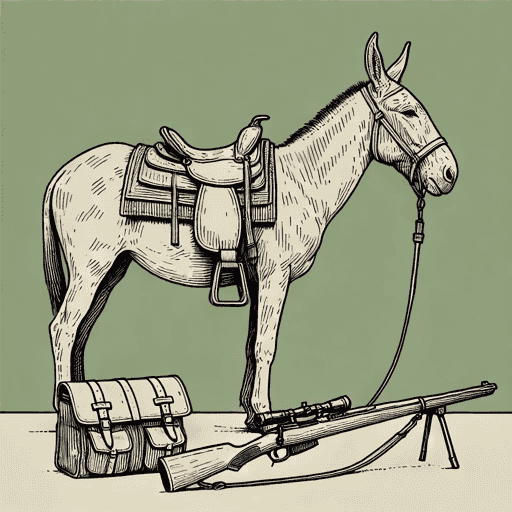
For the next two days, Georgie squirrels away provisions and avoids her mother and grandfather as much as possible. When it is time to meet Billy, he is an hour late and brings Georgie a mule, not a horse. Georgie is irritated by this. Still, she is grateful when he gives her the gold coins back and helps her load up the animal with her supplies. After several failed attempts as the mule prances around, Georgie manages to mount the animal and tells Billy to leave. As he does, she notices his horse is loaded down with saddlebags, and she realizes he invited himself along.
Despite Georgie’s efforts, the mule doesn’t move until Billy turns his horse onto the road; immediately after, the mule relentlessly follows the horse. The two travel a mile before stopping at a spot with lean-tos and a fire pit. As Georgie settles into the largest shelter, Billy cares for the animals and then joins her. By the light of the moon, Georgie watches Billy prepare for bed. She is astonished to find he is very capable and moves with a fluid grace. Finally, Billy lies down. His back touches Georgie’s, and at once, Georgie feels an ache in her heart because she and Agatha “often slept back to back” (52).
Chapter 6 Summary
Lying in the dark, Georgie thinks back to the first spring day after this past long winter. She and Agatha ran outside to enjoy the day. When they met up with Billy, Agatha told Georgie to stay behind while she went off with him. Georgie was annoyed and confused; she was certain Agatha would come back to announce that the two were engaged. Georgie came upon a group of pigeons—early scouts for the greater migration. She shot one with her rifle and tucked the bird into her coat to bring home.
On the way, she spotted Agatha alone, waiting for her, and demanded to know if Agatha would marry Billy. Agatha said she turned down Billy’s proposal. When Georgie asked if she and Agatha would run grandpa’s store together, Agatha said yes; though her response was unenthusiastic, Georgie thinks that “the fact she said it at all made me happy” (63). At home, Georgie’s grandfather praised her hunting skill while her mother fussed over her coat that was ruined with pigeon blood.
Chapters 1-6 Analysis
By beginning the novel at Agatha’s funeral, Timberlake sets up Georgie’s suspicions that Agatha is alive, thus foreshadowing Georgie’s journey to learn the truth. Through a combination of Georgie’s present-day observations and her memories of Agatha, these chapters introduce a central theme: The Inevitability of Change. Georgie’s youth leads her to hold a fixed image of her future that she doesn’t wish to deviate from, and this depends on the constancy of the people around her. However, Agatha and others do not necessarily wish to fall in line with Georgie’s view of how the future should go. Georgie’s resistance to this reveals her struggle accept that the world will not remain as she wishes. By focusing on Georgie’s memories, Timberlake highlights Georgie’s desperate attempts to hold on to the past while setting the stage for her character arc, in which she will become more accepting of change.
These chapters also highlight the differences between Georgie and Agatha, which are encapsulated in Georgie’s memory of migration day in Chapter 2. Georgie’s fear of the birds contrasts sharply with Agatha’s fearlessness and sense of adventure as she chooses to stand among the flock and even risk physical harm. The episode dramatizes their differing temperaments: Georgie is cautious and anchored by routine, while Agatha is bold and adventurous. This contrast makes Georgie’s later choice to leave Placid even more significant because it shows that Georgie does not typically take risks or step out of her comfort zone. As Georgie prepares for her trip, though, she uses the steady lessons she’s learned from working at her grandfather’s store to acquire supplies, showing how she uses her resourcefulness to compensate for her inexperience.
In addition to highlighting the personality differences between Georgie and Agatha, Georgie’s memories also introduce the theme of The Impact of Societal Expectations on Individual Choices. As a young woman in 1870s America, Agatha is expected to marry and support her husband in his endeavors. Her grandfather’s dismissive response to Agatha’s desire for a university education reflects the limits imposed on women’s futures by the patriarchal ideas of the time. Her grandfather implies that Agatha’s desire for an education is a passing fancy she will give up on when she meets a suitable potential husband. While he does not intend to harm her, his refusal to take her ambitions seriously is a deciding factor in Agatha’s choice to leave home. She knows that if she stays, she will be defined by others’ expectations rather than her own desires.
Agatha’s choice to break away from societal expectations is represented by her symbolic act of twirling among the pigeons; the freedom and joyousness of this act show her rejection of restraints. Her desire to attend university and her interest in Mr. Olmstead’s library show her desire for growth and independence. Agatha wants more than what the circumstances of her gender offer her, and her choice to run away shows she’s willing to do whatever is necessary to obtain what she wants. The letter she sends home in the final chapter reveals the extent of her planning, since she trades dresses, conceals her movements, and creates a believable story to cover up her escape. These actions demonstrate her cleverness and determination to get what she wants, despite the barriers she faces.
Meanwhile, Georgie’s preparations for her trip highlight her inexperience. Since she has never traveled before, she consults a book on traveling, highlighting her reliance on learning from others’ experiences. However, her choice to disregard some of the advice in the book shows that there is truly no substitute for lived experience. Georgie disregards advice she believes isn’t relevant to her journey, and she does not consider packing for contingencies outside of her planned trip; this again highlights her tendency to assume events will work out exactly how she wants. Her meeting with Billy similarly shows her inexperience and her idealization of her grandfather. The Bechtler coins she offers Billy are named for Christopher Bechtler who minted early gold dollars. Georgie’s grandfather believes they are worth more than bank notes, and thus, Georgie uses this argument in her bargaining. Traveling with Billy introduces her to new perspectives and compels her to form judgments for herself, rather than simply relying on her grandfather. This introduces the theme of The Difficulty of Finding the Truth as journey Georgie moves away from certainties toward a more complex understanding of the world.

Unlock all 47 pages of this Study Guide
Get in-depth, chapter-by-chapter summaries and analysis from our literary experts.
- Grasp challenging concepts with clear, comprehensive explanations
- Revisit key plot points and ideas without rereading the book
- Share impressive insights in classes and book clubs