One Came Home
47 pages • 1-hour read
Amy TimberlakeOne Came Home
A modern alternative to SparkNotes and CliffsNotes, SuperSummary offers high-quality Study Guides with detailed chapter summaries and analysis of major themes, characters, and more.
Chapters 19-24Chapter Summaries & Analyses
Content Warning: This section of the guide includes discussion of graphic violence and death.
Chapter 19 Summary
Hours later, Georgie wakes in a fine room in a Dog Hollow hotel. Mr. Olmstead brought her and Billy there. After bathing and dressing, Georgie goes to the train station to ask about Agatha. The ticket master says he may have seen someone resembling Agatha board a train a few weeks ago but can’t be sure.
Mr. Olmstead sent the sheriff after the counterfeiters for attacking Georgie and Billy. Georgie explains her face is bruised because she fell and that she shot the thumb off one of the men. At this, Mr. Olmstead is impressed, saying, “[N]ow I see that no one should underestimate Georgie Burkhardt” (207).
Billy is alive but badly hurt, and he will stay in Dog Hollow until he’s well enough to travel. Georgie asks Mr. Olmstead to take her home. Mr. Olmstead agrees but first tells Georgie that her grandfather died two days ago.
Chapter 20 Summary
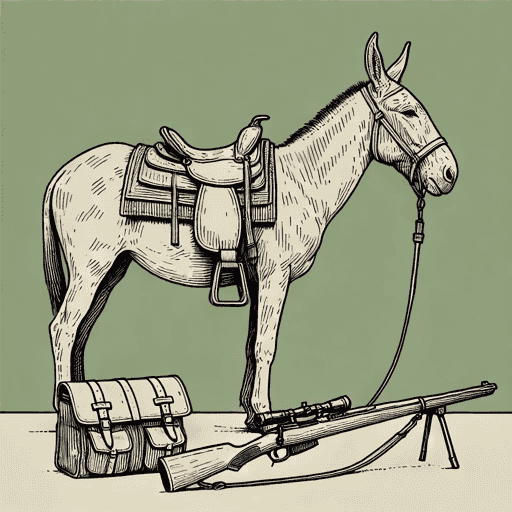
Mr. Olmstead offers Georgie a seat on his wagon, but she opts to ride the mule home after everything the animal’s done for her. She arrives in town just as her grandfather’s funeral finishes. When Georgie’s mother sees her, she runs to scoop her up in a hug, saying: “One came home! Georgie, you came home!” (213).
Later, Georgie compares the fabric from the Garrow girl’s hair ribbon to the fabric of Agatha’s dress, concluding they are the same. Agatha never sent a letter, so Georgie concludes the eldest Garrow girl somehow got Agatha’s dress and was shot while Agatha boarded a train and disappeared. Georgie isn’t sure if she’ll ever know what happened to her sister.
Chapter 21 Summary
In the weeks after Georgie returns home, the counterfeiters are caught, and she is launched into the national spotlight as a sharpshooter. Many people come to town for her story, but Georgie only tells it to her closest family and friends. Billy returns home and thanks Georgie for saving his life. The two part awkwardly, and Georgie reflects that this was the last time she saw him. Soon after, Billy marries his fiancée and leaves for Minnesota. Georgie officially buys the mule from Billy’s father.
Chapter 22 Summary
After the bustle of busy weeks, Georgie falls into a routine to keep thoughts of Agatha at bay. She spends her days running the store, and in her spare time, she writes letters to anyone who might know about Agatha. One day, Georgie rides up to the bluff overlooking the river and tells Agatha’s story to the water. She thinks that Agatha is like a pigeon who went off on a flight, and of herself, Georgie thinks: “I’d had my flight and was back at home” (228).
Chapter 23 Summary
At the end of July, a letter arrives from Agatha. She did run away with the pigeon hunters, but she abandoned them when it seemed they might be dangerous. She sold her dress to the Garrow girl and doubled back to Madison, where she enrolled at the university. She is hungry for news from her family, and particularly wants to know about Georgie’s adventures. At first, Georgie is outraged that Agatha left her. However, she realizes that Agatha needed to leave just as much as Georgie needed to come home. She can’t stay angry and hugs her mother, and both are overjoyed that Agatha is alive.
Chapter 24 Summary
A few months later, Mrs. Garrow arrives in Placid; she has come to see her daughter’s final resting place. In truth, her daughter’s death was an accident. While arguing with her father, she grabbed a gun by the barrel, and it went off, killing her. Mrs. Garrow gives Georgie’s mother money to get a new tombstone. The money is counterfeit, but Georgie’s mother pays for the tombstone with her own money.
In August, the Great Chicago Fire hits at the same time another great fire burns much of Wisconsin’s Lake Michigan coast. Survivors flock to Placid. Remembering how the people of Placid welcomed her back, Georgie welcomes these newcomers. Lastly, Georgie notes that she will never hunt again; she says that after all the death she’s seen, she doesn’t want to be responsible for any loss of life, human or otherwise.
Chapters 19-24 Analysis
The death of Georgie’s grandfather symbolizes the changed world to which she will return, highlighting The Inevitability of Change. Throughout her life, Georgie’s beliefs and decisions have been shaped by her grandfather’s views and thoughts, whether she realized it or not. While this has been limiting in some ways, it was not without care or wisdom. Her grandfather taught her about running the store and understanding people. In addition, he supported the family and wanted what was best for them. While Georgie grieves his death, she also recognizes that it is time for her to step up and take on more responsibility. After everything she’s experienced on her journey, Georgie is ready to make her own decisions and arrive at her own truths—she no longer needs her grandfather or anyone else to tell her what to think. Additionally, the juxtaposition between her grandfather’s confirmed death and Agatha’s unknown disappearance underscores that not all losses are the same. Closure, however painful, offers Georgie the ability to move forward, even through times of grief.
Georgie’s rise to national notoriety represents how The Impact of Societal Expectations on Individual Choices continues to shape her life. After her confrontation with Mr. Garrow and his companion, her story is exaggerated by the press. She gains a reputation for being exceptionally talented girl, with the press claiming her skills are far beyond any mortal man’s. In truth, Georgie is simply a skilled sharp-shooter. However, people of the time didn’t expect a girl to have such skills, highlighting the gendered assumptions of Georgie’s world.
Georgie’s refusal to tell her story to journalists highlights The Difficulty of Finding the Truth. The press cannot obtain the real story because Georgie controls who receives it. She shares the truth only with her family, asserting that her truth is hers to protect. At the same time, Georgie is forced to confront the truth of her relationship with Billy. By the end of her final conversation with him, she doesn’t know how she feels about him, and she deals with her emotions by keeping him at a distance. She is disheartened to learn that Billy still views her as a child and that he used her reputation for directness and honesty to his advantage. While this realization is deeply painful, it also forces Georgie to confront the difficult truth of who she was and how she’s changed. As she comes to terms with her new values, Georgie also accepts all the ways she has stayed the same. Before she left on her journey, she believed she belonged at home, and now that she’s returned, she knows she belongs there. Previously, she believed it because others told her so; and now, she believes it because she knows it for herself. This reflects a shift in Georgie’s maturity and independence: She is no longer defined by others’ expectations but by her own truth.
The letter from Agatha offers closure about her whereabouts and situation. It also highlights how Georgie has matured and grown. Previously, Georgie resented people who misled her, such as Billy and her grandfather; however, she quickly forgives Agatha. Georgie has realized that others must be free to follow their own truths. While Georgie knows she belongs at her family store, she finally understands that Agatha does not want to be there. Thus, she no longer holds ill will toward Agatha for living her truth. The influx of displaced people seeking refuge from the fires in Chapter 24 echoes The Inevitability of Change and brings the novel full circle. After losing Agatha to the city, Billy and his fiancée to Minnesota, and Georgie’s grandfather’s death, Placid receives an influx of new people. These newcomers don’t replace those who left or were lost. Instead, they bring new life and meaning to the town in the form of outside experiences that will enrich the lives of Georgie and others. Georgie’s response to them highlights her transformation. Previously, she might have resented the disruption, but now, she welcomes these people. The upheaval of her own journey has shown her that life will not and cannot stay the same, and she welcomes change and growth.

Unlock all 47 pages of this Study Guide
Get in-depth, chapter-by-chapter summaries and analysis from our literary experts.
- Grasp challenging concepts with clear, comprehensive explanations
- Revisit key plot points and ideas without rereading the book
- Share impressive insights in classes and book clubs