One for the Blackbird, One for the Crow
55 pages • 1-hour read
Olivia HawkerOne for the Blackbird, One for the Crow
A modern alternative to SparkNotes and CliffsNotes, SuperSummary offers high-quality Study Guides with detailed chapter summaries and analysis of major themes, characters, and more.
Background
Historical Context: Homesteading and the 19th-Century American Frontier
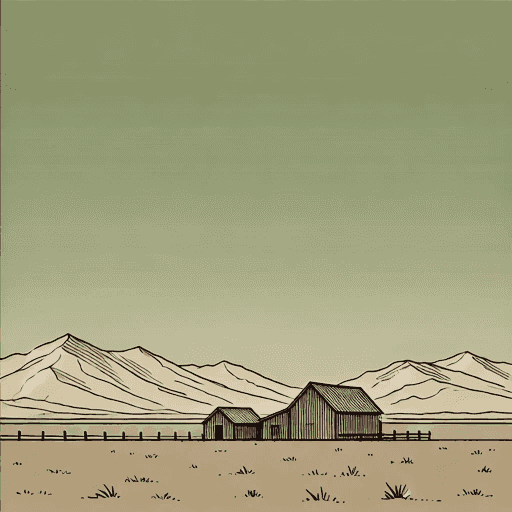
Set in the Wyoming Territory in 1876, One for the Blackbird, One for the Crow is grounded in the historical reality of American homesteading. The Homestead Act of 1862 offered 160 acres of public land to settlers willing to live on and cultivate it for five years. This policy spurred westward expansion but presented immense challenges. According to the National Park Service, fewer than half of all homestead claims were ever successfully “proven up,” a testament to the brutal conditions pioneers faced. Settlers endured extreme weather, crop failure, and profound isolation, with neighbors often miles away.
Sometimes referred to as the “Old West,” the American frontier is a fluid term that describes different regions of the US depending on the time period. Throughout the 1700s, as European colonial powers expanded their settlements in North America, migration increasingly moved west of the Appalachians toward the Mississippi River. By the mid to late 1800s, the established US government had spent decades promoting and enforcing westward settlement, including across the Midwest. This expansion was driven by Manifest Destiny, a widespread 19th-century belief that American settlers were divinely ordained to spread their system of government across the continent and claim the land as their own.
This ideology came at the expense of Indigenous people across the US. The government offered extremely limited recognition of Indigenous claims to the land, and though the federal government sought to purchase land through treaties with Indigenous tribes, the capacity to which these tribes could freely and fairly agree to terms was often minimal. Thomas Jefferson advocated for the assimilation of Indigenous people into white society, at the cost of their own culture, and Andrew Jackson later deepened the divide through the Indian Removal Act in 1830. This forced members of the Cherokee, Muscogee, Seminole, Chickasaw, and Choctaw nations across the Mississippi River, out of their sacred homelands and into less fruitful lands out west. Forced removal orders led to mass displacement, with thousands dying from disease, exposure, and exhaustion in detention camps and during the westward marches, a collective tragedy remembered as the Trail of Tears.
By the time of the novel, much of the frontier had been settled. However, the environment was harsh, and homesteads were often far from any town, making it difficult to maintain supplies or seek help if necessary. In the novel, the Webbers and the Bemises are “the only neighbor[s] for twenty miles in any direction” (7), making mutual reliance essential for survival. When Ernest Bemis is imprisoned, Cora is left with a farm she cannot manage alone as winter approaches. This historical context of forced codependence fuels the narrative’s central conflict. Faced with starvation, Cora must seek help from Nettie Mae, the woman whose husband her own husband has just killed. Beulah articulates their stark reality, stating, “Between our house and theirs, I think there are enough of us to see us all safely through the winter together” (21). Their subsequent arrangement is not a choice but a necessity dictated by the harsh demands of frontier life, forcing two warring families into a volatile but essential alliance.

Unlock all 55 pages of this Study Guide
Get in-depth, chapter-by-chapter summaries and analysis from our literary experts.
- Grasp challenging concepts with clear, comprehensive explanations
- Revisit key plot points and ideas without rereading the book
- Share impressive insights in classes and book clubs