Themes
The Pressure of Living Up to Expectations
Content Warning: This section of the guide includes discussion of graphic violence, death, and animal cruelty and death.
Joe’s greatest internal turmoil stems from the pressure to conform to expectations in both his professional and personal life. In his career as a game warden, Joe understands that the townsfolk expect him to behave exactly like his predecessor Vern Dunnegan, and when he doesn’t, he faces hostility and backlash. For example, when Joe writes Ote a ticket for poaching three prize bucks in the hunting off-season, Ote complains that Vern would never ticket him for this kind of offense. Ote declares, “These critters won’t be missed by anyone. That herd ran nearly thirty. Vern Dunnegan wouldn’t have pulled this shit” (6). The Saddlestring locals are used to Vern’s more lenient approach to rules and regulations, so Joe’s by-the-book adherence to the law shocks and upsets them. Joe takes his job very seriously, so he resents Vern’s lingering influence over Twelve Sleep County. It undermines Joe’s authority and makes his job more challenging. The pushback Joe receives for simply doing his job adds emotional strain to an already challenging role, compounded by the already heavy workload Vern left behind.
Beyond his professional duties, Joe also feels pressure as the sole provider for his family. He constantly feels guilty that his job pays only $26,000 a year and that he cannot provide the luxuries and comforts he believes his family deserves. The Picketts cannot even choose where they live, as the standard, outdated game warden houses are issued by the government. Joe internalizes his guilt, interpreting Marybeth’s occasional sighs and tired expressions as signs of disappointment: “Her frustrations appeared in random sighs and sometimes hopeless facial expressions that she probably didn’t even recognize as such—but Joe did” (55). Although Marybeth “never actually complained about the way her life had gone” (55), her mother Missy does express her discontent with Marybeth’s standard of living. Joe’s self-reproaches amplify during Missy’s visit because her subtle judgments of Joe and Marybeth’s life push Joe to constantly reflect on his career choices and financial situation.
However, by the end of the novel, Joe comes to realize that he has been projecting his insecurities onto his family. In reality, his family doesn’t measure his worth by material standards. Marybeth reassures him that what truly matters is his integrity and the values they instill in their children. She tells him, “You have me. You have your family. You have character. That’s a lot, and not many people can say that” (193). Marybeth’s words alleviate Joe’s internal strife, and he allows himself to focus on being a man of character, not just a man of means.
Conflicts Between Economic Interests and Environmental Protection
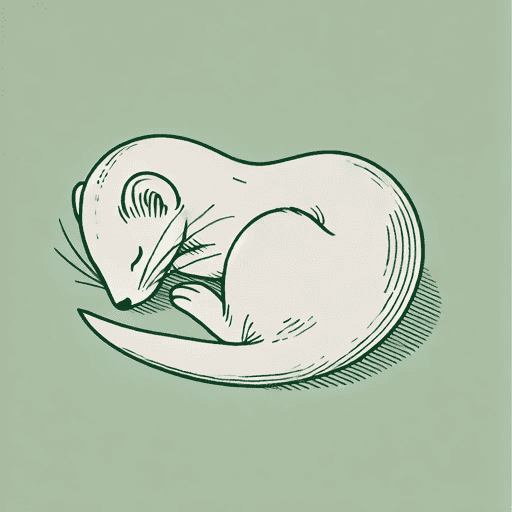
In Open Season, as several characters discover the Miller’s weasels, they must choose between reporting the animals—knowing that conservation efforts could impact Saddlestring’s economy—or staying silent to protect local jobs. The novel presents two differing views: one that prioritizes economic growth over wildlife preservation, and another that advocates for coexistence between human society and the natural world.
Vern is the main proponent of economy over ecology. He claims to have the interests of the Saddlestring community at heart when he lectures Joe about the possible economic consequences of a protected zone in the Twelve Sleep Valley. He says, “Think of the logging truck drivers, the cowboys, the outfitters, the fishing guides. They’d be unemployed while the Feds roped off the entire valley for the future” (107). In this speech, Vern argues that human livelihoods outweigh the survival of a small animal population. However, the novel aligns this human-centric worldview with one of its most manipulative and selfish characters, signaling that Vern’s perspective is flawed. As Joe’s investigation slowly reveals the truth, it also exposes the hypocrisy of Vern’s words. Although Vern claims to have Saddlestring’s interests at heart, Vern’s sole motivation is personal financial gain. His dedication to economic growth reaches an extreme when he plans the extermination of the Miller’s weasel colony just to keep the pipeline project alive. Ironically, this extermination plan also results in the deaths of several local hunters, which puts their families in immediate financial peril.
Despite Vern’s extremism, the novel shows that some of Vern’s predictions come true after Joe decides to report the Miller’s weasels’ existence. Unemployment increases as the protected zone reduces local hunting and logging areas, and some of the outsider conservationist groups negatively impact the survival rate of the last weasel colonies. These events depict the complexity of the issue of preservation and the often imperfect reality of its solutions.
Despite these flawed outcomes, through its protagonist, the novel upholds the importance of living cooperatively with the natural world. As a game warden, it is Joe’s duty to ensure humans don’t encroach on animal populations. Joe has “no problem with hunters hunting for meat” (101), as long as it doesn’t occur in excess. When he tickets hunters for exceeding their quotas, he ensures that the extra meat from the illegal kills goes to a local halfway house to help the less fortunate, demonstrating his commitment to both conservation and community welfare.
The Miller’s weasel massacre deeply disturbs Joe since it signifies a complete lack of respect for animal life. While it is Joe’s professional responsibility to investigate endangered species, he also feels morally compelled to help the threatened animals. Joe values animal life, but he also doesn’t hold it above human life. His environmental outlook strikes a balance between human and animal interests, and through his work, he encourages a symbiotic, respectful relationship with the environment he lives in.
The Corrupting Influence of Power and Money
Open Season’s two main antagonists, Vern and Wacey, are motivated by their overwhelming desire for money and power, which leads them to commit increasingly immoral acts. Their descent into corruption underscores the novel’s critique of greed and its destructive consequences.
Vern is singularly obsessed with acquiring “a ton of money” (256), and he will sacrifice anyone or anything to achieve his goal. The novel opens with the negative impacts of Vern’s money-driven decisions as Joe struggles to manage the overwhelming workload left in the wake of Vern’s sudden career change. Vern left his lifelong position as a game warden to chase a tripled salary and stock in an expensive pipeline project. To Joe, Vern’s decision appears to have completely changed the man’s personality. Vern’s newfound wealth makes him enormously selfish and hedonistic—he divorces his wife to pursue a more promiscuous lifestyle and indulges in excessive drinking, favoring high-end bourbon.
Vern’s desire to hold onto and expand his wealth turns him into an expert manipulator, particularly toward his devoted disciple, Joe. Vern exploits his influence to jeopardize Joe’s career, calling in favors to get Joe suspended and sabotaging Joe’s investigation by eliminating incriminating evidence. Vern also orchestrates the extermination of an entire colony of Miller’s weasels—an illegal act designed to keep the InterWest pipeline project alive, ensuring both his career and stock options remain secure.
Wacey, on the other hand, is corrupted by his quest for power. Joe considers Wacey one of his close friends and colleagues, and Wacey manipulates this relationship to cover up his illegal and immoral acts. Wacey not only helps Vern destroy the Miller’s weasel colony, but he also murders Ote, Kyle, Calvin, and eventually Clyde to cover up his tracks. As the novel progresses, Wacey becomes increasingly unhinged in his efforts to get rid of the Miller’s weasels—so much so that even his co-conspirator, Vern, considers Wacey a “goddamned lunatic hothead” (255).
Wacey’s ruthlessness reaches its peak when he targets Joe’s family. He shoots Marybeth, who is pregnant, cuts off the entire county’s telecommunications, and threatens and stalks seven-year-old Sheridan with a rifle, demonstrating his complete moral collapse. Though he acknowledges that he has “sunk low,” he refuses to change. Instead, he glibly concludes that his “understanding of the criminal mind” will make him a better sheriff, fully embracing his corruption (260). Joe’s eventual triumph over Vern and Wacey reaffirms that integrity and morality will prevail over greed and corruption.

Unlock every key theme and why it matters
Get in-depth breakdowns of the book’s main ideas and how they connect and evolve.
- Explore how themes develop throughout the text
- Connect themes to characters, events, and symbols
- Support essays and discussions with thematic evidence