44 pages • 1-hour read
Ophie's Ghosts
A modern alternative to SparkNotes and CliffsNotes, SuperSummary offers high-quality Study Guides with detailed chapter summaries and analysis of major themes, characters, and more.
Chapter 20-Interlude 11Chapter Summaries & Analyses
Content Warning: This section of the guide includes discussion of death and racism.
Chapter 20 Summary
Over the following days, Ophie works with Penelope to prepare the manor for the cousins’ arrival. Ophie doesn’t appreciate Penelope’s attitude and scolding, but she tries to tolerate her new coworker.
One day, Ophie sneaks away from her work to see Clara in the attic. During Ophie’s exchange with the ghost, Clara remembers more about the day she was murdered. She tells Ophie to look for her comb on the attic floor, which fell out when she was attacked. Amid the search, Colin appears and demands to know why Ophie is helping Clara. Ophie explains that Clara deserves justice; she then continues her search for the comb. Suddenly, Penelope arrives and takes the comb from her. Ophie stays quiet when Penelope puts it in her own hair.
Chapter 21 Summary
Over the next few days, Ophie doesn’t have time to return to the attic. Meanwhile, Penelope’s demeanor changes, and she is chattier and friendlier than usual. Ophie is startled when Penelope starts calling her “chickadee”—the same nickname that Clara calls her. Then, one day, Penelope insists on taking Ophie to go see a movie. Ophie is shocked when she witnesses Richard giving her money for them to go together. For the rest of the day, Penelope says more and more things that sound like Clara.
Interlude 9 Summary: “The Trolley Cars and the Cinema”
Ophie and Penelope take the trolley to the movies. The dead keep their eyes on Ophie in particular, eagerly following her to the cinema. They are surprised when they see her linking arms with another dead girl, too.
Chapter 22 Summary
Ophie and Penelope go to the movies. Ophie enjoys herself but remains confused by Penelope’s behavior. When they go out for sweets afterward, Ophie finally realizes that Clara must be possessing Penelope and using the girl’s body to be Ophie’s living friend. Ophie is afraid of what Clara will do next, as she now understands how desperate her ghost friend is.
Chapter 23 Summary
Over the next few nights, Ophie can’t sleep. She worries about Clara, Penelope, and Mama. She dreams of a different life for her and Mama but isn’t sure how they’ll get there. In the morning, she tries to tend to her mother and go about her chores, but Clara is more active than ever inside Penelope. Finally, the cousins arrive. Ophie is skeptical that any of them could have killed Clara, as they’re all very old. Later, she notices salt outside Mrs. Caruthers’s door and asks Henry about it. He warns her not to ask too many questions, especially because something terrible happened the last time the cousins visited.
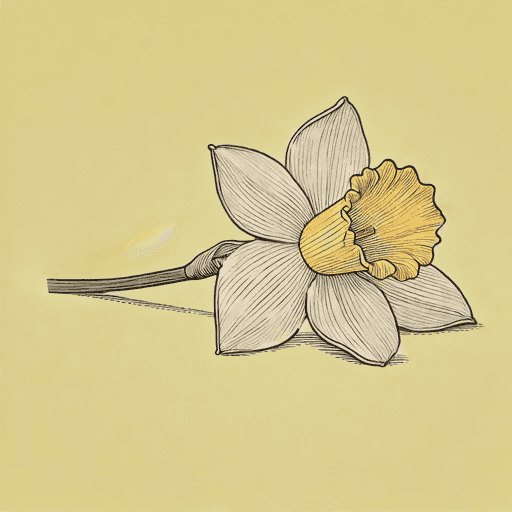
Interlude 10 Summary: “Daffodil Manor”
Chapter 24 Summary
Ophie tries to be on her best behavior when she and the other help serve dinner to the Carutherses and their guests. Amid the festivities, Richard announces that he and Edwina are engaged. Ophie watches in horror as Clara—who is still possessing Penelope—lunges forward and protests. Mama warns Ophie not to interfere. She doesn’t move even when Clara/Penelope flees the room in tears.
Chapter 25 Summary
After dinner service, Ophie finds Clara in the library, still “inside of Penelope’s body” (301). She tries reasoning with Clara, but the ghost gets upset. She is heartbroken over Richard, as well as her own ghostly circumstances. Amid the conversation, Clara finally remembers who killed her, but she disappears immediately afterward.
Richard calls for Ophie to attend to his mother. Edwina then informs her that she had the salt removed from Mrs. Caruthers’s room. Ophie realizes that Henry must have put it there because he knows about Clara’s death.
In Mrs. Caruthers’s room, Ophie is horrified to find Clara standing over the old woman with a pair of scissors. She desperately tries to talk Clara down by helping her remember what happened on the night she died. Mama and Richard appear and beg Ophie not to get involved. Clara opens up about what happened, and Ophie solves the crime, realizing that Clara and Richard fell in love and planned to marry. When Mrs. Caruthers learned that they were to announce their engagement at the cousins’ last visit, she was furious. Clara was a Black person who was passing as white. Disgusted by Clara and Richard’s relationship, Mrs. Caruthers killed Clara. Now, Ophie has a revelation and demands that someone open Mrs. Caruthers’s closet. There, they find Clara’s body hidden in a chest. Ophie tells Clara that she “can pass on” now (315). Ophie then heads for bed with Mama.
Chapter 26 Summary
Shortly after the revelation of Clara’s murder, Mrs. Caruthers dies. Richard holds a small funeral. In the following days, Ophie convenes with other ghosts and helps them move on. Then, one day, Colin tells Ophie that he is ready to move on, too; he was only staying around to protect Henry, who had spent his life doing bad things for Mrs. Caruthers and protecting her out of fear. Soon after this, Mama confronts Ophie about the night her father died, and Ophie tells her the whole story.
Interlude 11 Summary: “The Hill District”
Ophie and Mama continue saving money. When they receive a donation from a mysterious good Samaritan, they use the funds to buy a small home in the Hill District. Their lives are often still difficult, but they have each other.
Chapter 20-Interlude 11 Analysis
Ophie’s stay at Daffodil Manor further illustrates the novel’s examination of Work as a Pathway to Agency and Exploitation. Ever since coming to work for the Carutherses, Ophie has understood how important her job is to her and her mother’s future. Without her father, she and Mama must provide for themselves. They are not only a working woman and girl in the 1920s, but there are also few vocational and economic opportunities for Black women in the Jim Crow era, and if they lose their jobs, they will no longer have a place to live and will struggle to find more work. Ophie’s attempts to behave appropriately at Daffodil Manor originate from her desire to help her mother, and this motivation overrides her instinctive distaste for the abusive Mrs. Caruthers and the harmful dynamics of life at the manor. Ophie’s internal monologue in Chapter 23 reveals how heavily her working circumstances weigh on her psyche, as she wonders,
[H]ow did one go about mending a broken dream? It hadn’t just been the idea of their own place that had spurred Mama—it had also been the promise of a better life […] Now, with the loss of their savings, those dreams felt as far away as ever. It would be months before they could simply save up enough to even think about moving out of the manor (281).
The desperate tone of Ophie’s thoughts in this passage reflects several complicated truths. Despite the abuses that both mother and daughter endure at Daffodil Manor, the place offers them some semblance of stability, but at the same time, it also traps them in a static realm where they hold no power. Now, in the wake of Aunt Rose’s death, they are even more beholden to the Carutherses than they were when they first started working for them since they must rely on the family for both wages and housing. Despite Ophie’s longing to deliver her mother from these circumstances, Ophie feels that she has little ability to help in a meaningful way.
As a result, she grows even more determined to exercise some form of agency by solving the mystery of Clara’s murder. However, this plan carries a steep price, and over time, she begins to fear Clara’s true power and realizes the truth of “what Aunt Rose had always said”: the fact that “ghosts d[o]n’t always have a choice about what they want[]—or how they [go] about getting it” (278). As Clara strives to gain more direct power over the world of the living, Ophie’s detective work quickly evolves into a broader protective effort; if she can help Clara move on, she can keep the unquiet ghost from hurting others. In this way, she gains a more nuanced understanding of the world and seeks to use her unique talents to improve the circumstances of others, living and dead alike.
Thus, when Ophie discovers the truth and solves the mystery, she frees a multitude of people around her, and the long-term effects of her sleuthing gradually lead her to a transformative outcome. After she reveals what really happened to Clara, a series of changes take place. Clara’s ghost goes free, Mrs. Caruthers passes away, and Henry is finally safe from Mrs. Caruthers’s clutches. Similarly, Richard finally learns the truth of his late lover’s death, and even Ophie and Mama are able to move on from Daffodil Manor with the ghosts’ blessings. These narrative revelations show how Ophie’s bravery has helped others and herself. She refuses to give up on Clara because she cares about her, and because she follows the promptings of her own innate sense of compassion, Ophie excavates and broadcasts Clara’s real story, exposing Mrs. Caruthers’s deeds and ultimately facilitating her mother’s attempts to start a new life. In short, her fight for justice brings about positive changes from every angle.
The closing images of Ophie and Mama’s new house in the Hill District offer a hopeful ending, as Ophie and Mama don’t simply flee their exploitative circumstances; they finally find a way to claim their own home. As the narrator asserts in the final interlude chapter, “Everyone deserved peace in their own house, even a girl who could talk to the dead” (324). The new house is therefore symbolic of autonomy and freedom. Once Ophie and Mama have their own place, they can build independent lives together. Not all their troubles are over, but they “realize over and over again that there [i]s nothing they c[a]n’t do as long as they d[o] it together with honesty and love” (325). The mother and daughter have made amends for their fraught past by sharing their lives together in new ways, as is demonstrated when Mama asks Ophie about what she witnessed on the day Daddy died. Mama is now willing to talk about ghosts, about her late husband, and about Ophie’s gift, and she also understands the importance of confronting the past in order to move beyond it. In the end, the house is symbolic of the bright future that Ophie and Mama are building together.

Unlock all 44 pages of this Study Guide
Get in-depth, chapter-by-chapter summaries and analysis from our literary experts.
- Grasp challenging concepts with clear, comprehensive explanations
- Revisit key plot points and ideas without rereading the book
- Share impressive insights in classes and book clubs