Our Last Resort
51 pages • 1-hour read
Clémence MichallonOur Last Resort
A modern alternative to SparkNotes and CliffsNotes, SuperSummary offers high-quality Study Guides with detailed chapter summaries and analysis of major themes, characters, and more.
Chapter 37–EpilogueChapter Summaries & Analyses
Content Warning: This section of the guide includes discussion of sexual assault, emotional abuse, mental illness, and death.
Chapter 37 Summary: “Escalante, Utah: The First, Second, Third, Fourth, and Seventh Days”
Gabriel recounts his story: He and Sabrina were drawn to each other. After bumping into each other, Sabrina approached Gabriel in the restaurant on the first night while Frida was in the bathroom. They spoke briefly. The next day, Sabrina was at the pool with her husband. They were clearly in the middle of a quiet argument, and Sabrina soon left. Gabriel was there with Frida, and he got up as soon as Sabrina did. He had no clear plan, but he hoped to run into her. He did, and he asked her if she would like to sit on his patio and talk. He told her about his interest in the Roman Empire, and they traded life stories, although Gabriel left much out of his. Sabrina grew up in New Jersey, and her mother was a hairdresser who subjected her to a string of underwhelming stepfathers. She met William while working at a restaurant and was instantly smitten. She knew people thought she was interested in him for his money, but she was truly swept off her feet by his many grand, romantic gestures. They were, however, struggling lately. Sabrina said that William was difficult to deal with and could even be violent. She also told Gabriel that she loved reading and was currently working her way through Madame Bovary.
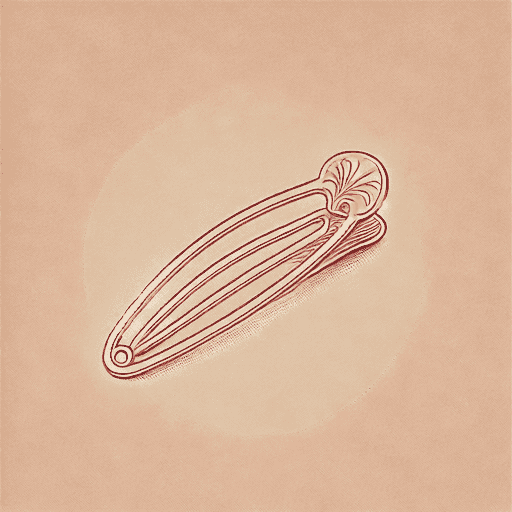
The next day in the restaurant, Gabriel could see that William and Sabrina looked miserable. William was silent, and Sabrina stabbed at her yogurt with her spoon. Gabriel decided not to go on the planned hike with Frida and stayed behind in their room. Sabrina showed up at the door. He let her in, she kissed him, and they fell into bed. They had passionate sex. Afterward, she gave him her hair clip, and he gave her the spare key to his hotel room. She took down his address and birthday so that she could write to him and make his birth chart.
Frida asks Gabriel if he thinks William was aware that there was something between Gabriel and Sabrina, and Gabriel says he is sure that William didn’t notice. Frida thinks that Gabriel is being naïve and realizes that William would have recognized Gabriel’s name if he went through his wife’s phone. Sabrina was too young to know about Gabriel’s past. But to William, Frida reflects, Gabriel would be the perfect fall guy if he was looking to murder his wife.
Frida asks if Gabriel used a condom with Sabrina. Offended, he tells her that he did. Frida asks more questions as she tries to determine whether Gabriel has implicated himself or done anything that William could use against him, and Gabriel becomes agitated. He is sure that Frida thinks he killed Sabrina, and the two begin to argue. She assures him that she knows he did not kill Sabrina or Annie; however, she is not really sure that he didn’t kill Sabrina and lies in order to get more information out of him.
Just then, they hear Detective Harris approaching. He tells the pair to raise their hands and informs Gabriel that he is under arrest for murder: The police have found the murder weapon, a chunk of white rock, in Gabriel’s backpack. Frida knows it has been planted since she searched the same backpack yesterday and found nothing unusual besides Sabrina’s hair clip.
Chapter 38 Summary: “New York City: Eleven Years Ago and then Ten Years Ago and then Nine Years Ago”
In a flashback, Frida recounts their past in New York. Annie and Gabriel get married and move into a suburban home that they can barely afford. Her parents help, but they argue about money. Annie works at her affluent father’s company, and Gabriel works as a research assistant to Howard, a scholar on Roman history.
They also begin to have other fights. After getting married, Annie becomes judgmental about people who are not married. Frida, in particular, feels singled out by Annie’s scorn for women who don’t commit to long-term relationships. This is exactly what Frida does, but for her it is part of a healing process: She is exploring dating, boundaries, and healthy relationships. Annie also begins texting Frida when she is upset with Gabriel. She often finds his behavior childish and impulsive. Again, Frida wishes that Annie would understand who she is dealing with. Both Frida and Gabriel are traumatized from their childhood in the cult and are working through serious issues. Annie, it seems, has no sympathy for either of them.
Chapter 39 Summary: “Escalante, Utah: The Seventh Day”
In the present timeline, Frida has a series of revelations: William knew that Sabrina cheated on him with Gabriel. He would have guessed that the seemingly anonymous key card in her bag came from Gabriel because it did not open their own room door. William then used the key card to plant the murder weapon in Gabriel’s backpack. He also must have planted Sabrina’s phone for Frida to find. He knew that it would lead the investigation toward Gabriel. He also knew that, because of Gabriel’s history, the police would seize upon him as a suspect.
After the police escort Gabriel away, Frida knows that it is up to her to save him. Although she does not like to think about it anymore, she is well acquainted with scheming. She admits that she is even acquainted with murder, and the novel later reveals that she killed Annie.
Chapter 40 Summary: “New York City and New Jersey: Almost Nine Years Ago”
In the past timeline, Annie has grown increasingly unhappy with Gabriel. She is tired of him coming home late and drunk, and she is also tired of his entire personality. Her unhappiness has made her even more judgmental, and Frida now actively dislikes spending time with her.
One morning, Annie calls her in a panic and insists that she come over. When Frida arrives, Annie tells Frida that in his inebriated state, Gabriel confessed to killing someone named Edwina. The name was so unusual that she looked it up and found a news story about Edwina’s death in the fire at the cult. Annie explains that this is the final straw and she intends to go to the police. She says she will go to the police the next morning, after she has gone for a run. That way, she will appear more clear-headed to the detective.
Frida knows that if Gabriel is apprehended for Edwina’s murder, she will be, too. She must protect her brother, but she must also protect herself. She waits for Annie the next morning by the waterfall that Annie always stops by when she is running. When Annie pauses, Frida pushes her over the edge.
Chapter 41 Summary: “Escalante, Utah: The Seventh Day”
Frida recalls her guilt in the wake of Annie’s murder. The experience increased her anxiety a hundredfold. She became obsessed with an HBO show about mobsters because they committed brutal murders and then went home to their families and lived normal lives. She, too, wanted to live a normal life.
Now, she turns her attention to William. When she killed Annie, she used a rental car to drive to the falls. She threw her clothing away. If William held onto the murder weapon, he must have a hiding spot. She is sure that he killed Sabrina in a fit of passion. Because he is a volatile, angry man, she is also sure that he ended up with blood on his clothes: He would never have been able to pull off a neat, orderly crime, especially in a heightened state of emotion. She knows he has a rental car. She locates the garage on the hotel property and vows to search it.
Chapter 42 Summary: “Escalante, Utah: The Seventh Day”
Frida must steal a key card from one of the hotel employees in order to gain access to the garage, but she soon finds William’s rental car. She breaks the window with a fire extinguisher and finds a shirt covered in blood. Just as she grabs it, Detective Harris screams for her to put her hands up. She complies, and she has the bloody shirt in one hand.
Chapter 43 Summary: “Escalante, Utah: The Seventh Day”
William is arrested, and Gabriel returns to the hotel. Frida decides to tell him that she killed Annie, and he is very upset. He feels responsible for Sabrina’s murder, even though he didn’t kill her himself. He is also angry about Annie. He feels that Frida didn’t have the right to take away his wife, even if she was going to turn him in.
Chapter 44 Summary: “New York City: The Aftermath”
Gabriel returns to Seattle, and Frida returns to New York. One day, Frida gets an email from Gabriel. He suggests they visit the cult’s abandoned compound. He flies to New York, and they make their way out there together. Gabriel begins sobbing. He confesses to Frida that if Annie had come to him with the information that she was about to turn him in to the police, he would have killed her, too. Gabriel and Frida realize that they are both similar.
Epilogue Summary: “New York City: December”
Chapter 37–Epilogue Analysis
The final section of the novel is fast-paced, but characterization still remains a key focal point. Even as the action accelerates with revelations and confrontations, the novel remains anchored in how trauma, devotion, and identity shape Frida and Gabriel’s choices. One of the most important revelations is Gabriel’s confession of his short-lived relationship with Sabrina. Gabriel demonstrates kindness, understanding, and empathy in his behavior toward Sabrina. He understood how unhappy she was in her volatile and abusive marriage. Sabrina reveals how easily she was duped by a charismatic man’s grand gestures. In her story describing how she fell in love with William, there are echoes of the way that Gabriel was taken in by Émile’s manipulation and the promise of belonging in the cult. Both of them were drawn by men who promised belonging, and they ended up getting harmed. By showing Sabrina concern and care, Gabriel reveals himself as a generous, emotionally available man despite his abusive past. In this way, their relationship highlights Reclaiming Identity in the Aftermath of Abuse as Gabriel has constructed an identity for himself that has at least partially broken from his past trauma.
The flashbacks that focus on Annie’s characterization deepen the moral and thematic tension. She is a judgmental individual who has no awareness of her social or economic privilege as she moves in the high-powered world of her father’s business. Unlike Gabriel, she lacks empathy and has no understanding of the impact that his past has on him. Gabriel has depression and uses alcohol to cope with trauma, but Annie demonstrates her unkind nature by seeing only the face of Gabriel’s problems, not their root causes. She also shows herself to be an uncaring friend by judging Frida for not getting married. When she finds out that Gabriel might have been involved in a murder, she demonstrates a black-and-white understanding of morality and her unwillingness to hear Gabriel’s side of the story. Frida recalls: “That’s how it worked in Annie’s tidy, clear-cut world. If you did something bad, you went to prison” (262). Annie’s refusal to account for trauma or context makes her incapable of compassion, and her judgmental stance alienates both Gabriel and Frida.
Frida’s decision to murder Annie crystallizes the theme of The Moral Complexities of Unconditional Devotion. It is a desperate choice shaped by trauma and love, and it reveals the lengths to which Frida will go in order to protect Gabriel. Although she, too, would be implicated in Edwina’s death, the real impetus behind her decision is to safeguard Gabriel from prosecution. She knows that his emotional stability is more tenuous than hers and doubts that he could survive a trial or incarceration. This moment dramatizes the ambiguous nature of her unconditional devotion, which propels her into acts that compromise her own morality.
The novel’s closing reconciliation between Frida and Gabriel cements its focus on the moral complexities inherent in their devotion to each other. When Gabriel admits that he, too, would have killed Annie had she threatened him, the siblings understand the depth of their bond. Ultimately, the survival lessons they learned while in the cult unite them. Neither sibling has a traditional approach to morality or personal ethics, but each understands and forgives the other. While the novel does not glorify their choices, it suggests that morality for survivors of abuse is rarely simple.
Frida fights to exonerate Gabriel for Sabrina’s murder, and solving the case with intelligence and resourcefulness is her last step in the process of reclaiming identity in the aftermath of abuse. She is intelligent and proves herself an excellent investigator, as she finds evidence that William killed his wife in a fit of rage. Frida has transformed the skills she developed as coping mechanisms during her traumatic childhood—vigilance, critical thinking, and the ability to read hidden motivations—into tools of empowerment. As a result, she comes to see herself as a competent and capable individual and a devoted sibling.

Unlock all 51 pages of this Study Guide
Get in-depth, chapter-by-chapter summaries and analysis from our literary experts.
- Grasp challenging concepts with clear, comprehensive explanations
- Revisit key plot points and ideas without rereading the book
- Share impressive insights in classes and book clubs