Summary
Chapter Summaries & Analyses
Prelude (227-230)
The Speech of Lysias (231-234)
Interlude—Socrates’s First Speech (234-241)
Interlude—Socrates’s Second Speech (242-245)
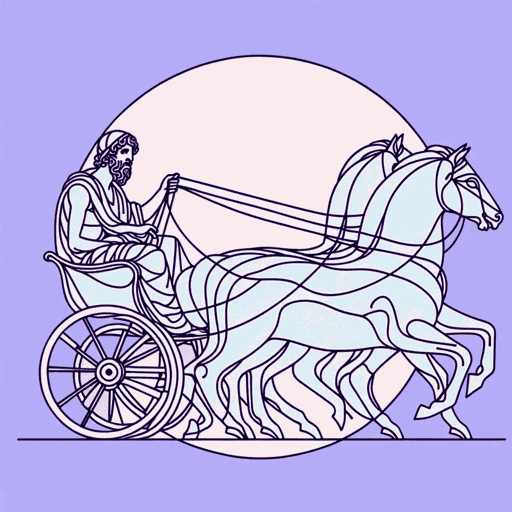
The Myth. The Allegory of the Charioteer and His Horses—Love Is the Regrowth of the Wings of the Soul—The Charioteer Allegory Resumed (246-257)
Introduction to the Discussion of Rhetoric—The Myth of the Cicadas (258-259)
The Necessity of Knowledge for a True Art of Rhetoric—The Speeches of Socrates Illustrate a New Philosophical Method (258-269)
A Review of the Devices and Technical Terms of Contemporary Rhetoric—Rhetoric as Philosophy—The Inferiority of the Written to the Spoken Word (269-277)
Recapitulation and Conclusion (277-279)
Key Figures
Themes
Symbols & Motifs
Important Quotes
Essay Topics
Tools
Essay Topics
What, in your opinion, does Socrates actually believe about love? Does the fact that he argues both for and against love weaken or strengthen his arguments?
Does Socrates’s use of myths and fables make his arguments more compelling? Are they meant to be seen more as entertainment? Support your reasoning by contrasting his first speech with one of his later speeches.
How would you characterize Socrates’s description of his “scientific” method? Does it come from a genuine desire for clarity and knowledge, or is it simply a way of praising his own reasoning while invalidating that of Lysias and others?
Write a response to Lysias’s speech as read by Phaedrus. If you agree, what additional arguments can you think of in favor of the “non-lover?” If you disagree, what additional objections can you think of besides those raised by Socrates in the dialogue?
Does Lysias deserve all the criticism directed at him by Socrates? What, if any, are the strengths of his speech as read by Phaedrus?
Is Socrates’s second speech an improvement on Lysias’s original speech? Why or why not?
Contrast Socrates’s negative opinion on the written word with Plato’s decision to commit this dialogue to writing. If, according to Socrates, writing is meant for the less articulate and less intelligent, and ought to be a last resort, what does that imply about the entire dialogue as a written text?
Discuss the role of the natural world in the dialogue. Socrates says that he has nothing to learn from the fields and trees—is this true? What are the implications of this attitude for the myths and fables he tells?
What is the significance of Socrates covering his face while delivering his first speech?

Unlock all 37 pages of this Study Guide
Get in-depth, chapter-by-chapter summaries and analysis from our literary experts.
- Grasp challenging concepts with clear, comprehensive explanations
- Revisit key plot points and ideas without rereading the book
- Share impressive insights in classes and book clubs