50 pages • 1-hour read
Piglet
A modern alternative to SparkNotes and CliffsNotes, SuperSummary offers high-quality Study Guides with detailed chapter summaries and analysis of major themes, characters, and more.
Important Quotes
Content Warning: This section of the guide includes discussion of disordered eating.
“There had been roast chickens back in Derby, but her mother’s were always anemic, trussed at the legs and moistened only by a gravy that had started life as a spoonful of granules. For dessert—or afters, as her father would say—there would be an apple pie from Morrisons bakery or a roulade from the frozen aisle, depending on the season, eaten on the sofa in front of the television.”
(Part 1, Chapter 1, Page 4)
The connection between Food and Class in Great Britain is an important theme in the novel. This passage describes the simple food that Piglet’s mother served in their working-class home in Derby. The references to granular gravy and frozen desserts reflect her mother’s relative lack of funds and her penchant for ready-made food, which offers a stark contrast to Piglet’s obsession with fresh ingredients and elaborate meals.
“He would tell her thirteen days before their wedding, and she would feel his words lodge like a shard of bone between her ribs.”
(Part 1, Chapter 1, Page 19)
Each chapter of the novel ends with a brief epigraph like this one that reveals the inner thoughts of Piglet and other characters in the novel. These interstitial epigraphs help build tension as the wedding day approaches and Piglet prepares for her new life. In this instance, the revelation that Kit will tell Piglet a world-altering secret 13 days before the wedding creates a sense of suspense that tempers Piglet’s excitement about the marriage.
“They were still close—of course they were close—but Margot’s family was growing in a direction away from Piglet, as she had planned it, as she had always known, and there was something hurtful about this choice: Margot striving ahead, as she always did, sure of herself, making a unit of her own rather than waiting for Piglet, leaving her behind.”
(Part 1, Chapter 2, Page 26)
Piglet’s changing friendship with her childhood friend Margot is an important source of tension throughout the novel. This passage suggests that Margot’s pregnancy makes Piglet feel insecure, as if her friend is proceeding down a path that she can’t follow. The growing distance between Piglet and Margot is a destabilizing force in Piglet’s life, even though Margot is Piglet’s maid of honor.
“For twenty minutes, the room shook minutely around her, drinks trolley clinking as she sprinted, jumped, and lunged. When she felt the echo of her own flesh, reverberating as she moved, she intensified her efforts until her legs burned, her chest heaved, and sweat poured into her eyes.”
(Part 1, Chapter 3, Page 33)
Piglet’s body-image issues are an essential part of her character and grow increasingly worse after the revelation of Kit’s betrayal and as her wedding approaches. In this passage, Piglet’s awareness of the “minute” shaking of the room and the “echo” of her body moving reflects the intensity with which she criticizes her own body, developing the theme of Body Image and the Pressure to Be Thin. It is later revealed that her body-image issues are rooted in conflict with her family.
“‘Posh people, hey? […] I still can’t get over the fact that she gets naked in front of you,’ Margot said, throwing the bread into her open mouth. ‘Imagine if your mum did that!’
‘It’s chic!’ Piglet protested. ‘They’re always naked at the house in France.’”
(Part 1, Chapter 4, Page 49)
The differences between working-class and upper-class families are an important source of tension in the novel, as Piglet works to try to build a life that matches her fiancé’s family. In this passage, Piglet defends her future mother-in-law Cecelia’s eccentricities—such as swimming and enjoying the sauna naked—as a marker of her class. Her description of Cecelia as “chic” reflects her desire to be accepted into the upper class.
“Amid the chaos—their bunk bed in the middle of the room, mouldering suppers among their stationery—Franny had told her. She confided what she had been doing in crumbs: scraps of information that had scared Piglet.”
(Part 1, Chapter 5, Page 70)
In the first section of the novel, it is revealed that the nickname “Piglet” refers to the protagonist’s childhood tendency to eat all the food at her family’s table. This passage suggests that Piglet’s relationship with food is closely tied to her sister’s disordered eating. The use of the words “crumbs” and “scraps” in the final sentence reflects Piglet’s obsession with food, which touches all aspects of her life.
“What could she say? What sentence would pierce him while leaving her intact? She had built her life so carefully around him. To say something, to do something, to feel something, would be to self-destruct.”
(Part 1, Chapter 6, Page 82)
After Kit reveals his betrayal, Piglet realizes that her whole life is built around Kit and the type of life he can give her. This passage suggests that acknowledging his betrayal—even to herself—risks destroying the life she has so carefully built. Her acceptance of The Pressure to Build a Perfect Life has made their life together too important to dismantle, as it would destroy all she’s worked for. Her desire to find a way to hurt him while leaving herself intact indicates that, at this point, she sees them as the same person, rather than distinct individuals.
“There were […] au pairs with charges no older than twelve who ate salt beef bagels, cacio e pepe, and laksa. As she walked, smelling the air, stepping over littered napkins, Piglet imagined what life might have been like, how different it could have been, if she had been eating food like that at their age.”
(Part 1, Chapter 7, Page 94)
This passage reflects the novel’s thematic interest in the relationship between food and class in Britain. The presence of the au pair—rather than a parent—suggests that these children are wealthy, as does their familiarity with food like salt beef and laksa. Piglet believes that if she had been raised with a sophisticated palate—as opposed to the simple meals her mother cooked—her whole life would have been different.
“There were katoris filled with daal, as thick and silky as rice pudding but yellowed with turmeric, finished with cream; a dark, oily, goat curry, chunks of meat blackened by a tandoor; neatly cubed paneer swathed in spinach; prawns, pink and black and glistening, scattered with coriander, sitting spikily in their dish; grilled chicken thighs, reddened with spice, scattered with chili.”
(Part 1, Chapter 7, Pages 97-98)
This passage is representative of the evocative food descriptions scattered throughout Piglet. The description of the prawns as “glistening” and “sitting spikily” reflects the active presence of food in Piglet’s imagination. The use of the words “thick,” “silky,” and “oily” evokes images of the body, foreshadowing Piglet’s physical discomfort after she finishes this amount of food.
“Piglet looked into the mirror and saw someone—herself?—a tall woman with broad shoulders wearing a dress that was designed to make her look smaller than she was. Allegra Joy peered out from behind her: elfin.”
(Part 1, Chapter 8, Page 115)
Throughout the novel, Piglet struggles with body-image issues as she compares herself to the women around her, especially her sister, Franny, and her mother-in-law, Cecelia. In this passage, her body dysmorphia is amplified by both the petite owner of the bridal shop, Allegra Joy, and her wedding dress, which she chose because it made her seem small. The fact that the dress doesn’t fit properly contributes to Piglet’s sense that she is losing control of her life.
“‘I can talk to you however I like,’ she said, and her throat was ripping open. She imagined a new self crawling out, lifting itself from her cracked rib cage. ‘After what you’ve done, for the rest of our lives, I can talk to you how I want.’”
(Part 1, Chapter 9, Page 135)
This passage demonstrates how deeply Piglet is wounded by the revelation of Kit’s betrayal. The image of her throat ripping open and her rib cage cracking anticipates the painful roast pork dinner that she has with Kit’s parents and partially helps explain her visceral disgust at the sight of the pork.
“She had come too far; she had isolated herself from so many people, detaching herself from her support network in favor of a sense of superiority: perfect coupledom, bliss. And for what? How much of this life could be true when it had been built around a lie?”
(Part 1, Chapter 10, Page 150)
The novel suggests that Piglet’s willingness to forgive Kit is because she has isolated herself from many other sources of support and feels as if she would have no one else if their relationship ended. The jumbled nature of the first sentence of this passage—including both a semi-colon and a colon—reflects her jumbled sense of self and her realization that the foundation of their relationship (and thus her life) is a lie.
“Piglet queued for her cake, answering questions about the date, her dress, and her diet. Somehow, once her answers were given, they were regurgitated and merged with the conversation surrounding Natalie: her due date, her maternity wear, her cravings.”
(Part 1, Chapter 11, Page 158)
Throughout the novel, Piglet’s body-image issues cause her to feel distant from and resentful of her pregnant friend Margot. This passage, in which Piglet shares a work party with a pregnant colleague, suggests that her issues stem from her worries that her own body reads as pregnant to others. The parallels between Piglet and Natalie suggest that pregnancy is the next step in Piglet’s life, a horrifying prospect for her.
“She noticed her hand, which was no longer a hand. Her fingers had fused together. They were short and swollen and ended in a sharp point. She stared at it, this appendage resting on the door. It was not a hoof, but it was not a hand.”
(Part 1, Chapter 11, Page 165)
As the wedding day approaches, Piglet’s mental state grows increasingly fragile. In this passage, she has a visual hallucination in which she turns into a pig. The hallucination is a reflection not only of her nickname but also of her increasingly disordered eating. Piglet’s belief that she is too much is a kind of self-fulfilling prophecy that propels her toward her disastrous wedding.
“‘We’ll get beer,’ her father said, looking between himself and Darren, not understanding or not caring about the convivial ritual that came with sharing a bottle of wine, the ceremony of pouring for your counterpart first and then yourself.”
(Part 1, Chapter 12, Page 193)
Piglet spends the night before her wedding with her family, who take her to the fast-casual chicken restaurant Nando’s for a celebratory dinner. Piglet is disappointed both in her parents’ choice and in the fact that her father isn’t sophisticated enough to order champagne like Kit’s parents would. Her disappointment in her parents reflects her desire to rise above the working class and join Kit in the upper-middle class.
“‘These things happen, Pig,’ he said, unable to look at her. She was backing away from him, retreating, returning to herself. She was shaking her head. […] He was immobile, watching her, and beneath his gaze she felt lesser than she had before.”
(Part 1, Chapter 12, Page 197)
In the final section of the novel, it is implied that Piglet’s father, John, was unfaithful to her mother, Linda, at some point during Piglet’s childhood. When Piglet reveals Kit’s betrayal, John suggests that betrayal is to be expected in marriage. The fact that Piglet’s father is willing to accept Kit’s betrayal does not make her feel better; rather, it suggests to her that her happiness is less important to John than the image of his daughter in a prosperous marriage.
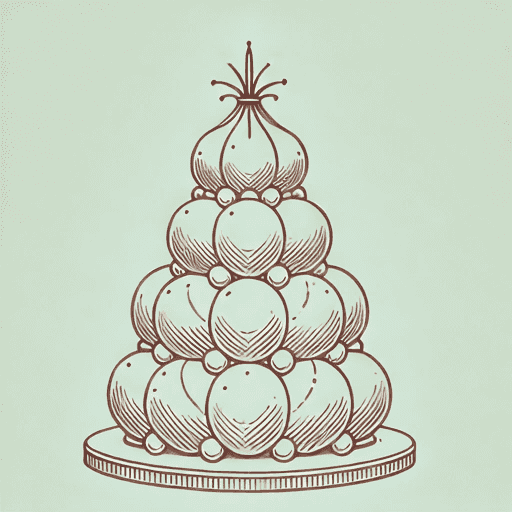
“Halfway up the tower, she slipped a whole bun into her mouth. It exploded with custard, and her mouth watered as she held it on her tongue. She had no need to chew, her saliva dissolving the pastry, the crème slipping down her throat. It was incredible: what her body could do.”
(Part 1, Chapter 13, Page 204)
As Piglet’s binge eating increases in the lead-up to the wedding, the descriptions of her food and eating habits become increasingly animalistic. The image of her swallowing the choux buns without chewing recalls a snake eating its prey whole. Despite the vicious nature of the image, Piglet has a brief moment of love for her body and appreciation for what it can do, suggesting that her body-image issues haven’t totally consumed her.
“She stepped into the suspender belt, attempting to pull it over her bulk, tucking her tailbone. She heard the judgmental ripping of seams as she tugged it past her hips. The belt sat below her belly button, which peeked out above the fabric like a gouged eye.”
(Part 2, Chapter 1, Page 222)
Piglet’s preparations for the wedding are presented in language recalling a horror story as she struggles to fit into her too-small wedding dress. In this passage, the use of the word “judgmental” suggests that the dress itself is her enemy. The description of her body as bulky and the image of her belly button as a gouged-out eye suggest that her wedding is making her monstrous.
“She had traced this journey with Kit, wandering in the shadow of the Bodleian Library, and they had told each other how wonderful their wedding would be, their life: how beautiful, how much more magnificent it would be than any of their friends’. She opened her eyes, swiveling her head to look at the tower of pastry beside her. It was not magnificent.”
(Part 2, Chapter 1, Page 232)
Although Piglet is shocked by Kit’s betrayal, the novel suggests that she is more disappointed in the fact that the dream life she thought she was building is not as perfect as she once believed. The repetition of the word “magnificent” in this passage suggests that Piglet is obsessed with appearances. The magnificence of Oxford’s Bodleian Library—an important tourist spot and center of the university—makes Piglet’s failed relationship even more disappointing in comparison.
“Piglet let herself sink into the food. Bourguignon would not let you down like a lover. Confit garlic would not abandon you like a friend. Her legs began to swing at the high table as porters rushed past, their eyes sliding sideways as they took in her dirtied hands, her white dress. She did not care. She was careless. This feast was hers.”
(Part 2, Chapter 2, Page 256)
This passage demonstrates how deeply Piglet relies on food as emotional support in the lead-up to and on the day of her wedding. The references to her lover and friend reflect Kit’s betrayal and her sense that Margot has abandoned her. Ultimately, the wedding feast that she selected so carefully does not fulfill her.
“‘Remember, all of our friends are here,’ Cecelia said, smiling widely, and Piglet spied a glint of gold at the corner of her lips: a false tooth that she hadn’t noticed before.”
(Part 2, Chapter 2, Page 260)
Throughout the novel, Piglet struggles with the pressure to build a life that appears perfect from the outside. On the day of her wedding, this façade falls to pieces as she reveals Kit’s betrayal to her friends and family. In this passage, Cecelia’s false tooth acts as a symbol of imperfection: Although Piglet believed that her future in-laws had a perfect life, she now sees that they also have their flaws.
“Mrs. Edwards took her place, pulling at her dress, squashing at the netting, trying to make it fit under the table. Piglet had thought that these thrones, ornate and golden, would make a nice picture, something enviable to share on the internet. Mrs. Edwards saw them plainly: the metallic paint chipped to reveal a black plastic beneath, the red velvet cushion synthetic, suspiciously smooth.”
(Part 2, Chapter 3, Page 266)
During the wedding reception, Piglet feels as if her identity is splitting as people call her by her married name, Mrs. Edwards. While planning the wedding, Piglet focused on how others would perceive it and her. Now, as Mrs. Edwards, she sees that her attempts to build a beautiful wedding have failed. The peeling gold paint on the couple’s thrones reflects her sense that their life is a beautiful façade.
“She tried to listen for their reaction as she told them what he had done, her voice echoing, but blood was pounding in her ears, and the bones of her dress creaked and groaned across the speakers, as if in reproach.”
(Part 2, Chapter 3, Page 271)
This passage demonstrates how intensely Piglet’s body-image issues influence her mental health. It is unlikely that the microphone that Piglet is holding would pick up the sounds of her body straining against her corset. The fact that she hallucinates this sound suggests that she believes her family and friends are as conscious of her weight gain as she is.
“But her wants, her desires, she had come to realize, were untrustworthy allies. Since he had told her, revealed how he had indulged his pleasures, she had decided to follow her own. […] With every mouthful, she let herself believe that everything, still, was fine. It would be fine because she could make it so, imbibe it, consume it until it was true. She had eaten her heart out. It had not changed a thing.”
(Part 2, Chapter 4, Page 284)
This passage suggests that Piglet overeats as an act of revenge in the aftermath of Kit’s betrayal. The fact that she associates his betrayal with indulging in pleasure indicates that the unnamed betrayal may have been infidelity. The novel’s ending, in which Piglet prepares and enjoys a meal just for herself, suggests that food is only satisfying when she is eating it for her own pleasure, rather than in reaction to Kit’s behavior.
“Previously, her trips here had been about Kit, about whoever they were hosting for dinner, and she had picked up ingredients she knew they would like, had made dishes that would make their eyes round, their mouths water. But what did she want?”
(Part 3, Chapter 1, Page 294)
The novel begins and ends with trips to Waitrose for groceries, reflecting the importance of food in Piglet’s life. This passage suggests that Piglet’s fixation on food is connected to her desire to please Kit and her need to build a life that appears beautiful to others. In the final scene, Piglet prepares a meal for herself without considering anyone else’s opinions. The simple meal that she prepares reflects her independence after a lifetime of serving others.

Unlock every key quote and its meaning
Get 25 quotes with page numbers and clear analysis to help you reference, write, and discuss with confidence.
- Cite quotes accurately with exact page numbers
- Understand what each quote really means
- Strengthen your analysis in essays or discussions