Pimp: The Story of My Life
51 pages • 1-hour read
Iceberg SlimPimp: The Story of My Life
A modern alternative to SparkNotes and CliffsNotes, SuperSummary offers high-quality Study Guides with detailed chapter summaries and analysis of major themes, characters, and more.
Symbols & Motifs
Ice
Content Warning: This section of the guide includes discussion of racism, sexual violence, child abuse, child sexual abuse, substance use, addiction, graphic violence, physical abuse, and emotional abuse.
Throughout the book, ice stands as a symbol of traditional portrayals of masculinity, which often require men to withhold emotion and stifle their own humanity, particularly when dealing with women. Iceberg Slim is so named for his acquired ability to be completely calm and expressionless in the face of intense stress. He first earns this name when he is almost shot and has no reaction to the experience; when a bullet flies over his head, knocking off his hat, he reacts as though it were just a light breeze. As Glass Top tells Slim, “I’ve seen some cool studs in my time, but I ain’t never seen nothing equal to that” (204). However, Slim admits that his “icy” demeanor comes from his constant use of cocaine, which dulls and hides negative emotions. As he wryly states, “My icy front was really backed by the freezing cocaine I snorted and banged every day” (207).
The image of emotional “iciness” also arises when Sweet advises Slim to “never get friendly and confide” (179) in women, declaring that “a good pimp is always really alone” (179). The act of maintaining power and domination over women comes primarily from the disconnect between the desire for money and power and the empathy that Slim now lacks. The Capacity for Good and Evil is demonstrated through the contrast between Slim’s cold exterior and the guilt and shame that he secretly struggles to suppress. The image of ice also relates to The Cycle of Sexual Violence and Exploitation, particularly when Sweet teaches Slim never to empathize with his women, nor to love them or show weakness or pain in their presence. For Slim, this injunction manifests in the physical and emotional abuse that he heaps upon his workers, as well as general degradation and disrespect that he uses when referring to women as “bitch.” Because of his acquired power and increasing drug use, Slim starts to see himself as a god who can do anything and dominate or out-compete anyone. In the end, however, Slim’s honest portrayal of how easy it is to fall for the temptation of power and wealth delivers a warning about the pitfalls of toxic masculinity, which often leads to violence against women.
Prison
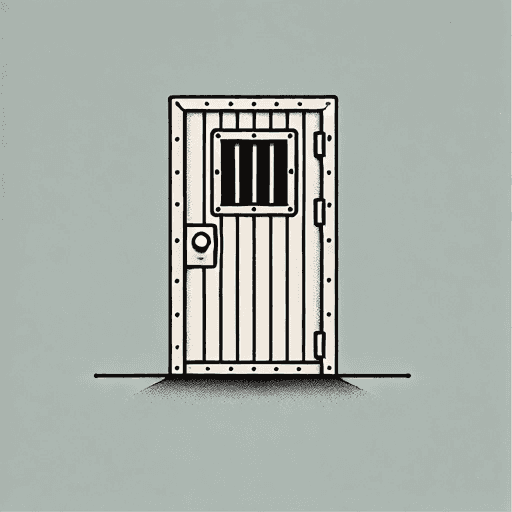
Within Slim’s autobiography, prison becomes a symbol of Systemic Racism in the 20th Century. Slim’s experiences in prison demonstrate blatant examples of racism and oppression, and from the very beginning, he and his inmates are segregated by skin color. To make matters worse, the prison guards are often particularly abusive toward non-white inmates. The first prison that Slim goes to has deplorable conditions, and his friend, Oscar, endures abuses that eventually trigger a mental health crisis. Despite these experiences, Slim returns to prison several times before he finally tires of repeating the cycle of crime. While in prison for the final time, Slim experiences both physical and psychological confinement and has no choice but to reflect on his life choices. During his last incarceration, he finally makes the decision to change.
Prison also represents The Relationship Between Crime and Trauma, as well as The Capacity for Good and Evil that exists within all humans. Many of the people whom Slim meets in prison or on the streets have stories of past traumas that have influenced their decision to lead lives of crime. Inmates in the prison system also demonstrate both positive and negative qualities, as many are imprisoned for crimes such as theft, murder, and sex work. At the same time, Slim meets people who are helpful, loyal, and understanding, such as the inmate who helps him to escape.
“The Streets”
The image of “the streets” is used as a motif throughout Slim’s autobiography, often representing the dangerous and corrupted lifestyle associated with sex work in the 20th century and depicting The Cycle of Sexual Violence and Exploitation. The streets are where many of Slim’s formative experiences take place; his workers ply their trade there, and the streets therefore become a representation of the brutal competition that exists in the sex work industry. Living a “street life” means that Slim and the women who worked for him rarely have permanent housing, instead living in hotels and moving from state to state to avoid law enforcement or to find better sources of business.
The young Slim depicts the streets as an almost glorious place when he talks to his women about their work. He deliberately romanticizes “the streets” in order to convince the women that they belong there; he wants to make them feel like they are doing something important so that they will keep earning money and supporting him. In this narrow view, the streets are where the money comes from. However, Slim also sees various horrors and meets diverse groups of people on the streets, and these experiences gradually turn him into a paranoid and angry version of himself. The longer that Slim spends in the lifestyle of a pimp, the less like himself he becomes.
Scratch (Money)
“Scratch” is a slang term for money, and in Slim’s world, it stands as a symbol of power, status, and freedom from Systemic Racism in the 20th Century. The prospect of wealth is tempting and enticing for many, but for Slim, it becomes something more. Slim grew up in the early to mid-20th century, and while the northern states did not have Jim Crow laws that made segregation a legal requirement, the ravages of racism and systematic oppression still existed on a mass scale. The young Slim mistakenly believes that by gaining wealth and power, he can rise above this oppression, but in reality, Slim traps himself into a destructive lifestyle that leads to multiple incarcerations.
Like many men of the era, Slim initially feels that pimping is the “fast track” to success, and he puts all his effort into obtaining wealth through sex work. Slim always prioritizes money and therefore commits many acts that fall into The Cycle of Sexual Violence and Exploitation. He loses his sense of empathy and respect for others and thinks only of himself and his next stack of bills. Slim’s singular pursuit of money also leads him to waste 20 years of his life in meaningless, hollow, and abusive work rather than living up to his potential.

Unlock the meaning behind every key symbol & motif
See how recurring imagery, objects, and ideas shape the narrative.
- Explore how the author builds meaning through symbolism
- Understand what symbols & motifs represent in the text
- Connect recurring ideas to themes, characters, and events