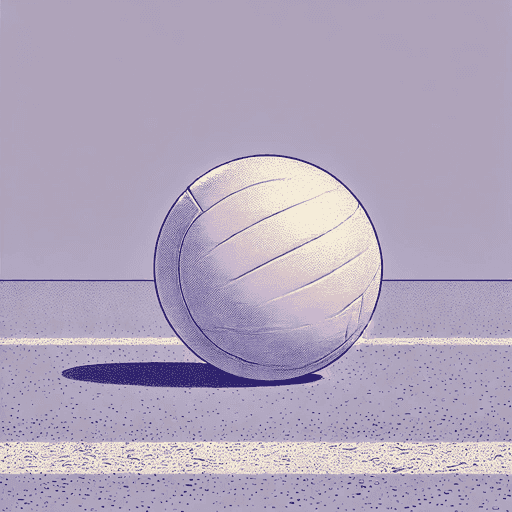
Premium Harmony
33 pages • 1-hour read
Stephen KingPremium Harmony
A modern alternative to SparkNotes and CliffsNotes, SuperSummary offers high-quality Study Guides with detailed chapter summaries and analysis of major themes, characters, and more.
Literary Devices
Content Warning: This section of the guide includes discussion of death, animal death, and substance use.
Third-Person Limited Narration
“Premium Harmony” uses third-person limited narration. This mode of narration filters the story’s world through a single character’s consciousness while keeping the grammatical third person. In this case, the perspective adheres to Ray Burkett’s perceptions and idioms, often via free indirect discourse that lets his diction and judgments tint the narration without quotation marks. The literary effect creates a sense of intimacy and exposure. The reader inhabits Ray’s interior consciousness—his petty irritations, impulses, and sudden bursts of self-pity—so closely as to resemble a mind thinking in real time, yet the slight narratorial distance preserves room for judgment, irony, and pattern recognition unavailable to Ray himself. This balance is crucial to the story’s emotional and ethical texture. King avoids editorializing; instead, the voice quietly stages a contest between what Ray thinks about himself (put-upon, sensible, and unlucky) and what his thoughts reveal (resentful, self-justifying, and intermittently tender). Third-person limited binds the reader to a flawed point of focus while refusing the absolution that an apologetic first-person perspective might seek or the conclusiveness that an omniscient voice might provide.
That same narration is the engine of the story’s realism. Because the story portrays events as Ray registers them—such as the heat pressing in the car, the clerk’s blue smock, and a kickball display under a seasonal sign—the scene accrues through plausible, workaday details. The voice borrows Ray’s vocabulary of brands and surfaces (Wal-Mart, Bugles, Sno Balls, a cheap cigarette with a deceptively pleasant name), suggesting a society saturated in commercialism. Even the procedural language around death (the listing of clipboards, oxygen tanks, and the sheet) is filtered through Ray so that social realism converges with psychological realism, portraying how a man under stress both observes and misreads. The result is a sustained imitation of ordinary perception: partial, self-serving, intermittently generous, and therefore realist.
Present Tense
In literature, tense refers to the grammatical time of a story’s telling (present, past, or, in rarer cases, future). It shapes a reader’s sense of causality, hindsight, and inevitability. The past tense often carries a tacit guarantee of aftermath—that someone survived to narrate, for example—while the present tense simulates simultaneity. “Premium Harmony” is written in the present tense, and the effect is to trap the reader in the immediate moment: The heat is punishing now, Mary is walking into the store now, the manager is trying CPR now, and the EMTs cover a face now. Present-tense narration denies retrospective wisdom and refuses the smoothing power of memory, instead emphasizing contingency—a key element in the story’s exploration of The Absurdity of Death Intruding on the Mundane, as disparate details exist alongside one another. It also amplifies the story’s ethical discomfort because Ray cannot curate his reactions before the reader encounters them. Finally, the present tense harmonizes with the story’s realist aim: It mirrors unfolding procedure, letting small motions and bureaucratic steps possess their full weight in the moment they occur.
That immediacy makes the story’s occasional past-tense intrusions—especially in dialogue about the newly dead—stand out as pointed markers of transition. When bystanders or Ray refer toa Mary’s earlier actions, such as how “she wanted a purple kickball for [their] niece” (61), the shift to past tense marks the community’s first acknowledgment that a life has left the present. Similarly, when the dog dies in the superheated car and Ray mutters, “[Y]ou’re with her now” (62), his language presumes a completed passage. These flickers of past tense suggest how grief progresses through shock into narrative.
Dark Humor
Dark humor is the literary technique of finding or staging comedy in situations that are violent, grotesque, or tragic, thereby producing a jolt of cognitive dissonance that can both estrange and console. It thrives on tonal clash. “Premium Harmony” explores how characters use Dark Humor as a Response to Grief, but the narrative itself embraces a similar tone via a sequence of bleak comic images and thoughts: the dog Biznezz eating a petrified Sno Ball, its coconut flecks later stuck to his whiskers as he overheats in the car; the purple kickball offered “on the house” by a flustered manager (61), as if grief were a customer-service issue; the teenagers pressing their faces to the glass to film a stranger’s collapse; Ray’s shameful recognition that bereavement makes him “someone special”; and even the title’s brand-name promise of “Premium Harmony” attached to a cheap cigarette at the center of a marital argument. The comedy arrives in the mismatch between the gravity of events and the stubborn triviality of objects and impulses, which paradoxically mirrors how real tragedy can feel in the moment. It also critiques a landscape in which consumer goods and protocols mediate even death; the joke implicates the systems and habits that composed the couple’s life.
Irony
In literary terms, irony is a patterned incongruity between appearance and reality, expectation and outcome, or utterance and meaning. Irony’s main forms include verbal irony (saying one thing and meaning another), situational irony (events producing the opposite of what is intended), and dramatic irony (when the reader knows more, or better, than the character). “Premium Harmony” contains all three. The title “Premium Harmony” is a situational and verbal joke: a cigarette brand promising quality and concord that accompanies the collapse of a marriage and a life and that tastes, by Ray’s own admission, anything but premium. It is situationally ironic that a stop meant to secure a child’s simple pleasure (a purple kickball) becomes the scene of an adult’s death and that an indulgent treat tossed to calm a dog becomes his absurd death mask. There is a broad dramatic irony in the gap between Ray’s self-conception and the reader’s understanding of him, assembled through his own thoughts.
Ray intermittently registers this irony, but only at the level of discomfort, not insight. For instance, he notes the bitter twist of being able to smoke at the dining-room table now that Mary is gone, but the recognition does not grow into self-reproach so much as into a grim permission. This adds a further layer of dramatic irony, demonstrating how the objects and rituals of everyday American life—brands, protocols, and salesmanship—both cushion and cheapen catastrophe in ways that the characters are only semi-aware of.

Unlock all 33 pages of this Study Guide
Get in-depth, chapter-by-chapter summaries and analysis from our literary experts.
- Grasp challenging concepts with clear, comprehensive explanations
- Revisit key plot points and ideas without rereading the book
- Share impressive insights in classes and book clubs