Pretty Things
Pretty Things
A modern alternative to SparkNotes and CliffsNotes, SuperSummary offers high-quality Study Guides with detailed chapter summaries and analysis of major themes, characters, and more.
Summaries & Analyses
Quizzes
NEWReading Tools
Symbols & Motifs
Pretty Things
Content Warning: This section of the guide contains discussions of suicide.
The title of the book is Pretty Things, and Chapter 1 features Instagram captions that read: “Pretty things, so many pretty things in the world; and we get them all” (13). “Pretty things” symbolize materialism. At the nightclub, “there are girls in fur and designer silk, swanning and preening like exotic birds, and men with diamonds in their teeth” (13). The people at the club both consume pretty things and are themselves consumable, pretty things. Their glittering, glossy social media accounts submerge their humanity and transform them into a pretty things that other people want. As an Instagram influencer, Vanessa cannot talk about her sadness or desire to gulp Drano because such feelings are not pretty. As Vanessa explains, “the image you exude must be compelling, it must be brand-positive, it must be cohesive no matter how fractured your internal dialogue might be” (145). The symbolic “pretty things” underpin the theme of Truth Versus Storytelling; Vanessa shows how an influencer turns their life into a brand which presents them as a commodity.
Up close, the “pretty things” symbolism falls apart. As Ashley/Nina experiences Vanessa face-to-face, Vanessa stops representing a contemptible pretty thing. Nina says that “[s]he is no longer a caricature on whom I can hang all my resentment, but a human being who has cried on my shoulder” (327). The lack of physical proximity between the influencer and the follower makes it easier for the follower to think of the influencer as a pretty thing. In contrast, in real life, Vanessa shares her true feelings—in the novel, it is harder to be a pretty thing offline than online.
Stonehaven
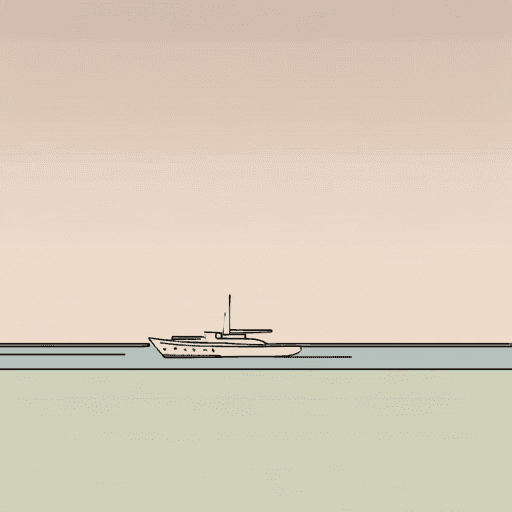
Stonehaven is a symbol of pain and trauma. Judith battles mental health conditions there and eventually dies by suicide on the yacht. Benny continues to get in trouble at Stonehaven, and William brutally separates Benny and Nina on the property. In the narrative present, it is where Nina learns that her mom had an affair with William, and it is where Vanessa discovers that her mom died by suicide in part because of William’s affair.
Stonehaven’s origin story initiates this symbolism of pain and trauma as Vanessa’s and Benny’s great-great-grandpa refused to pay the designers and builders—according to Benny, because he was “an asshole” (96). Nina notes the persistent agony of Stonehaven when she describes the “secrets mortared in with the stones” (229). The “secrets” attached to the building process itself epitomizes the socioeconomic trauma that Brown explores throughout the book inflicted by wealthy and powerful people. Vanessa describes Stonehaven as an “albatross that hung around the Liebling family neck” (133), alluding to Samuel Taylor-Coleridge’s poem The Rime of the Ancient Mariner (1798) in which this is given as a punishment to a sailor for shooting the albatross that helped them.
Yet the characters do not run away from Stonehaven. They leave it, but they inevitably return. Even Benny, who wants to burn it down, goes back to Stonehaven to live with Vanessa, Daisy, and Nina. While the characters themselves develop, Brown also alters Stonehaven’s meaning to symbolize redemption. By engaging with Stonehaven and confronting its history of hurt, the characters stop perpetuating its cycle of pain. In the epilogue, Nina describes Stonehaven in springtime. Spring symbolizes rebirth, and Stonehaven no longer symbolizes pain and trauma.
Inheritance
Inheritance is a motif throughout the novel that supports the critical themes. Inheritance underpins Grifting and Vengeance. Nina’s family is full of grifters, so she, in a semi-sincere way, presents her life as a grifter as inevitable—it is part of her inheritance. Vanessa is part of a rich and privileged family, so she throws herself into the shallow, materialistic world of Instagram influencing—another sort of grift. As Vanessa and Nina inherit their family’s grievances, they view each other as the enemy, and each character tries to punish the other for their supposed wrongs.
The motif also supports the theme of Truth Versus Storytelling. Vanessa and Nina find themselves inheriting family narratives that obscure their truths. From her family, Vanessa learns, to “pretend everything is still OK,” but she concludes that “[m]agical thinking didn’t save my mother, or my brother, or even my father” (450). After Nina discovers that Lily has been lying about the return of cancer, she separates herself from her Lily. By deviating from their family narratives, Vanessa and Nina shed what they have inherited to discover the truth: They are not enemies but allies.

Unlock the meaning behind every key symbol & motif
See how recurring imagery, objects, and ideas shape the narrative.
- Explore how the author builds meaning through symbolism
- Understand what symbols & motifs represent in the text
- Connect recurring ideas to themes, characters, and events