Private Lives
38 pages • 1-hour read
Noël CowardPrivate Lives
A modern alternative to SparkNotes and CliffsNotes, SuperSummary offers high-quality Study Guides with detailed chapter summaries and analysis of major themes, characters, and more.
Background
Literary Context: Noël Coward and the Comedy of Manners
Comedy of manners is a genre of drama that satirizes social conventions, particularly the hypocrisies of high society and moral codes that prioritize public appearance over private behavior. Plots typically revolve around stock characters involved in scandals and explore upper-class pretensions and human foibles. The genre’s humor typically comprises witty, fast-paced dialogue that offers social critique by skewering the rules of etiquette and propriety.
The genre has its origins in ancient Greek comedies. It then flourished in Enlightenment France with the works of Molière (Tartuffe, 1664 and The Misanthrope, 1666) and England with William Wycherley’s The Country Wife (1675) and William Congreve’s The Way of the World (1700). 18th- and 19th-century examples include Richard Brinsley Sheridan’s The School for Scandal (1777) and Oscar Wilde’s drawing room plays, notably The Importance of Being Earnest (1895). Noël Coward carried the tradition of the comedy of manners into the 20th century. Private Lives is one of his best known plays in the genre, along with Hay Fever (1925), a comedy about a family entertaining guests at their English country house, and Blithe Spirit (1941), a supernatural farce about a socialite haunted by his dead first wife.
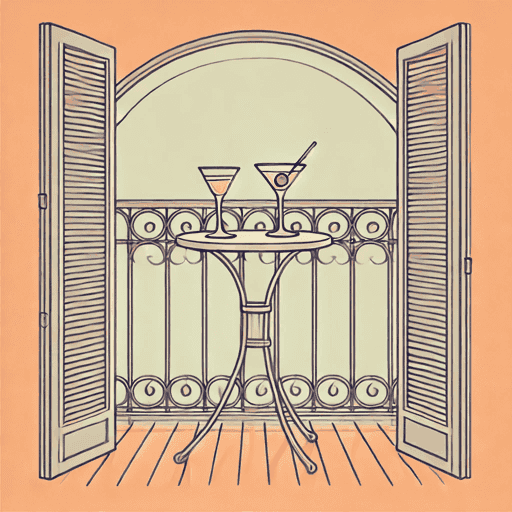
Written in four days, Private Lives was a vehicle for Coward and Gertrude Lawrence, a fellow actor and friend on whom he based Amanda. The play features the stocks characters of the cad, the vixen, the ingénue, and the stuffy aristocrat; it foregrounds the sexual scandals of divorce, infidelity, and lust. The love scenes and references to Catholicism in Act 2 were flagged by the censors but ultimately allowed. The play’s upscale settings (a luxury hotel, an elegant Parisian apartment) highlight the genre’s criticism of upper-class superficiality and preoccupation with keeping up appearances. Coward’s signature witty repartee, particularly between Elyot and Amanda, emphasizes the absurdity of social expectations, as the characters test their own and the audience’s assumptions about decency and appropriate behavior.
As a gay man who was not publicly out in his lifetime, Coward wrote characters that could be coded as gay to pass the censors. Contemporary scholars have analyzed his works through the lens of queer theory, reading his comedies of manners as critiques of heteronormative conventions and as examples of “high camp,” a term for an aesthetic that finds humor in heightened affectation.
Sociohistorical Context: Divorce Laws in 1930s Britain
The depiction of marriage and divorce in Private Lives reflects the social changes of interwar Britain, particularly reforms in divorce laws. Divorce was uncommon before 1914, with “just one divorce for every 450 marriages” (“Divorce since 1900,” UK Parliament). Women who petitioned for divorce faced sexist barriers, as the Matrimonial Causes Act of 1857 gave men the right to divorce their wives on the grounds of adultery alone, whereas women were required to produce additional proof of abuse, cruelty, desertion of two years, or a crime. The law reinforced the double standard that weighed a man’s infidelity as less transgressive than a woman’s. Divorce was also considered highly scandalous and was an expensive process typically possible only for the wealthy, making the topic a ripe focus for a comedy of manners.
Private Lives was written in 1930 and takes place in “The present” (1), with Elyot and Amanda’s divorce having taken place five years earlier (presumably 1925). The play is thus set against several post-World War I social changes. Women’s suffrage was realized limitedly in 1918 and more widely in 1928. The landmark Matrimonial Causes Act of 1923 significantly reformed divorce, giving women equal rights to divorce husbands solely on the grounds of adultery. However, this only moved the goal posts of social opprobrium: The initiator of divorce proceedings was viewed as less scandalous than the spouse being divorced for having been unfaithful, so it was seen as chivalrous for husbands to allow wives to initiate divorce proceedings. In the play, the characters frequently discuss who should end up on the record as initiating the divorce petition. Elyot reveals that he “let” Amanda divorce him for “cruelty and flagrant infidelity” (10)—deference he calls the “action of a gentleman” (10), suggesting adherence to moral codes and public opinion. Double standards continue to be at play as well: While Elyot and Amanda both admit to varying degrees of infidelities in their marriage, it is Amanda’s reputation that is framed as more at risk. Coward’s focus on the intricacies and management of the public stigma of divorce offers a social critique on gender expectations and the moral vagaries of the rich.

Unlock all 38 pages of this Study Guide
Get in-depth, chapter-by-chapter summaries and analysis from our literary experts.
- Grasp challenging concepts with clear, comprehensive explanations
- Revisit key plot points and ideas without rereading the book
- Share impressive insights in classes and book clubs