Private Lives
38 pages • 1-hour read
Noël CowardPrivate Lives
A modern alternative to SparkNotes and CliffsNotes, SuperSummary offers high-quality Study Guides with detailed chapter summaries and analysis of major themes, characters, and more.
Symbols & Motifs
The Yacht
The yacht idling in the water by the Deauville hotel is a symbol of luxury, leisure, and status. Both couples remark on its presence from their terrace as they admire the view, revealing their attitudes about marriage and their status in society. To Sibyl, the impressive ship confirms her belief that marriage is bliss, and she marvels at how its lights reflect in the water. But like her illusion of her ideal marriage, the dazzling lights are mere surface reflections and not substantial. Amanda also comments on the reflecting lights but wonders who owns the yacht. Victor doesn’t respond, but Elyot answers, “The Duke of Westminster’s, I expect. It always is” (29). Elyot demonstrates his familiarity and belonging with the elite class, suggesting that when he mocks high society, he is being self-aware and self-critical. Amanda wishes she was on the yacht, but it is out of reach, just like her longing to have a lasting relationship with Elyot. Victor simply wonders “who it belongs to” (41), parroting Amanda as he and Sibyl ponder the mysteries of who owns the yacht and where their spouses have gone.
The Orchestra’s Song
Coward wrote “Some Day I’ll Find You” for the play; it appears in Act 1 as the orchestra’s number and in Act 2 when Elyot and Amanda sing a duet. The song, described in the stage directions as “a sentimental, romantic little tune” (20), is a motif that reappears each time Elyot and Amanda are prepared to separate, representing their irresistible attraction to each other. The song describes lost love, regret, and a longing to reconcile, with lyrics like, “I’ll leave you never / Love you for ever / All our past sorrow redeeming” and, “Can't you remember the fun we had?” (Coward, Noël. “Some Day I’ll Find You.” Genius.com, 1930).
Elyot and Amanda first encounter each other while the orchestra plays the song, prompting Elyot to call it a “[n]asty insistent little tune” (33-34) to deflect its evocative power. The song is played on repeat, a persistent nudging for the exes to acknowledge that their romantic feelings have not died and mirroring the cycle of their on-again, off-again romance. Despite their love for each other, the flaws and dysfunction of their relationship are bound to repeat. They may believe they are wiser and have implemented safeguards, but the song’s repetition is both luring and suggestive of unchanging patterns. In an ironic nod to Coward’s role as composer and the effect of the song to draw them back together, Amanda responds, “Extraordinary how potent cheap music is” (34).
The song reappears in Act 2 as a bandage after the couple’s sore disagreement. Elyot serenades Amanda on the piano and “[t]hey sing several old refrains from dead and gone musical comedies finishing with the song that brought them together again in the first Act” (56). The reference to the songs as “dead and gone” signifies the couple’s past love and the unlikelihood of its successful resurrection. Elyot and Amanda’s duet represents their fleeting harmony, as their moments of magic and connection only last the duration of the song.
Champagne Glasses
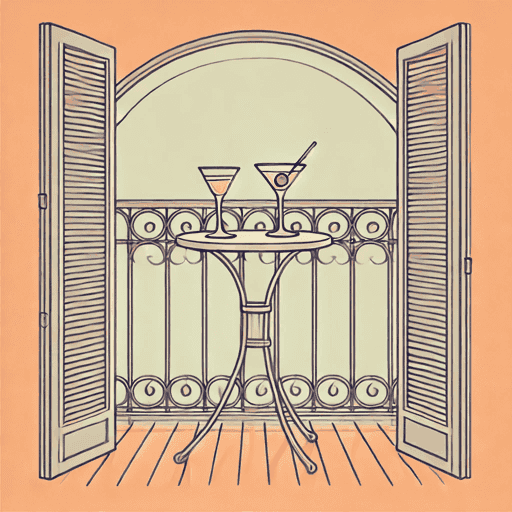
The champagne glasses in Act 1 appear as pairs on two different trays, symbolizing the sophistication of the upper class as well as the mismatched pairing of Elyot with Sibyl and Amanda with Victor. When Elyot and Amanda rejoin on the terrace after their spouses have stormed out, their antagonism thaws, and they toast their shared predicament with Elyot’s set of cocktails. The champagne glasses are ironic props, as the symbol of refinement and romance is juxtaposed against two bickering exes who end up satisfying their urges. Amanda’s facetious suggestion, “Shall we get roaring screaming drunk?” (30), is significantly less indecent than what they end up doing—ditching their spouses on their honeymoon.
The cocktail glasses are also props that highlight the structure of the play as a potential swapping of couples. Elyot and Amanda almost simultaneously bring out trays of drinks, demonstrating their synchronicity as a couple. Elyot and Amanda drink the glasses on his side of the terrace, while at the end of Act 1, Victor and Sibyl toast from the tray on the other side. Amanda and Sibyl each drink champagne from the suite opposite their own, foreshadowing the re-coupling of the play’s protagonists.

Unlock the meaning behind every key symbol & motif
See how recurring imagery, objects, and ideas shape the narrative.
- Explore how the author builds meaning through symbolism
- Understand what symbols & motifs represent in the text
- Connect recurring ideas to themes, characters, and events