44 pages • 1-hour read
Reason for Hope: A Spiritual Journey
A modern alternative to SparkNotes and CliffsNotes, SuperSummary offers high-quality Study Guides with detailed chapter summaries and analysis of major themes, characters, and more.
Chapters 5-10Chapter Summaries & Analyses
Content Warning: This section of the guide includes discussion of graphic violence, death, kidnapping, and physical injury.
Chapter 5 Summary: “Solitude”
Goodall recalls her time in Gombe after Vanne left. Although she missed her mother, she was consumed by her work, learning something new about the chimps every day. In retrospect, Goodall asserts that her time in the forest was changing her spiritually. While she wasn’t overtly questioning her faith, she spent a lot of solo time immersed in the natural world.
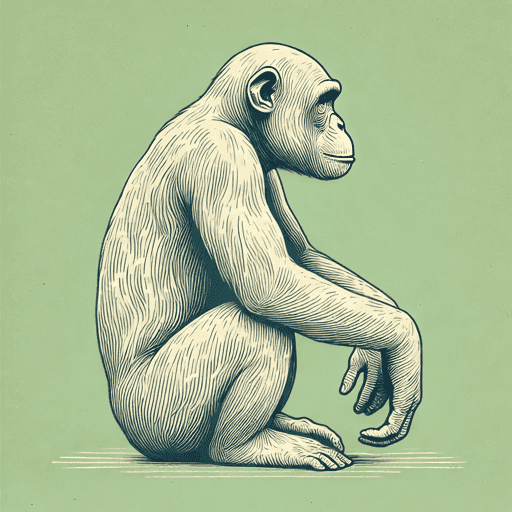
Meanwhile, Goodall grew more attached to the chimps she was studying. There were a lot of strict ideas about how humans—particularly scientists—should regard their animal subjects, but Goodall didn’t abide by them, as she wasn’t formally trained in this thinking. For example, most scientists frowned upon naming animals, but Goodall named her chimps. She reflects on her particular connection with the chimp David Greybeard. In retrospect, Goodall claims that studying David taught her about humans.
Goodall continues reflecting on how the Gombe changed her. She doesn’t know how to convey her shifting awareness, but marvels at how much the natural world taught her and how much belonging she felt.
Chapter 6 Summary: “A Decade of Change”
Goodall reflects on the years from 1964 through 1974. During this time, she earned her PhD, took a teaching job at Stanford, got married to Hugo van Lawick, and had her son, Hugo Eric Louis, nicknamed “Grub.” When she and Hugo divorced “at the end of the decade” (83), Goodall struggled with grief and guilt. She recalls the difficulties of their relationship and split.
Earlier in the decade, Goodall returned to England for a lecture series and had trouble readjusting to civilization. A lot was changing in the world outside Gombe, and the environment was suffering. Grub was born amidst this difficult era, which sometimes made Goodall question her decision to have a child. She reflects on her experience of motherhood and remarks on all she learned from the chimps, particularly a mother chimp named Flo. Despite the difficulties, Goodall loved being with Grub for the first years of his life. Finally, when Grub was nine, Goodall returned to Gombe and Grub stayed in England with Vanne. Throughout this period, she and Hugo spent less time together and drifted apart.
After Goodall’s divorce, she visited Notre Dame. The experience helped her focus on bigger philosophical questions. She suddenly understood all that Gombe had been teaching her. In particular, she found a new understanding of God.
Chapter 7 Summary: “Paradise Lost”
Goodall reflects on her relationship with Derek Bryceson. They met around the time her “world turned upside-down” (97) and she still sees him as one of the most essential parts of her life. She remarks on his generosity of spirit and good character. Derek also fought in WWII, receiving a war injury. He worked tirelessly to overcome his injuries and went on to work as director of parks for Tanzanian leader Julius Nyerere.
Goodall remembers taking little trips with Derek when Derek was working in Gombe. During one trip with Grub in tow, they had a near-death experience. They were flying in a bush plane and the vehicle malfunctioned. The pilot panicked and crash-landed the plane. On the ground, Goodall, Grub, and Derek struggled to exit the plane. After they escaped, Goodall realized how close they’d come to death and how unafraid she’d been. Derek then proposed and Goodall accepted.
Not long after Goodall and Derek’s marriage, they had another terrifying experience. Goodall was at the Gombe camp when 40 men attacked and kidnapped four graduate students working for Goodall. Goodall and the others evacuated the camp for Dar es Salaam. Meanwhile, Derek liaised with the government and kidnappers, who wanted a ransom. The despair and waiting felt endless. After the students were finally returned, Goodall struggled to deal with subsequent problems, but Derek was by her side throughout.
Goodall returned to Stanford after the kidnappings to a poor reception. People blamed her for what happened and demanded she quit. With Derek’s help, she gave interviews and tried to clarify what happened. One interviewer reassured her, saying he had worked on many similar cases and people often found themselves abandoned and betrayed after suffering such terror. Goodall despaired to think of violence being met with scorn instead of love.
When she returned to Gombe, she spent a night alone near the lake, where she reflected on all the violence she’d encountered. Until this point she’d believed that chimps were more peaceful than humans, but she was about to discover otherwise.
Chapter 8 Summary: “The Roots of Evil”
Goodall reflects on the work she set out to do in Gombe and how it evolved. In the early 1970s, she and her fellow researchers began to witness violence amongst the chimps for the first time. A male chimp named Humphrey from a neighboring community was violent towards the chimps of the community Goodall was studying. Goodall and her team were unable to understand this behavior. Then, Goodall began to notice a female chimp, Passion, and her baby, Pom, attacking another female named Gilka. They killed and ate her baby, too. Passion and Pom staged many similar attacks, but Goodall couldn’t understand why.
Over the next four years, Goodall witnessed other new behavioral patterns. Chimps from her group broke off to form another group. They were territorial and instigated attacks on the original group. Goodall tried to reconcile this behavior with the violent human behavior she’d witnessed.
Goodall recalls the response when she published her findings. Some thought she was exaggerating her observations and others insisted she downplay the violence so scientists and writers couldn’t prove innate human brutality. Goodall was torn, but learned a lot from a UNESCO conference she attended. She recounts some of the conversations that impacted her while here. Around this time, she also read Richard Dawkins’s book The Selfish Gene, which sought to explain human violence. Although the book was eye-opening, Goodall wanted to know more.
Chapter 9 Summary: “Precursors to War”
Goodall reflects on the violence she observed between chimpanzees, comparing their behaviors to human behavioral patterns. She considers pseudospeciation—or the idea that some behaviors can be passed between generations within a group—within the context of chimps and humans. She wonders if inherited patterns of violence relate to belonging.
Goodall studied patterns of cultural speciation, both in gangs and religious sects. What she noticed was that humans had more awareness of violence, pain, and death. She explains why chimps seem oblivious to death, using examples from her observations. At the same time, she witnessed love between chimps, too.
Chapter 10 Summary: “Compassion and Love”
Goodall recounts the love and kindness she witnessed between chimps. They hug, kiss, and groom each other to show affection. She recalls the way one adolescent male chimp took care of an orphaned chimp. Some philosophies of human behavior suggest that kindness only originates from the selfish desire for something in return, or reciprocal altruism. Goodall doesn’t agree, citing examples of selfless acts of love. However, she did struggle to reconcile chimps’ simultaneously “sinful” and “saintly” behavior.
Goodall continues reflecting on selflessness and sacrifice. She shares more chimpanzee anecdotes, comparing chimp and human behaviors. She references the Holocaust and all those who sacrificed their lives for others. She references Jan Zwartendijk, a Lithuanian consul who wrote permits for thousands of Lithuanian Jews to escape the Nazis. Goodall asserts that his heroic act was done out of selfless love.
Chapters 5-10 Analysis
Goodall focuses on a more difficult era of her life to explore her theme of Overcoming Grief, Fear, and Despair. Throughout the preceding chapters, Goodall remarks on the peaceful nature of her childhood, adolescence, and early adulthood. Between the years of 1964 and 1974, however, Goodall began to encounter more hardship, which challenged her beliefs and character. Goodall acknowledges the positive and negative aspects of these life challenges: “I discovered the joys and responsibilities of being a mother. I experienced, as have so many others, the bitterness of a close and joyful relationship with a spouse slowly changing and souring, and the intense emotional pain that this generates” (83).
Goodall’s allusions to joy recall her early religious experiences and her youthful delight in nature. Goodall can acknowledge the happiness and wonder she experienced even amidst her sorrow and bitterness. Goodall’s early experiences of such dichotomous emotions would introduce her to new forms of human hardship and gradually usher her towards a new level of understanding.
Goodall peppers her moments of joy and awe with detailed descriptions of her hardships to convey the inextricable nature of good and evil. Such hardships include her divorce, her near-death experience in the bush plane, the kidnappings, and the aftermath of the kidnappings. The more difficult life proved to be, the more Goodall questioned who she was and what her purpose was: “Was there a purpose to life on planet earth? And if so, what role were we humans supposed to play […] In particular, what was my role to be?” (92). Loss and pain, violence and sorrow were teaching Goodall that not all of life was happy discovery and that humans were capable of profound cruelty. At the same time, Goodall could still acknowledge all of the goodness she had experienced in her human relationships and in nature. Unable to reconcile the competing forces of good and evil, Goodall turned again to religious and philosophical thought. In her grief and despair, Goodall thus suggests, she was compelled to seek new truths.
Goodall’s ongoing experiences in Gombe helped her to overcome her sorrow and to find new meaning from the wildlife she studied. When Gombe describes her experience of motherhood, she remarks on how much “chimpanzee maternal behavior” helped her “understand the basic, powerful instincts of mother-love” (90). The chimps were more than Goodall’s observational subjects, offering her insight into the human condition. Being in the natural world also granted Goodall a quiet respite where she could reflect on the violence she was witnessing amongst humans: “I thought how sad it was that, for all our sophisticated intellect, for all our noble aspirations, our aggressive behavior was not just similar […] to that of the chimpanzees—it was even worse” (109). Goodall doesn’t resolve her despair in this lakeside moment, but the peace of the natural world helps her to reconcile with the truth of human evil, even if only momentarily.
Peppering her account with such moral questions conveys Goodall’s humanity and enacts her ongoing search for understanding. She is never content to draw easy conclusions. For example, when she witnesses Humphrey senselessly attacking the other community or sees Passion and Pom killing and eating other mothers’ babies, Goodall does not assert that chimps are pure evil or that their violence is evidence of innate human depravity. Instead, she continues observing, reflecting, reading, and asking questions—always seeking deeper truths. Her response to grief, fear, and despair is active. She recognizes her own fallibility and limitations, and looks to others to teach her. Humility, Goodall’s account implies, is an essential part of overcoming pain and creating something new from it.

Unlock all 44 pages of this Study Guide
Get in-depth, chapter-by-chapter summaries and analysis from our literary experts.
- Grasp challenging concepts with clear, comprehensive explanations
- Revisit key plot points and ideas without rereading the book
- Share impressive insights in classes and book clubs