44 pages • 1-hour read
Reason for Hope: A Spiritual Journey
A modern alternative to SparkNotes and CliffsNotes, SuperSummary offers high-quality Study Guides with detailed chapter summaries and analysis of major themes, characters, and more.
Key Figures
Content Warning: This section of the guide includes discussion of graphic violence, war, illness, and death.
Jane Goodall
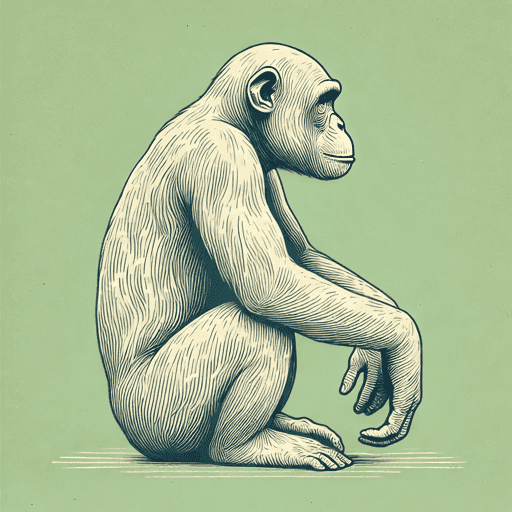
Jane Goodall is the author of Reason for Hope. Goodall was born in 1934 and died in 2025. She was an ethologist, humanitarian, and conservationist, who is best known for her studies of chimpanzees in Tanzania’s Gombe National Park. While Goodall had no formal scientific education or training, her work in Gombe was groundbreaking in the science world. She was the first person to observe chimpanzees using tools, communicating with each other, expressing complex emotions, and developing social patterns. Her findings changed scientific understanding of human evolution, particularly in the context of primates. Goodall’s work compelled scientists and thinkers to reassess humans’ early ancestry and innate human behavioral patterns.
Goodall was born to Mort and Vanne Goodall in 1934. She had a younger sister, Judy. Goodall primarily grew up with Vanne, Judy, and her maternal grandmother Danny at Danny’s English manor, the Birches. Her father fought in WWII and her parents divorced some time thereafter. It was at the Birches that Goodall fell in love with the natural world for the first time and began nurturing dreams of traveling to Africa. Throughout her coming of age, she had a deep belief in God, which evolved over the course of her life and in accordance with her experiences. When she learned about the Holocaust, her faith wavered. When she met Reverend Trevor, her faith returned. Much later in life, her faith waxed and waned as a result of her time in Gombe National Park and her encounters with loss and death.
After years spent observing chimpanzees in Gombe, Goodall went on to teach at Stanford University, to found the Jane Goodall Institute and Roots & Shoots, and to devote herself to environmental conservation. She wanted to educate the public on the natural world and to encourage people (particularly young people) on how to care for the earth and wildlife. Goodall’s work—and her writing in Reason for Hope—also touches upon humanitarianism. Goodall’s messages of hope and peace relate to human relationships. She argues that if humans reconnect with the natural world, they will be more equipped to help one another.
Vanne Goodall
Vanne Goodall was Goodall’s mother. At the time Goodall was writing Reason for Hope in the late 1990s, Vanne was in her 90s. Goodall writes about her mother with affection, loyalty, and respect. When Goodall was a child, Vanne always supported Goodall’s love for exploration and discovery. Even when Goodall’s curiosity distracted her from what she was supposed to be doing, Vanne never punished her. Vanne remained Goodall’s avid supporter throughout her adolescence and adulthood. After Goodall finished school, Vanne suggested she pursue secretarial training, work Vanne believed would help her travel and explore the way she wanted. Her advice proved sound, as Goodall’s secretarial certification ultimately led her to work as Dr. Louis Leakey’s personal secretary.
Vanne also accompanied Goodall on her original trip to Gombe National Park. When Leakey first chose Goodall to go to Tanzania on behalf of his research project, Leakey urged her to take a companion—ideally “someone with whom I was relaxed, someone who would not compete, and would leave me to do the study as I thought best” (57). Goodall immediately identified Vanne as the ultimate candidate and “was overjoyed when she agreed” (57) to accompany her.
In Gombe, Vanne supported Goodall exactly how she needed. She helped her maintain the camp, while giving her the space to research and explore. When Vanne’s year in Gombe came to an end, Goodall realized how much her mother had been contributing all along. She “missed Vanne for her companionship, for the long talks we had enjoyed by the campfire, the discussions of new observations” (71). She also realized how much Vanne had connected with the locals and how self-sacrificial she had been throughout her time in Gombe. Goodall regretted not acknowledging her support better while she was there.
Dr. Louis Leakey
Dr. Louis Leakey is a central figure in Goodall’s story, and was responsible for helping Goodall to carve out her vocational path and her place in the scientific world. Goodall met him when she first traveled to Africa, after someone recommended Goodall contact him if she was interested in animals. Leakey worked at the Coryndon Museum of Natural History as a paleontologist and anthropologist. He hired Goodall as his personal secretary and gave her work at the museum. He and Goodall hit it off right away. He was “a true giant of a man; a real genius with an inquiring mind, enormous energy, great vision—and a marvelous sense of humor” (44). Goodall later learned that he could be “short-tempered and impatient with people he considered fools” (44) but was grateful that she “apparently enchanted him [with her] youthful enthusiasm,” “love of animals,” and “determination to get to Africa” (44).
Originally, Leakey invited Goodall to work on a dig with him and his wife Mary at Olduvai Gorge in Tanganyika. This dig offered Goodall the sort of hands-on anthropological experience she craved. She spent months in Tanganyika, during which time her relationship with Leakey developed further. The two would spend hours discussing science, religion, and philosophy. Goodall was relieved that so many of her ideas aligned with Leakey’s. Like herself, Leakey believed that science and spirituality were entangled and was often frustrated by how polarized the fields were presented. Talking to Leakey helped Goodall further develop her own worldview.
Later, Leakey invited Goodall to travel to Tanzania to work on his chimpanzee research project in Gombe National Park. Goodall was thrilled, as this was just the sort of work she had longed to do. Despite the challenges he faced finding funding, Leakey prevailed, “and eventually found a backer” (56) for the project. He believed in Goodall when no one else did. For example, Leakey did not care that Goodall was untrained, as he “preferred that his chosen researcher should go into the field with a mind unbiased by scientific theory. What he had been looking for was someone with an open mind, with a passion for knowledge, with a love of animals, and with monumental patience” (55). Leakey identified all of these qualities in Goodall and chose her for the project. He continued supporting and defending her throughout her time in Gombe.
Derek Bryceson
Derek Bryceson was Goodall’s second husband. When Derek and Goodall met in the mid-1970s, Derek “was director of Tanzania’s national parks and a member of parliament in Dar es Salaam” (97). As director of parks, Derek would often travel to Gombe National Park, where he and Goodall met and started spending time together. Goodall was immediately moved by Derek’s “passionate love for and loyalty to his adoptive country” (97). She also admired Derek’s dry British humor and his marked determination. Derek had fought in WWII as a fighter pilot. During a crash, Derek suffered a spinal injury which threatened his ability to walk. Despite the odds against him, Derek “prove[d] the doctors wrong” and “taught himself to walk [again] with the help of a cane” (98).
Derek and Goodall fell in love and married in the wake of Goodall’s divorce from her first husband, Hugo van Lawick. Derek proposed shortly after he, Goodall, and her son Hugo Eric Louis (“Grub”) were almost killed in a bush plane crash. Over the years following, Goodall and Derek’s relationship deepened. They became partners “in love and in endeavor” (97). Goodall asserts that she never would have survived the 1975 kidnapping incident if it had not been for Derek’s relationship with the Tanzanian government and his tireless support of her.
Derek died in 1980 from stomach cancer. Goodall was devastated when she learned that Derek had a tumor and heard how bleak his prognosis was. She was numbed by shock, desperate to believe the reality she faced wasn’t true. Over the following months, she and Derek prayed tirelessly for Derek’s recovery, but to no avail. Goodall was forced to face her worst fear: Watching her loved one die a slow and painful death. Derek’s death opened Goodall to a new form of loss and sorrow, too. Afterwards, Goodall had to interrogate her belief in God once more, and had to accept the commonplace nature of death. She turned to the Gombe forest for reassurance and found healing there. Eventually she learned to let her grief for Derek go—acknowledging the wonderful connection they’d shared despite the brevity of their time together.

Unlock analysis of every key figure
Get a detailed breakdown of each key figure’s role and motivations.
- Explore in-depth profiles for every key figure
- Trace key figures’ turning points and relationships
- Connect important figures to a book’s themes and key ideas